November 10th, 1864

November 10th, 1864

General Sherman sent word via telegraph to General Corse, who was in command of the garrison at Rome.  Corse, who had distinguished himself in early October at the Battle of Allatoona Pass, was to begin destroying anything in Rome that had or could have military value to the Confederates.  The most important items of military value were the Noble Foundry and the Rail Road.  The Foundry was destroyed with explosive charges and the remainder of the majority of the city was put to the torch.  While many buildings were not designated as being of military value, some were set on fire by over zealous soldiers and others burned because of their proximity to military targets.  By morning there were very few buildings still standing.  The ones that survived were isolated from the main part of town that burned.  The Federals destroyed two train depots and a warehouse as well as a livery stable still containing horses.  As Corse and his men moved south to rendezvous with the remainder of Sherman’s Army, they began to destroy the railroad.

In Atlanta, Sherman’s Chief Engineer, Capt. Orlando Poe, was busy at work destroying anything of military value and was focusing much attention on the railroad and its related facilities.  Poe had built a battering ram with an iron bar that was just over 21 feet long and suspended from a ten foot tall wooden suspension system.  This was used to destroy the round house and depot.  Some buildings were also rigged with explosives to be set off upon their departure.  In five days, as the Federals leave Atlanta, it will be nothing more that a smoldering ruin.
_cmb0132-bw
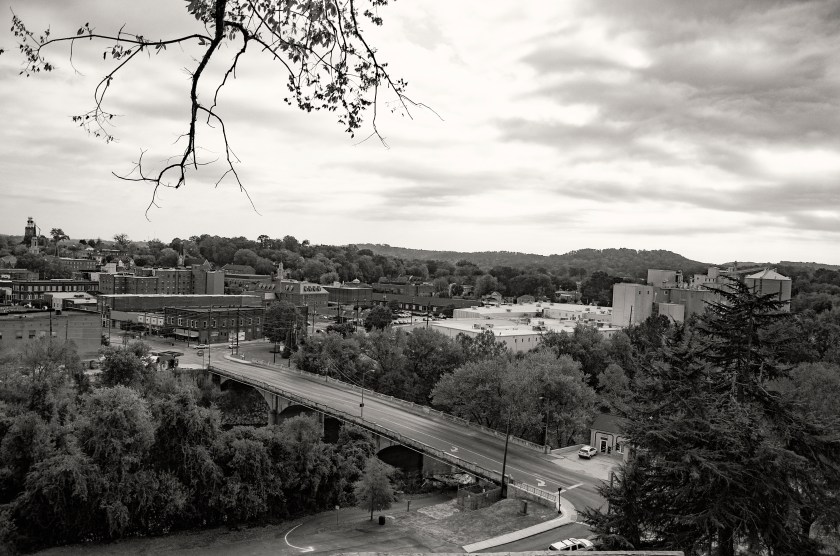
Downtown Rome, Georgia.  Noble Foundry, which produced arms, including cannons, once stood on the site of what is now Southeaster Mills.  Here at First St. and Broad St.  In this image the Broad Street bridge crosses the Etowah River and the factory to the right is former location of Noble Foundry.  Taken from the top of the hill at Myrtle Hill Cemetery near the Confederate Monument.
_cmb0066-bw
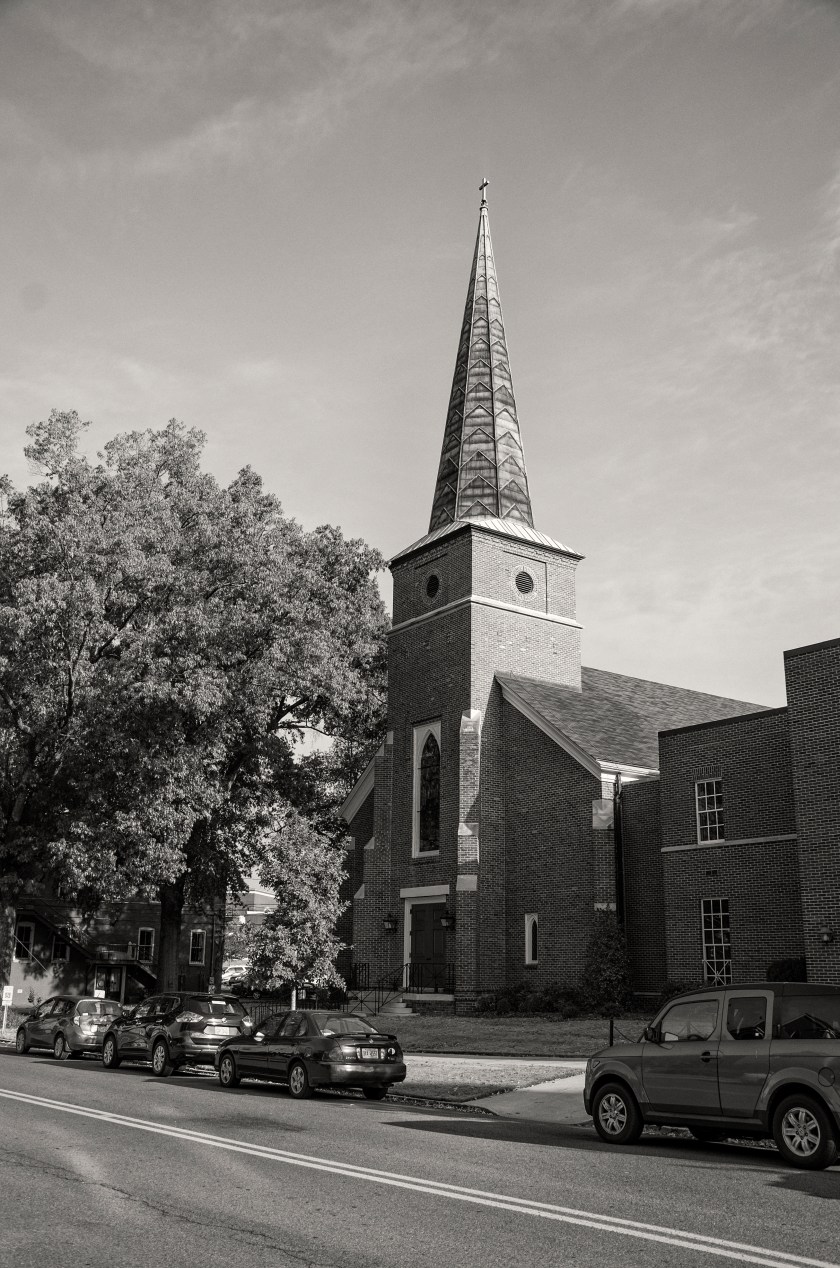
The First Presbyterian Church of Rome is one of the few remaining period structures from the Civil War in Rome.  It was used by the Federal occupation forces as a warehouse for food and supplies.  Federal troops also poured molasses down the organ pipes and removed the pews to build horse stalls.
_cmb0082-bw
Remains of some earthworks at Fort Norton, which sits upon Civic Center Hill in Rome and is part of a city park with walking trails.  This fort was one of three forts used to protect Rome and manufacturing facilities from the Federals. 
_cmb0094-bw
Remnants of earthworks at Fort Norton, Rome Ga.
_cmb0168-bw
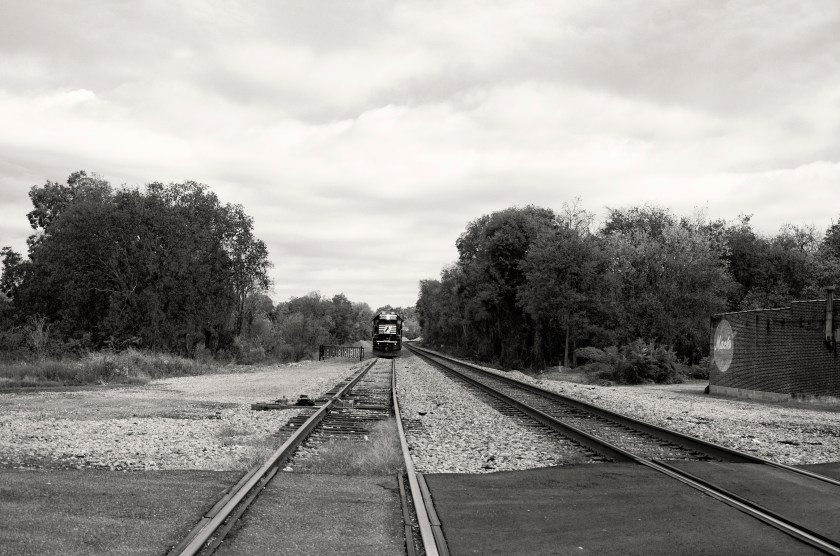
The railroad the lead from Rome through Kingston to Cartersville.  General Corse used this railroad to reinforce Allatoona Pass in October of 1864.  As the order was given to abandon Rome, the Federals destroyed most of the city and as they marched east to link up with other Federal forces to move towards Atlanta, they destroyed as much of the railroad as possible.


November 9th, 1864

November 9th, 1864

After playing cat and mouse with General Hood in North Georgia during October, General Sherman stopped the chase and established his headquarters in Kingston Ga.  From here, he was in a position to lash out at Hood if he reentered North Georgia, and he could also direct and finalize the logistical components of his March to the Sea.

Sherman had ordered the removal of all civilians in Atlanta and had also directed that all military personnel not going on the March to the Sea, should return to Chattanooga and other parts north.  Civilians not wanting to travel north, were transported to Rough and Ready where they were transferred through to the Confederate lines.  Sherman also ordered all the excess equipment and unnecessary war material to be sent back to the Federal lines in the north and that anything that could be of any possible military value to the Confederates was to be rendered useless and destroyed.  Once the last train had left Atlanta, the railroad was to be destroyed as well as the telegraph lines.  This would completely cut off General Sherman from any support until he reached the coast and could be resupplied by the Federal Navy.

_cmb0023-bw
The Kingston Museum houses artifacts from the early years of the town and from the Civil War.
_cmb0032-bw
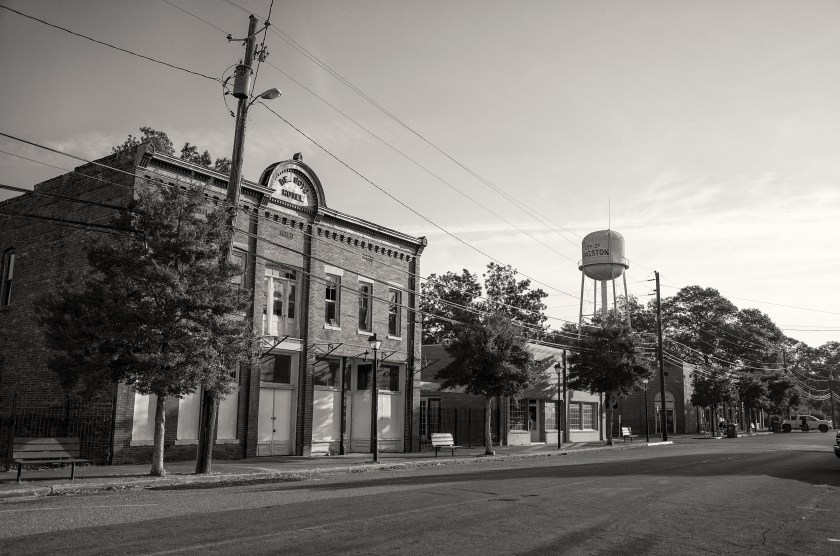
Downtown Kingston is mostly empty now, with only a few businesses operating and many buildings boarded up.
_cmb0049-bw
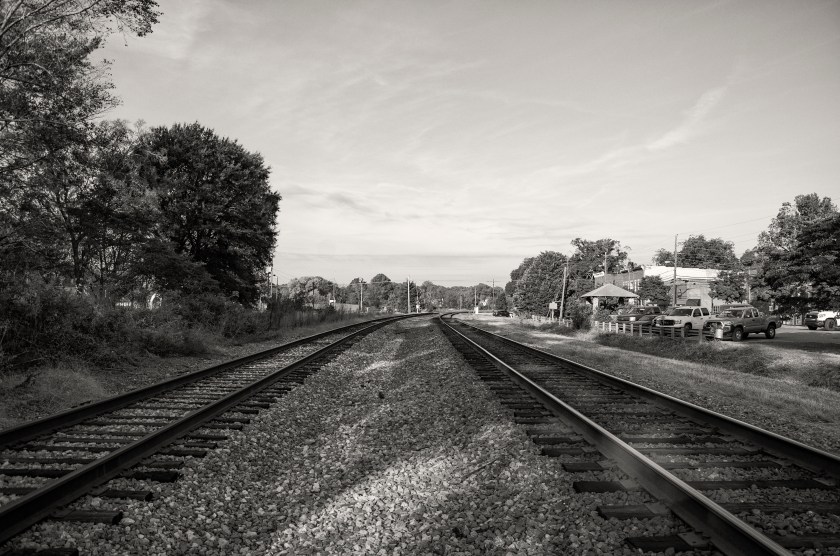
Looking west along the railroad tracks through Kingston towards Rome, Ga.  These tracks were an important supply route and were also the route General Corse took as he went to reinforce the fort at Allatooan Pass.
_cmb0018-bw
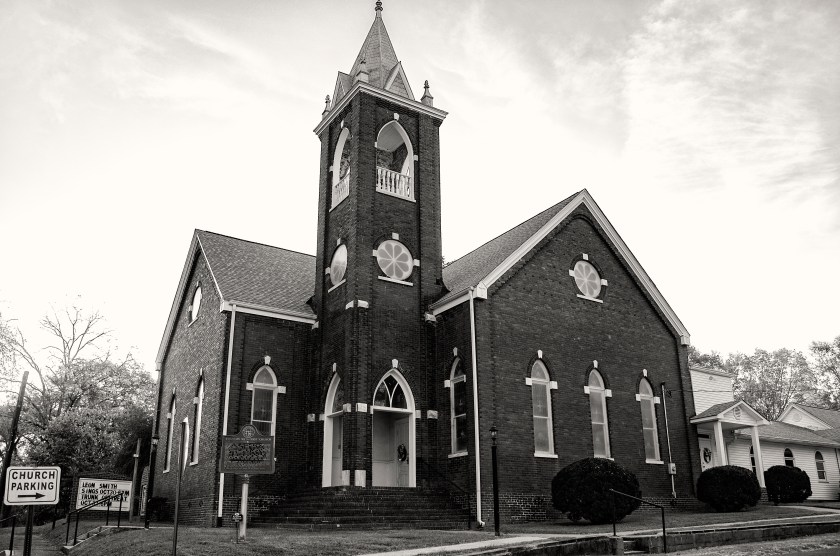
The Kingston Methodist Church is the only Church in Kingston to have survived the burning of the town in November of 1864.  After the Federal Army had left for their March to the Sea, the Church was open to all denominations as a house of worship, which fostered a great sense of community within the towns people.

Mid October 1864

After the Battle of Allatoona Pass, Hood continued to move his army to the north and west of Atlanta.  He threatened the Federal supply line in several locations, but did not do any real lasting damage.  He was pursed for a short while by Sherman and his army, but as the Confederates moved farther west into Alabama, Sherman held his position along the railroad and upon receiving orders to proceed with his plan to March to the Sea, he began making preparations.  He established a headquarters in Kingston and directed all the activities in preparation for the March.  He ordered all the non essential personnel and equipment in Atlanta to be sent back to Chattanooga and had rations and ammunition stockpiled in Atlanta for their departure in early November.

03304v
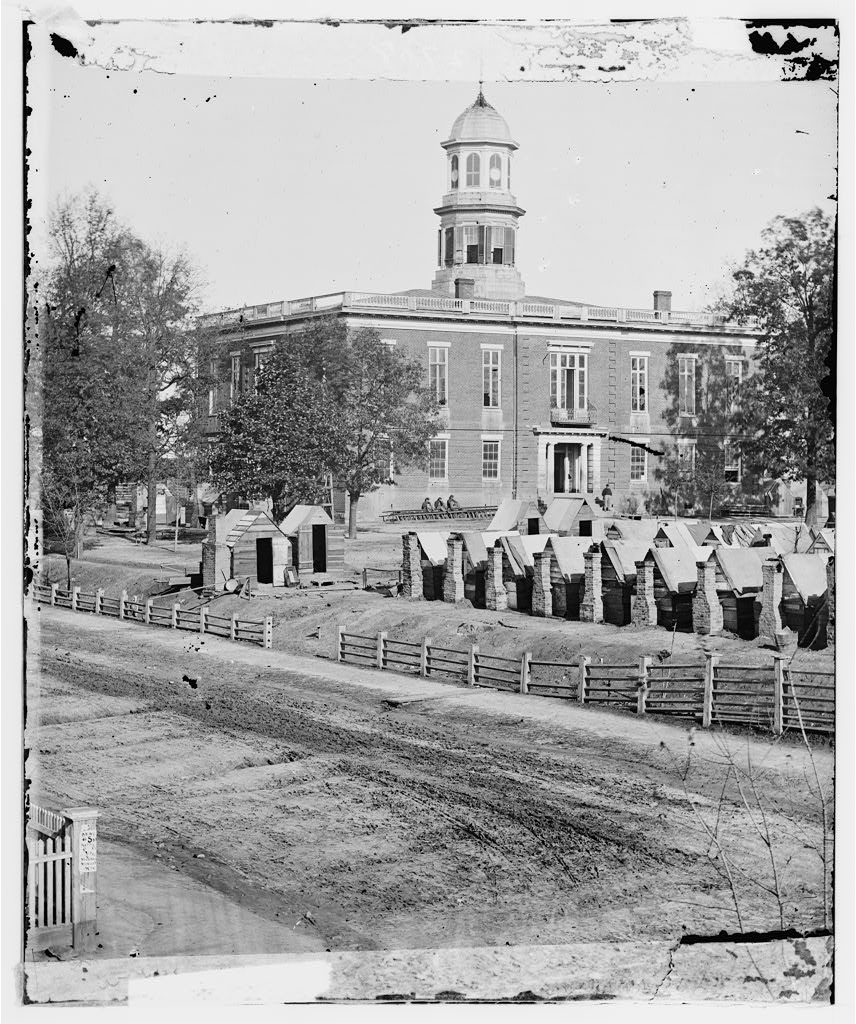
During the Federal Occupation of Atlanta, many of the Federal troops had constructed improved living quarters in anticipation of staying the winter.  They scavenged the many destroyed structures around Atlanta for the materials to construct their small shacks.
217
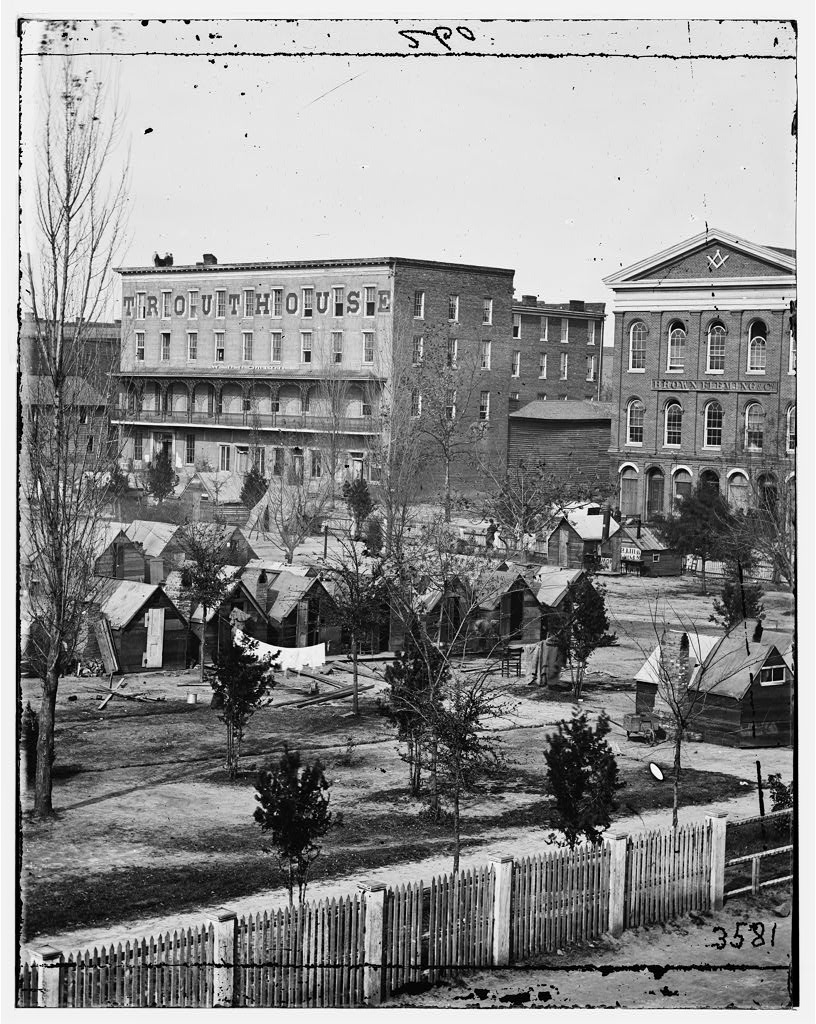
More improved living quarters near the Atlanta City Hall and Fulton County Court House.  The Federal units assigned as the Provost Guard made their quarters here, where the current Georgia State Capitol now sits.

Back to work!

Folks, I am sorry for not posting in such a long while, but honestly with the holidays and my participation in a few other projects, one with the Atlanta History Center, I have been a bit taxed for time.  I am now back on task and moving forward with the completing the documentary.  I will be working to find a publisher and if it proves to be too difficult a task I will be self publishing through Amazon or will publish a PDF e book.  I will also be producing a selection of folios that will contain prints from various locations along the Atlanta Campaign and the March to the Sea.  I may also attempt another Kickstarter Campaign if I decide to self publish.

Last year I made a series of post under the title of “150 Years Ago Today”.  This year I will be making post with a similar timeline, but they will be images of the current conditions of the location that is significant for that day. 

150 Years Ago Today: Dec. 18th – Dec. 24, 1864

General Hardee has had his forces quietly construct a pontoon bridge across the Savannah River.  They constructed it out any boat or pretty much any floating object they could use.  On top of the boats, boards were placed to make a road.  They then placed straw and hay on top of the bridge to dampen the noise of travelers.   On the night of Dec. 20th, Confederate forces withdrew from Savannah and crossed the pontoon bridge into South Carolina.

Dec. 21st, at 4:00am, Federal forces were met on the outskirts of town by the Mayor and aldermen.  They formally surrendered the city and requested protection from the Federal Army.  Word was immediately sent to General Sherman, who was meeting with Navy Officers.  Sherman was taken back to King’s Bridge.  From there he rode into Savannah.

Dec. 22nd, General Sherman entered Savannah and established his headquarters at the Pulaski House.  While working out the details here, an English merchant, Charles Green, offered the General his home as his Headquarters.  General Sherman accepted and the Headquarters was moved to the Green House.  It was here that Sherman penned his famous telegram to President Lincoln.  It read as follows: 
            “I beg to present you as a Christmas gift the city of Savannah, with one hundred fifty heavy guns and plenty of ammunition, also about twenty-five thousand bales of cotton.”

Dec. 24, President Lincoln receives Sherman’s telegram.  The telegram is published in newspapers across the country.  Lincoln replied with “Many, many thanks for your Christmas gift, the capture of Savannah, but what next?”

The March to the Sea is complete.  Sherman has reached his goal of Savannah and now has control of the city.  Camps are established and order is maintained.  Sherman’s Chief Engineer, Orland Poe, is reconstructing and fortifying the cities defenses.  The mines and obstructions are removed from the Savannah River and the port is reopened.  The citizens are encouraged to go back to life as normal, as as much of normal as can be expected under occupation.  Freed Blacks begin working for the Federal Army in various roles and schools are established for them in places that were once used in the slave trade.  Sherman rests, repairs, and refits his Army for there is more to come.

150 Years Ago Today: Dec. 10th – 17th, 1864

Dec. 10th, Sherman begins to lay siege to the defenses of Savannah and artillery exchanges become a frequent occurrence.  In order to keep up a siege, Sherman know he will need supplies and must make contact with the Federal Navy just off the coast. 

Dec. 12th, Kilpatrick is dispatched with his cavalry to locate an assault route to Fort McAllister.  Fort McAllister protects the mouth of the Ogeechee River and must be taken in order for Sherman to begin supplying his army.  After locating and route and informing Sherman, Kilpatrick rides to Midway and makes his headquarters at the Midway Church and then sends forces to Sunbury in an attempt to contact the Federal Fleet.

Dec. 13th, Federal forces overwhelm the garrison at Fort McAllister after a spirited fight the fort is captured.  Sherman watched the assault from a rice mill across the river.  With the Ogeechee River open, supplies begin to flow in to the army.  Sherman has a 1000′ long wharf built at King’s Bridge on the Ogeechee River.  This area is now a park with a boat ramp where the Hwy. 17 crosses the Ogeechee River.

Dec. 17th, General Hardee, commander of the Confederate forces in Savannah, sends a request to Confederate President Jeff Davis for reinforcements from Lee’s Army in Virgina, but receives word that Lee can not spare any troops.  General Sherman, knowing he has the upper hand, sends a request for Hardee’s surrender, but it is rejected by Hardee and the siege continues. 

150 Years Ago Today: Dec. 6th – Dec. 10th 1864

Dec. 6th and 7th, the Right Wing marched through Bulloch County and crossed the Ogeechee River at Jenks Bridge, the remnants of which are visible today at the Savannah Ogeechee Canal Society park.

Dec. 8th – Dec. 10th, the Left Wing marches toward Savannah passing through Springfield and Ebenezer.  At the while meeting more resistance.  The Right Wing begins to push elements to the East through Pooler and also faces increased resistance. 

Dec. 10th, General Sherman arrives on the outskirts of Savannah’s defenses and begins to plan for siege operations. 

150 Years Ago Today: Dec. 1st – Dec. 5th, 1864

Dec. 1st, 1864:
     The Right Wing, who Sherman is now traveling with, is making its way towards Millen and passes through the area of Herndon and Birdsville, west of Millen. 

Dec. 2nd, 1864:
     Sherman and the Right Wing move into Millen.  Sherman stays here for a day so that he can communicate with all parts of his army.  Soldiers give reports of the deplorable conditions found at the abandoned Camp Lawton just north of town.  Nearly the entire town is burned to the ground over the next day or so. 

Dec. 3rd, 1864: 
     The Left Wing passes through the area of Buckhead Church where on the 28th the Federal Cavalry under Kilpatrick clashed with Wheeler’s Confederate Cavalry.  The Left Wing then marches into Millen.  Parts of the Right wing have started moving out of Millen and are moving past Scarboro.

Dec. 4th, 1864:     The Battle of Waynesboro
     On the morning of the 4th, Kilpatrick’s Cavalry supported by two Brigades of Infantry marched on Waynesboro.  Their objective was to capture the town and burn all the bridges over Brier Creek.  As they approached the town they encountered General Wheeler’s skirmishers and drove them in toward the main line of works.  Being out numbered by the Federals who were advancing rapidly on their position and were about to over run them, the Confederates fell back to another line of prepared work in the streets of Waynesboro.  As Wheeler was again about to be overrun by a larger force, he ordered his Texans and Tennesseans to charge, thus delaying the Federals long enough for Wheeler to move his forces to block the Augusta road should Kilpatrick turn that way.  After quickly taking control of the town, the Federals burned the bridges over Brier Creek and set fire to the town.  The towns people were able to suppress many of the fires saving a great deal of the town. 

Dec. 5th, 1864:
     General Hardee is now well aware of the Sherman’s intent to move on Savannah and has placed his command between Sherman and Savannah.  The Right and Left Wings are both moving in a south easterly direction using the main roads into Savannah.  On the 5th, Sherman, traveling with the 17th Corps reaches the Ogeechee Church in what is now Oliver.  He took possession of a private home for his headquarters and remained here for several days to coordinate the movements of his command.  They were now within 50 miles of Savannah. 

150 Years Ago Today: Nov. 28th, 1864

Nov. 28th, 1864:
     The Left Wing of Sherman’s army moves from the Ogeechee River at Fenn’s Bridge to Louisville and Bartow.  The Right Wing Occupies Riddleville and Wrightsville.  Both of the wings are getting closer to each other and will eventually merge as they close on Savannah. 

150 Years Ago Today: Nov. 23 – Nov. 27, 1864

Nov. 23rd, 1864: 
     The Left Wing of Sherman’s army moves into and occupies the Georgia State Capitol of Milledgeville.  At one point, soldiers occupy the state house building and hold a mock session of the legislature.  They have speeches and vote to repeal secession.  General Sherman takes the Governor’s Mansion as his headquarters.  The Governor had taken all the furnishings with him to Macon leaving the mansion empty.  Sherman slept in his bedroll on the floor. 
     The Right Wing reaches the Oconee River north east of Macon.  After passing through McIntyre and Toombsboro they are delayed at Ball’s Ferry by stiff Confederate resistance. 

Nov. 24th, 1864:
     General Kilpatrick takes his cavalry column and leaves the Right Wing and feints toward Augusta with elements of the Left Wing.  General Hardee arrives at Ball’s Ferry to assess the situation.  He decides that their lines must be abandoned and they withdraw during the night. 
     They Left Wing begins to leave Milledgeville and moves through Hebron.

Nov. 25th, 1864:
     The Left Wing begins to move towards Sandersville and begin to meet active Confederate resistance and begin to skirmish almost constantly as they advance.

Nov. 26th, 1864:
     The Right Wing occupies Oconee and have taken the abandoned lines of the Confederates at Ball’s Ferry.  The Left Wing enters Sandersville where they clash with cavalry as the enter town and fight a running skirmish through the town square.  Elements of the Left Wing move out from Sandersville and move toward Tennille and Davisboro. 

Nov. 27th, 1864:
     The Left Wing has reached the Ogeechee River and begins to cross at Fenn’s Bridge.  A series of sharp cavalry battles ensue in the area of Waynesboro when Sherman feints toward Augusta.  The Left Wing also provides support for Kilpatrick as he operates and clashes with Wheeler between Millen and Waynesboro.