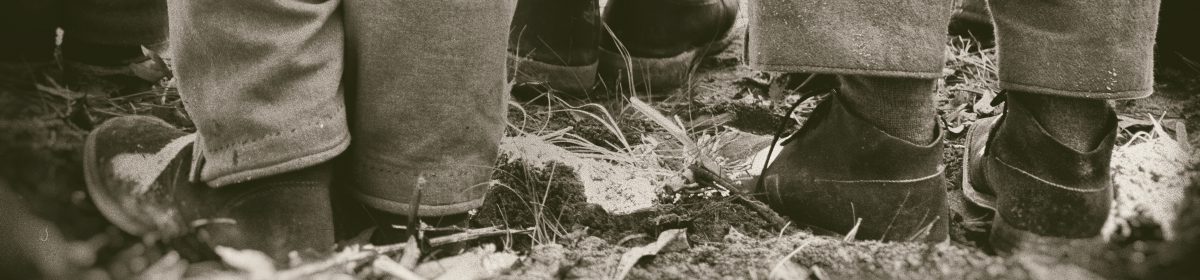
May 14th, 1864 was the first day of the Battle of Resaca. This was the first large scale battle in the campaign. There were approximately 160,000 troops engaged over a two day period. Union casualties were around 3560 and Confederate casualties numbered around 2600.
General Hood attacks the Federal line north of Resaca and pushes them out of their lines and back about a mile. The 5th Indiana Battery shows up just in time and is able to support the retreating Federals, causing Hood to return to his lines and allowing the Union troops to retake their lines. There was fighting along the entire four mile long front.
Day Three of Photography is Done!
Today I went to make images in Resaca. I made images at the area off of Chitwood Rd., an area at E. Nance Springs Rd., Rooker Rd., the Confederate Cemetery, several areas along Camp Creek Valley, Snake Creek Gap, Fort Wayne, the Rail Road bridge over the river and Rome Crossroads. I will be headed back up there this weekend to photograph the reenactment on Saturday. It should be pretty cool to have a reenactment on the actual battlefield. They were up there this morning and had started to set things up. Check out there website if you interested in going.
The Battle of Resaca, 2014
150 Years Ago Today: May 12th and 13th
May 12th, 1864: General Johnston begins to realize that General Sherman’s Objective is either Resaca or Calhoun. Johnston begins the retrograde movement from Dalton, by ordering the wagon trains to start heading to Resaca. He orders the infantry to move out after dark and has his Cavalry dismount and take their place. The will then cover the retreat and protect the rear of the Confederate Army.
During the morning of the 12th, a large portion of the Union Army begin their flanking movement of Dalton and follow McPherson’s route to Snake Creek Gap. Due to a thunderstorm and heavy rain the night before, the Union Army progresses slowly. The roads are choked with wagons bogged down in the mud and infantry slogging through the quagmire. This slows the Federals and allows the Confederate Army more time to reach Resaca and being digging in. During the afternoon of the 12th, General Sherman arrives at Snake Creek Gap. Upon meeting General McPherson, for the first time since his failure to take Resaca or destroy the railroad around Resaca and cut off the Confederate life line, he says “Well, Mac, you have missed the opportunity of a lifetime”. An officer standing near by said these were spoken “not ungraciously”, but General McPherson realizes it is a deserved comment for his failure.
May 13th, 1864: All the troops are in motion. Union Troops are moving toward Resaca via Snake Creek Gap. Confederate Soldiers have abandoned Dalton and started moving south. Union Soldiers move into Dalton and find it empty and that the railroad is intact. They begin to turn Dalton into a supply base and other Union troops begin to move south in pursuit of the Southerners. Wheeler’s Cavalry fights a rear guard action against Union troops that are in pursuit of the Confederates near Tilton. By the afternoon of the 13th, most of the Confederate Army is massed around Resaca and has dug in. Sherman realizes the he will not be able to get between the Confederate Army and Resaca and orders the Union Army to dig in with a line of works paralleling the Southerners works. Skirmishing takes place at various points along the line. All the pieces are almost in place for the first large scale engagement of the Campaign.
150 Years Ago Today, May 11th, 1864
May 11th, 1864, General Johnston receives word in the early morning that the Union Army is massing for an attack on Resaca via Snake Creek Gap. He telegraphs General Polk, who is Rome on his way form Louisiana to Dalton, and directs him to Resaca to assume command and reenforce the troops already there. He then sends General Hood from Dalton to Resaca and has General Cleburne prepare to move from Dug Gap to Resaca. He then directs General Cheatham to prepare to withdraw from Rocky Face Ridge and replace Clerburne at Dug Gap. Upon arrival at Resaca, General Hood finds that there is no attack imminent and there are no Federal troops within four miles of Resaca. He Telegraphs General Johnston and informs him of such. All the previous troop movements toward Resaca are put on hold.
Union observers, on the Northern part of Rocky Face Ridge, have seen part of Cheatham’s Corp start to move away from the lines at Buzzards Roost. Sherman is notified and he immediately orders the line at Buzzards Roost probed. There are enough Southern Soldiers still in the lines to repulse the attempted Reconnaissance by Force. The Union troops go to ground and must wait until nightfall to pull back. Sherman informs McPherson that he will be at Snake Creek Gap in the morning and that he is planning to have the majority of the Army follow his route to and through Snake Creek Gap. Sherman orders McPherson to strengthen his defenses in the gap. Sherman also orders Schofield’s troops to begin pulling back from Crow Creek Valley.
General Polk arrives in Resaca and with General Hood, they observe the deployment of troops and assess the situation. In the evening they go to Dalton by train to meet with General Johnston and make plans for the retreat from Dalton and the defense of Resaca. General Polk overnights with General Hood at Hood’s headquarters. General Polk, who is also the Episcopal Diocese of Louisiana, baptizes General Hood.
150 Years Ago Today: May 10th, 1864
On May 10th, 1864, there was continued skirmishing along Crow Creek Valley and Mill Creek Gap at Buzzards Roost. General McPherson had pulled back form his attempt to take Resaca and was encamped at Snake Creek Gap. On the night of the 9th, McPherson sent a dispatch to General Sherman informing him of his inability to take Resaca. On the morning of the 10th General Sherman received McPherson’s dispatch. Needless to say, Sherman was “pissed off”, and sent a very curt reply to McPherson. I can imagine that a few days later, when they met face to face, it was not a pleasant place to be. After receiving the dispatch for McPherson, Sherman began planning a movement of the Army of the Cumberland to Snake Creek Gap to reenforce McPherson and attack Resaca.
150 Years Ago Today: Snake Creek Gap and Crow Creek Valley
On May 9th, 1864
General McPherson and The Army of the Tennessee, reached Snake Creek Gap on May 9th, thus setting up a flanking movement in an attempt to attack the Confederate rear and stop their retreat from Dalton. General Sherman had hoped that General Johnston would turn the Confederate Army away from Dalton to attack McPherson and if General Geary had successfully taken Dug Gap he would have been in a position to hit General Johnston’s flank and the remainder of the Union Army could attack the Confederate rear. What Sherman wanted and what he got, are two different things. Upon reaching Snake Creek Gap, McPherson was ordered to attack the Confederates holding the town of Resaca.
McPherson sent his skirmishers through the gap and saw a considerable and extensive line of earth works between the gap and Resaca. He also saw Southern troops and over estimated their numbers. He pulled back and did not push the attack. General Sherman was furious at the lost opportunity to decimate the Confederate Army and possibly end the campaign there and push on to Atlanta with out much of a fight. Had McPherson attacked, he would only have found a fairly small number of Confederate troops protecting Resaca, some of which were cadets from the Georgia Military Academy in Marietta. His hesitation allowed enough time for the Confederate Army to send reinforcements to Resaca.
Also on May 9th, General Sherman ordered General Schofield’s, Army of the Ohio, to attack the Confederate line in Crow Creek Valley, just north of Dalton. The Southern soldiers put up a tough fight and repulsed multiple attempts by the Union Army to take their position. Rowan’s Ga. Battery was positioned on Potato Hill and the remnants of the Battery and Infantry works are still visible today. It has been turned into a small park with a trail up the hill to the works. Here is a link for an article about the new parks. Dalton Daily Citizen
150 Years Ago Today, The Battle of Dug Gap
On May 8th, 1864 General Sherman sent General Geary’s 2nd Division of General Hookers XXth Corps. to Dug Gap. His intent was to have Geary’s 2nd Division create a diversion and prevent Confederate Scouts from descending the wagon road through Dug Gap and scouting westward for the movements of the Union Army. General Sherman did this to screen the movement of General McPherson’s Army of the Tennessee as they moved south on the western side of Rocky Face Ridge toward Snake Creek Gap. McPherson’s task was to attack the Confederate rear and block their retreat from Dalton. The battle at Dug Gap was a successful diversion and McPherson made it to Snake Creek Gap unseen by the Confederate Army.
During the battle of Dug Gap the Confederates were outnumbered 10 to 1, but they held the high ground and used the natural rock formations of the ridge for cover and concealment. Southern soldiers also constructed a stacked stone wall to use as cove in addition to the natural rock formations being used. About 1200′ of this wall still exist today. During the battle it was reported that the Southern soldiers were rolling large boulders down on the advancing Federal troops. The Federal troops were upset by this and called it a cowardly act and not “Fair Play”. The Confederate soldiers here were from the 1st and 2nd Arkansas and Breckenridge’s dismounted Cavalry. Geary’s 2nd Division suffered roughly 357 casualties to the Confederate’s 50.
Palmer’s XIV Corps of the Army of the Cumberland was also heavily engaged at Mill Creek Gap. This is where I-75, US 41 and the Rail Road move through Rocky Face Ridge. The Western and Atlantic Railroad went through here as well. Confederate engineers had previously flooded a portion of this area to prevent and slow the Federal advance. The attack here was also a diversionary tactic to draw attention away from General McPherson’s movement towards Resaca via Snake Creek Gap.
Day Two is Done!
On this day 150 years ago, the Atlanta Campaign began with its first battle at Tunnel Hill. Elements of General Sherman’s massive Army of the Cumberland were pushing through the area toward Mill Creek Gap. Along the way they were taking control of key railroad points and the railroad tunnel at Tunnel Hill was a key strategic point. The Federals easily routed the small contingent of Wheeler’s Cavalry that was stationed at Tunnel Hill. When Sherman arrived on scene, he took over the Clisby-Austin house as his Headquarters for several day’s. He began the early planning of the March to the Sea here.
Earlier today I was able to photograph the Clisby-Austin House inside and out. It was really cool to walk where General Sherman walked 150 years ago to the day. I was there so early that I was the only person there and had the whole place to my self. Here is a list of all the locations that I made images at today.
1. Tunnel Hill Heritage Center: Here I made images at Key’s Battery, The Clisby-Austin House, the railroad tunnel and the battlefield.
2. Dug Gap: I made images here yesterday as well, but today I made images from Mill Creek Valley, below the gap, near the Federal position during the battle. This was called the Babb’s community.
3. The bronze statue of General Johnston in downtown Dalton.
4. Mill Creek Gap: Today I made images of I-75, US 41, and the Railroad as they pass through the gap.
5. Ringold: I made images of the train Depot and the railroad tracks.
6. Atlanta Campaign Pavilion number 1 at Ringold Gap.
7. The Old Stone Church: About three miles south of Ringold Gap. It was used as a hospital by both side at different times throughout the war.
8. Atlanta Campaign pavilion number 2.
9. Tilton: I made a few images of the railroad here and of some of the terrain. As the Confederate Army retreated from Dalton, a rearguard action was fought here to slow down the Federal advance and protect the Confederate supply train.
10. Atlanta Campaign pavilion number 3.
11. Resaca: I did not make any images here today, but I did scout a few more locations, including Fort Wayne, that I plan on photographing next week. I also drove by the area where the reenactment will be during the weekend of the 17th. Looks like they have already started making preparations for the event. It should be the largest they have ever had at Resaca and probably the largest in the state this year. I am looking forward to attending. It is really cool to have the reenactment on part of the actual battlefield. For more information checkout their website here: Resaca Reenactment
My first day of Principle Photography
Well, it’s done, I made it through my first day of photography for the “War Was Here” project. I was up at 4:30am this morning and was in the Dalton area before 6:30am. I was so focused on making images that I didn’t make any video. I will try to make a video tomorrow. I learned that with the proper planning and location scouting, things go really fast. I finished at each of the locations much more quickly than I thought I would. Below you will find list of the locations I made it to today.
1. Crow Creek Valley, where General Stevenson’s line crossed Crow Valley Road
2. Potato Hill, where an artillery battery helped push back the Union Army
3. Poplar Springs Church, a battery was on the hill behind the cemetery and also offered a good view of potato hill just to the east.
4. Fort Fisk, located on the side of Rocky Face Ridge, this was another artillery battery protecting Mill Creek Gap
5. Mill Creek Gap, where the railroad goes through the gap in Rocky Face Ridge
6. Dug Gap, where the Confederate soldiers used the rock formations and boulders on the ridge as cover during a battle. They also built a stacked stone wall after the lines stabilized the evening of the battle. It is still there and made for some great images
7. The Huff House, where General Johnston had his headquarters during the winter of 1863 and into the spring of 1864.
8. The Blunt House, where the first Mayor of Dalton lived. It was used as a hospital after the family evacuated during the Federal advance.
9. The Hamilton House, General Joseph M. Lewis, commander of the famed Kentucky Orphan Brigade, made his headquarters here during the winter of 1863 and spring of 1864.
Not a bad days work. Hope I made some really good images. I will find out later this week when I start editing and organizing the images. I filled a memory card today so I will have a lot of work to do. Tomorrow is the 150th anniversary of the Battle of Tunnel Hill. I plan on being there to photograph the battlefield, train tunnel and the Clisby -Austin house. I will try to get to the “Old Stone Church” in Ringold if I have time.
It Starts Tomorrow!
Tomorrow will be my first day of principle photography for my War Was Here project. I will be heading up to the Dalton area to make some images and will be back up there to shoot at Tunnel Hill on Wednesday. I’m looking forward to this great weather we are having and hope to have some great images for show later this week or early next week. I’m going to try and shoot some video as well and if I get a chance tomorrow, I will post one here in the blog. Get ready folks, it’s going to get a little crazy around here for awhile.
 War Was Here