November 23rd, 1864

Nov. 23rd, 1864:

The Left Wing of Sherman’s army moves into and occupies the Georgia State Capital of Milledgeville.  At one point, soldiers occupy the state house building and hold a mock session of the legislature.  They have speeches and vote to repeal secession.  General Sherman takes the Governor’s Mansion as his headquarters.  The Governor had taken all the furnishings with him to Macon leaving the mansion empty.  Sherman slept in his bedroll on the floor.

The Right Wing reaches the Oconee River north east of Macon.  After passing through McIntyre and Toombsboro they are delayed at Ball’s Ferry by stiff Confederate resistance.

_dsc0491-bw
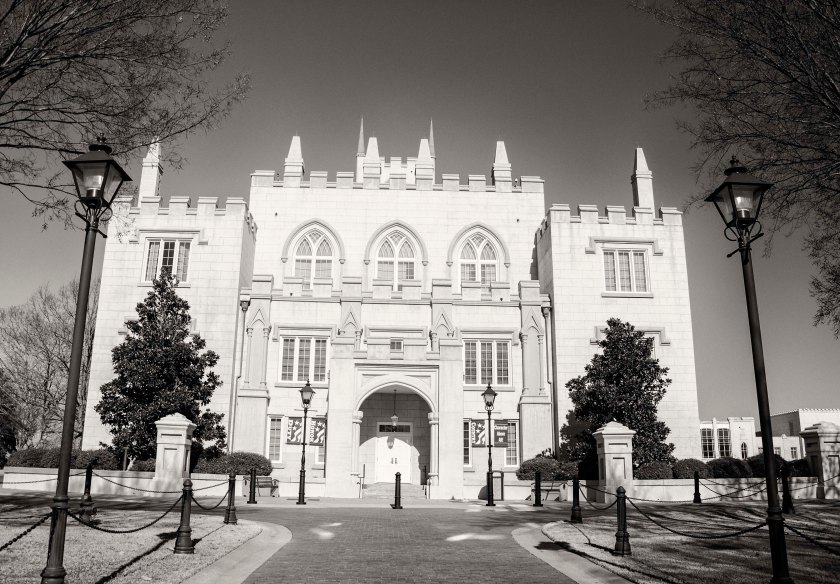
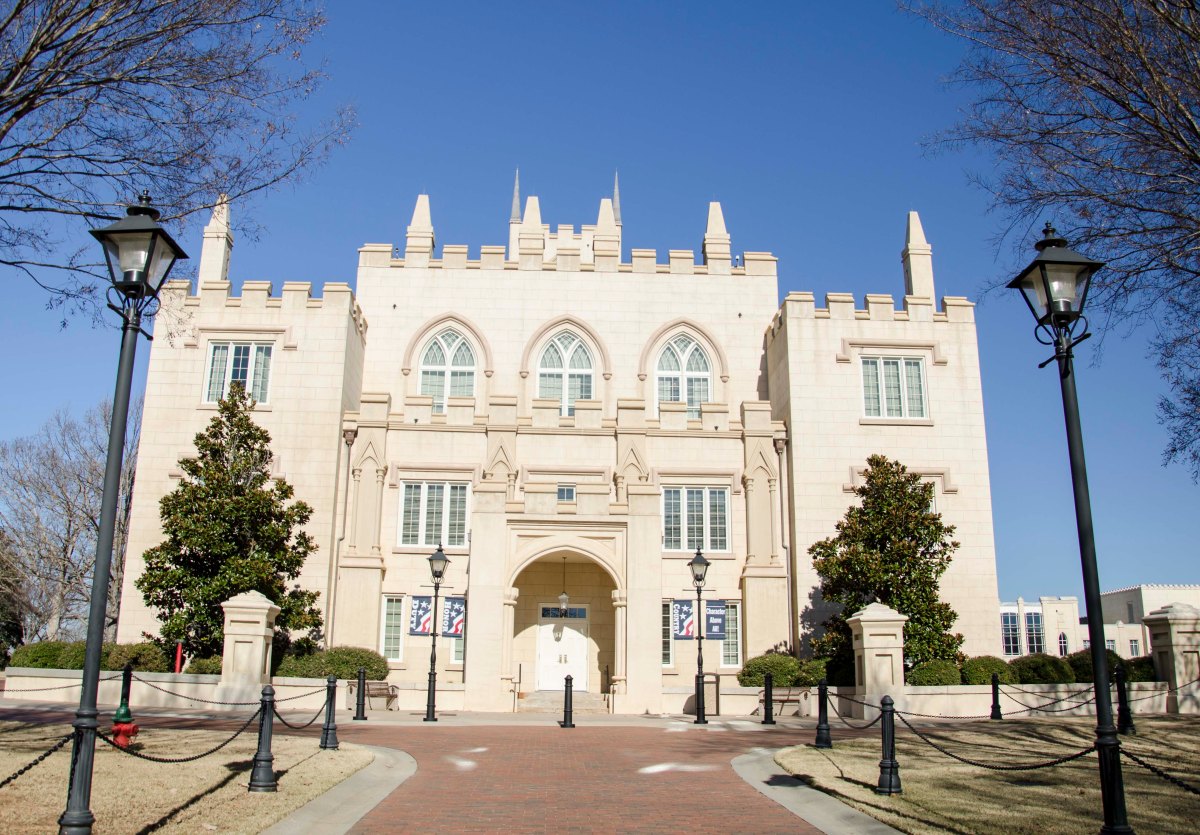
The Georgia’s old Capital building in Milledgeville, was built in 1804 with the first meeting of the legislature happening in 1807.  It was here that Federal troops of Sherman’s Left Wing held a mock congress.
_dsc0475-bw
The old State Capital Building is now part of Georgia Military College.  It houses offices, classrooms and the Old Capital Museum. 
_dsc0500-bw
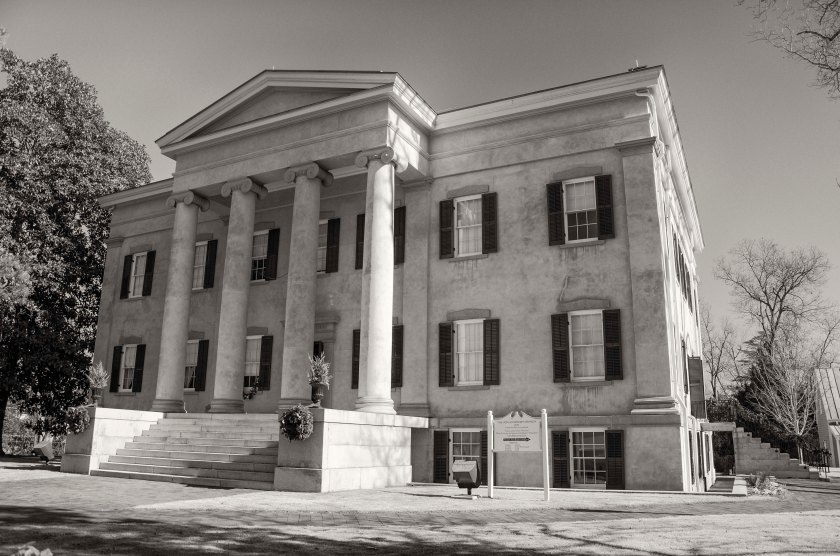
This was the Governor’s Mansion in Milledgeville.  When the Governor escaped from Milledgeville prior to the arrival of the Federals, he made sure to pack everything, including the furniture for his escape.  General Sherman slept here while the Federals were in town.
_dsc0178-bw
The Oconee River at Ball’s Ferry.  The Federals of the Right Wing arrived here on the 23rd and found the Ferry on the east(right side) bank of the river under a Confederate Guard.  The Federals attempted to cross the river up stream and were able to push the Confederates back for a short time.  The Confederates were reinforced and were then able to drive the Federals back across the river.  By the 25th, the main Federal columns of the Right Wing reached Ball’s Ferry.  They were able to attack the Confederates from the front while another Federal force crossed the river upstream and attacked the Confederate flank forcing a retreat.
_dsc0195-bw
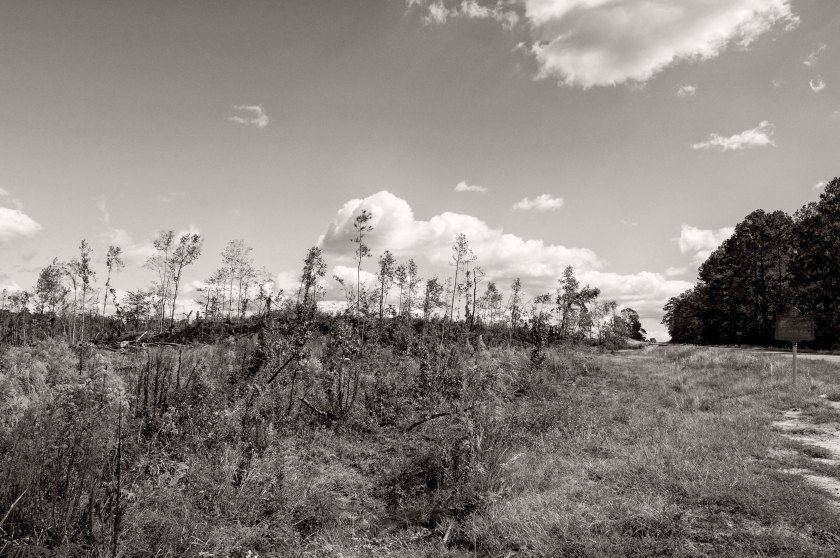
This high ground on the east side of the Oconee River at Ball’s Ferry was once occupied by Confederate forces defending the river crossing.

November 22nd, 1864 The Battle of Griswoldville

November 22, 1864:

The 20th Corps, part of the Sherman’s Left Wing, reached Milledgeville.  They marched into town past unoccupied Confederate earthworks and were completely unopposed.  Mayor R.B. DeGraffenreid surrendered the town and asked for protection from looting and destruction.  Two regiments camped on the state house grounds and acted as the provost.  They also raised the first U.S. Flag over the state house since the start of the war.

The Right Wing fought what is thought to be the largest battle of The March to the Sea at the Battle of Griswoldville.  On the morning of the 22nd, General Hardee dispatched three brigades of Georgia Militia from Macon to August to help defend the city.  Hardee was hoping that the Federal column had already passed and that the militia would be moving behind them and have a clear path to August.  Weather and choked roads, along with delaying actions by Wheelers cavalry, had caused the Right Wing to slow down.  The Militia were under orders to retreat if the encountered any resistance.

General P.J. Phillips was in command of the Militia, after they marched north east from Macon they met up with the 4th Brigade that had marched out the night before.  They told Gen. Phillips about the skirmishing between Wheeler and the Federals.  Phillips also learned that his detachment outnumbered the Federals and decided to disobey his orders and attempt to overrun the Federal position.  They were to attack across open fields that were nearly 700 yards in distance and try to reach a deep ravine about 100 yards from the Federal lines.  The Federals were caught off guard by the attack as it came unexpectedly, but they quickly regrouped and formed up for a fight.

The Militia, made up of old men and young boys, made a concerted, if not confused, effort to attack the Federal position.  Many of the Militia had never seen combat, some fired on their own men by mistake, some even attacked in the wrong direction.  The battle hardened veterans of the Federal army opened up with a withering fire from their position and the bodies of the dead and dying Militia were littering the field.  Yet they still advanced, time and time again under the constant fire of the Federals.  The Militia reached within 50 yards of the Federal line before they finally retreated.  The Militia lost 51 men killed and 472 wounded.  The Federals lost 13 men and only had 79 wounded.

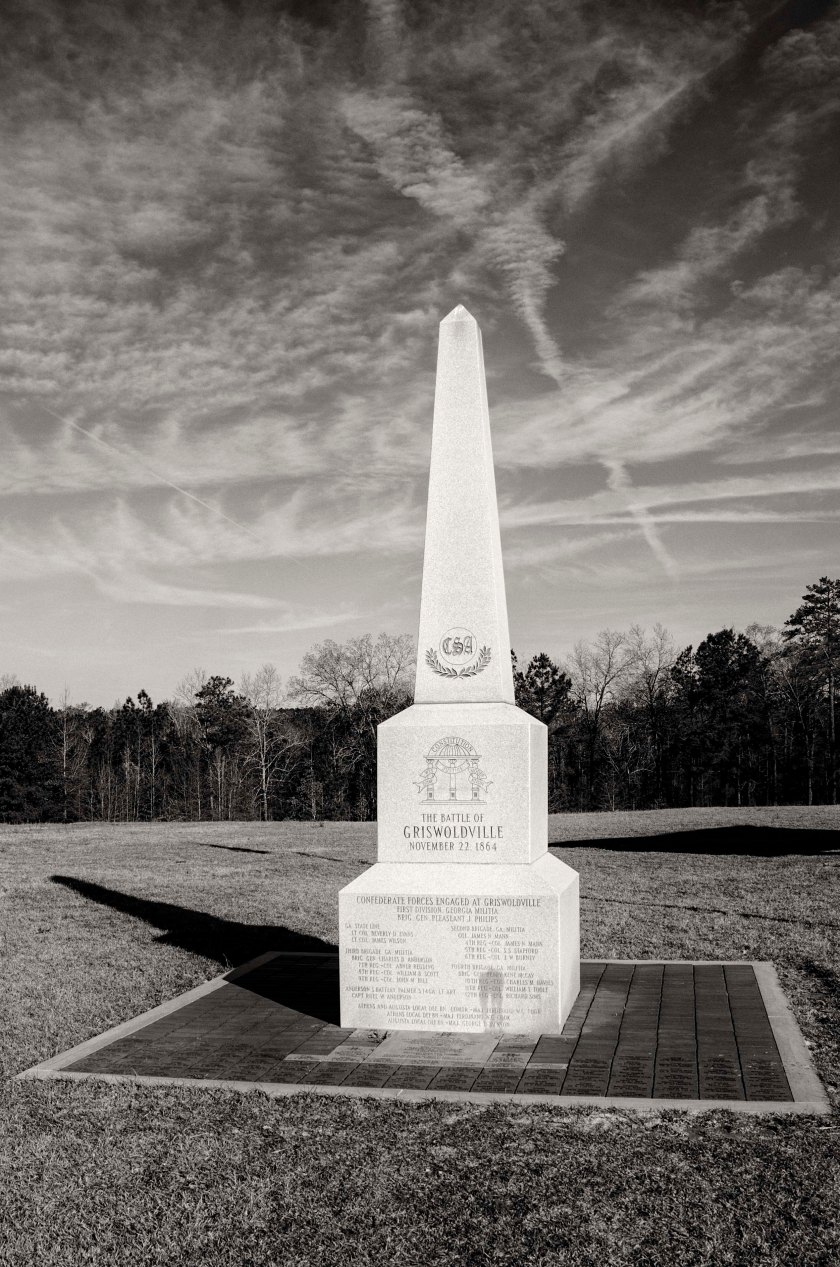
_dsc0023-bw
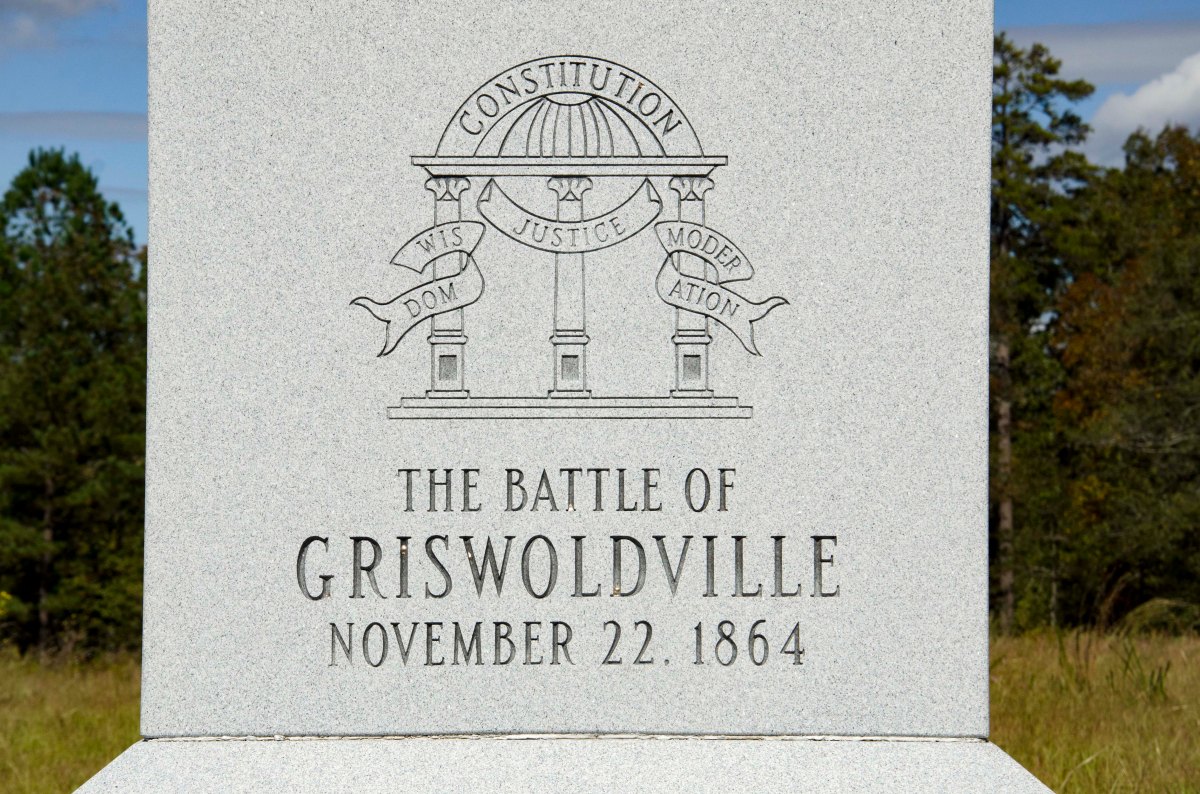
This memorial stands on the Griswoldville Battlefield.  The Federal forces would have been in the tree line stretching north towards the railroad and south, crossing Baker Rd. towards and parallel to Griswoldville Road.
_dsc0166-bw
Federal lines would have been in the tree line in the distance.
_dsc0036-bw
Looking Southwest down Baker Road toward Griswoldville Rd.  The Federal lines would have been behind the camera and the image shows the direction that the Confederate attack came from.
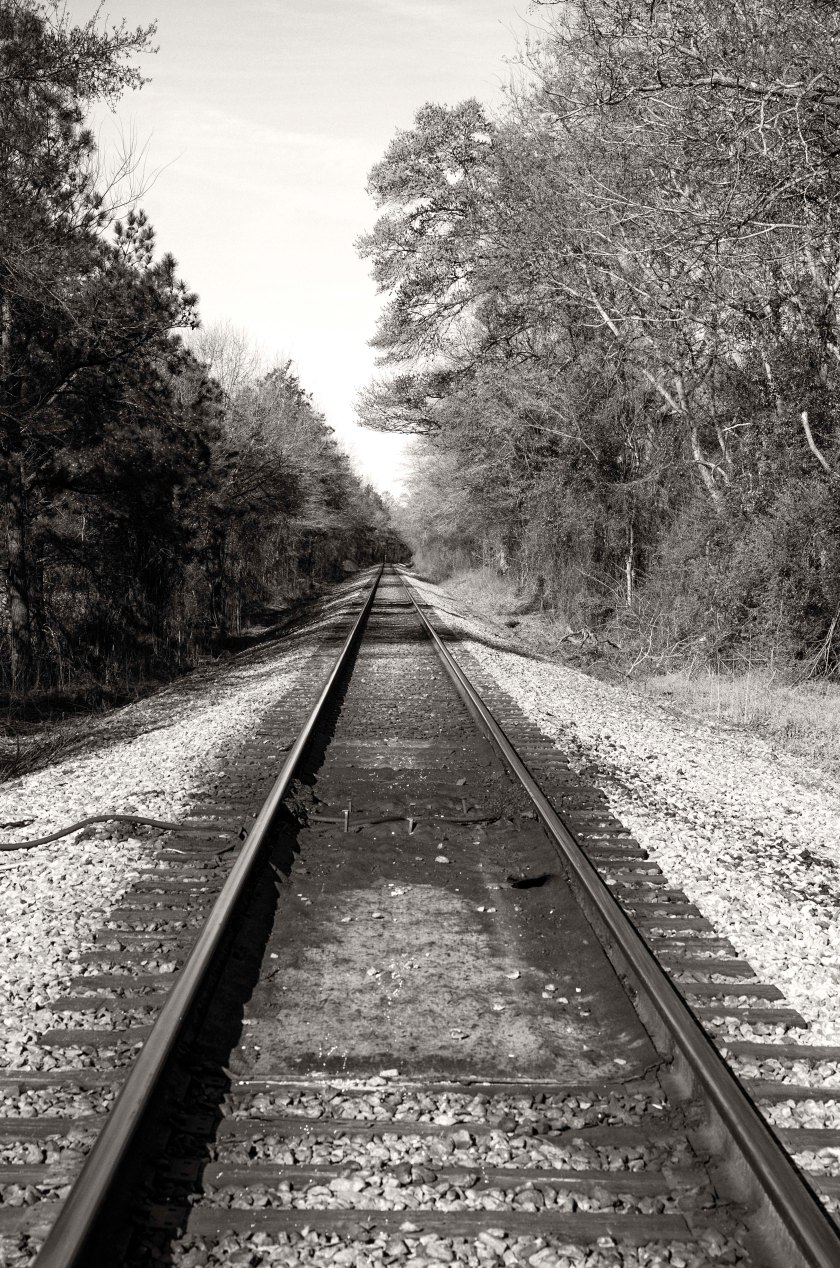
_dsc0042-bw
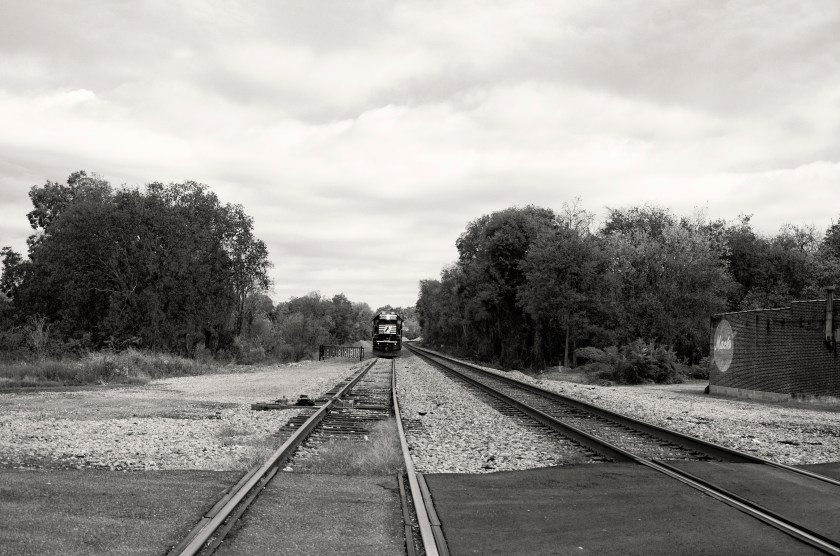
The railroad was a strategic element throughout the war.  It was used to move men and supplies great distances in a short time and it was often a target of destruction.  These tracks are in Griswoldville and connect Macon to Savannah.

November 21st, 1864

November 21, 1864:

Parts of the Right Wing of Sherman’s army pass through Gordon and move on east to Irwinton.  Their column stretches out for miles as they choke the roads.  The Left Wing continues to move closer to Milledgeville.  Sherman remarks in his memoirs that they only made 8 miles on this hard, cold, windy day.  That night an uncommon early season snow storm blanketed the army with snow.  The southern civilians accuse the yankees of bringing the cold weather with them.

General Hardee, in command of the Confederate forces in Georgia, is in Macon where he has been preparing to defend the city.  His scouts have reported that the Federal columns have turned away from Macon and have started on a move eastward.  Hardee now realizes that the Federal objective is most likely Augusta or Savannah.  General Hardee begins to shift his troops as well as Wheeler’s cavalry to the east in an effort to slow down the Federal Advance.

November 19th, 1864

November 19th, 1864:

The 20th Corps, part of the Left Wing, made their way through Social Circle and Rutledge to Madison along the way they destroyed the Railroad and any thing that could be used to support the Confederate war effort.  From Madison, General Geary took a Division to Buckhead, near the Oconee River.  In Buckhead, Geary’s Division burn the Railroad Depot, 500 bales of cotton, and 5000 bushels of corn.  They also burned the Ferry and boats on the river as well as the railroad bridge that was over 400 yards in length.  General Sherman, who was traveling with the 14th Corps of the Left Wing, moved through Shady Dale and Newborn, destroying both as they were working their way towards Milledgeville.  Sherman and the 14th Corps also crossed the Alcovy River during the day. Elements of the Right Wing reach and occupy Clinton.  They camp in and around the town.

_dsc0086-bw_dsc0081-bw_dsc0078-bw_dsc0096-bw

November 18th, 1864

November 18th, 1864:

The Left Wing continues to move towards Milledgeville.  General Sherman is still traveling with the 14th Corps and they turn south from the area of Covington and move towards Milledgeville via Shady Dale.  The 20th Corps moved on Madison where they destroyed the railroad while Geary’s Division was sent to the Oconee River to destroy the bridges crossing it.  After they completed their assignments, the 20th Corps was to move south through Eatonton to link up with the 14th Corps near Milledgeville.  The Right Wing crosses the Ocmulgee River and begin moving south east.  They are working their way toward Monticello and toward Clinton, which is just north east of Macon.

The Federals process of foraging was in full swing.  The “Bummers” as they were often called, would leave the camps in the morning ahead of the main column and move out to the flanks.  Along the flanks they would visit every home and plantation and take their food and livestock.  There are many accounts of the”Bummers” also taking personal items and random keepsakes.  There are even accounts of the soldiers stealing and wearing ladies dresses.  For the most part, if there was more food than the soldiers could carry or use, they would destroy it so it would be of no use to an Confederates that may come around.  The “Bummers” stopped at Jarrell Plantation, now a state historic site, to forage and destroy what they could not carry.  They burned the cotton gin and destroyed 300 bushels of the families wheat, they stole the livestock, and wagons.  They Federal troops also freed all the slaves on the plantation.

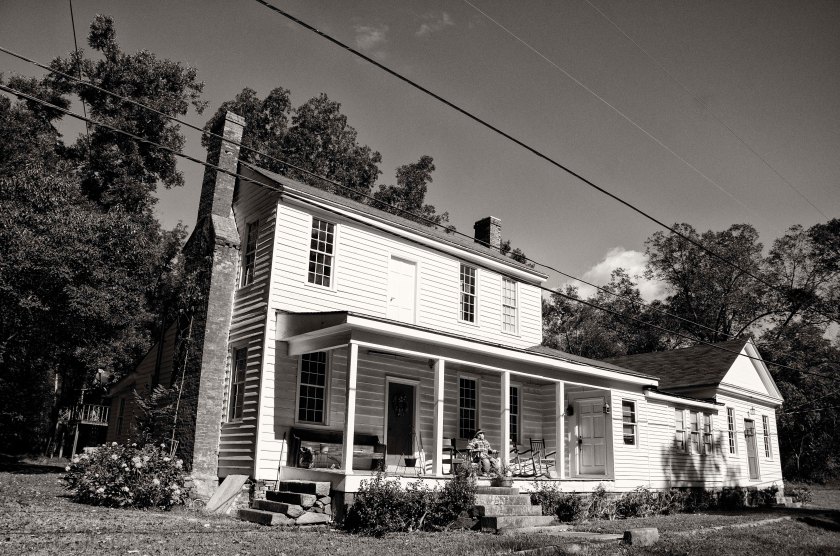
_dsc0013-bw
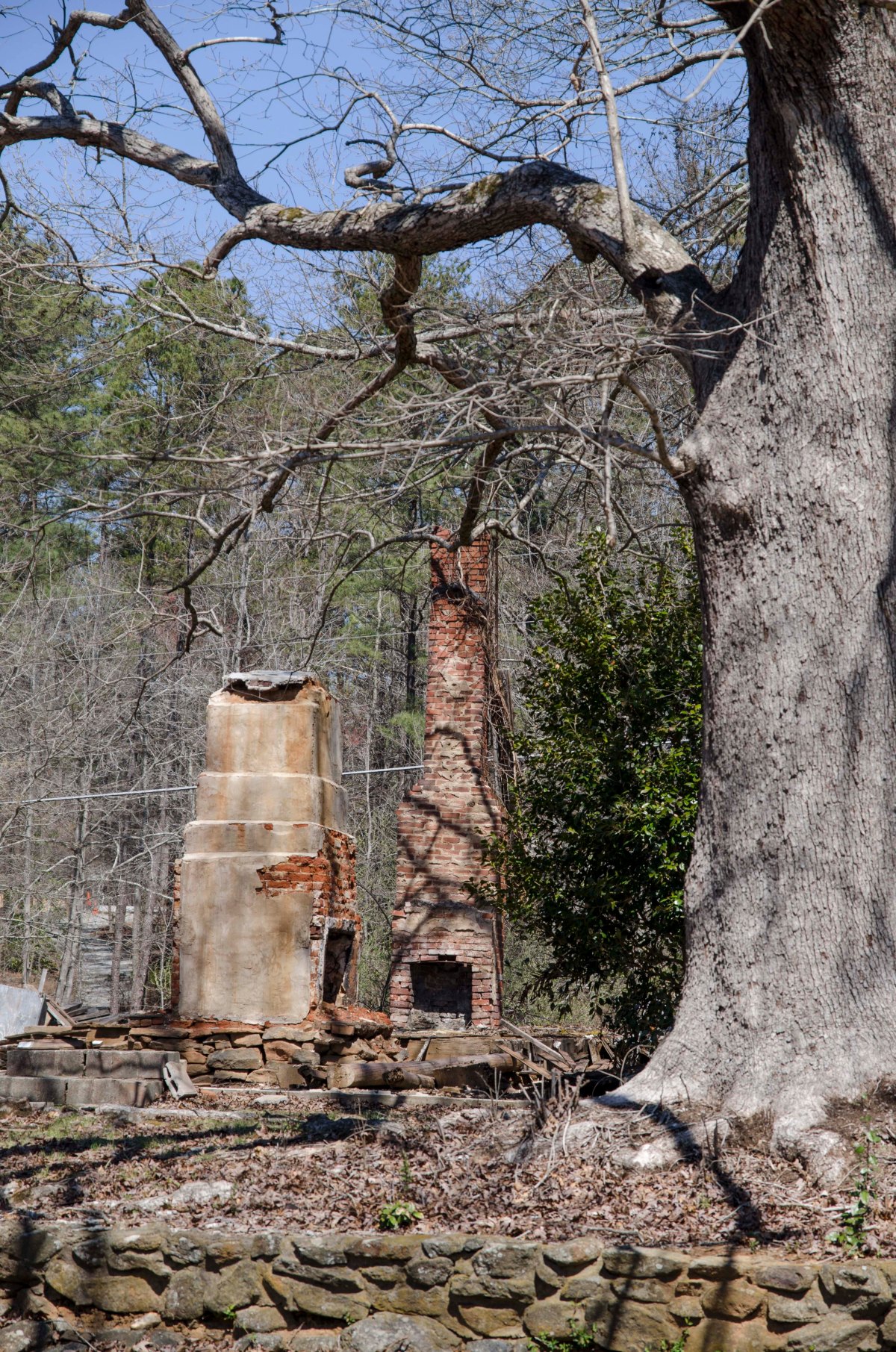
Jarrell Plantation House.  Built in the early 1840’s this home and land belonged to the Jarrell family for 140 years.  When Federal foragers came through they torched the cotton gin, took all the food they could carry, destroyed 300 bushels of wheat, and freed 39 slaves.
_dsc0038-bw
Parts of the Right Wing also passed through the area of Round Oak and past Sunshine Church, where a Federal Cavalry had been engaged with Confederates in a small battle during the summer.
_dsc0041-bw
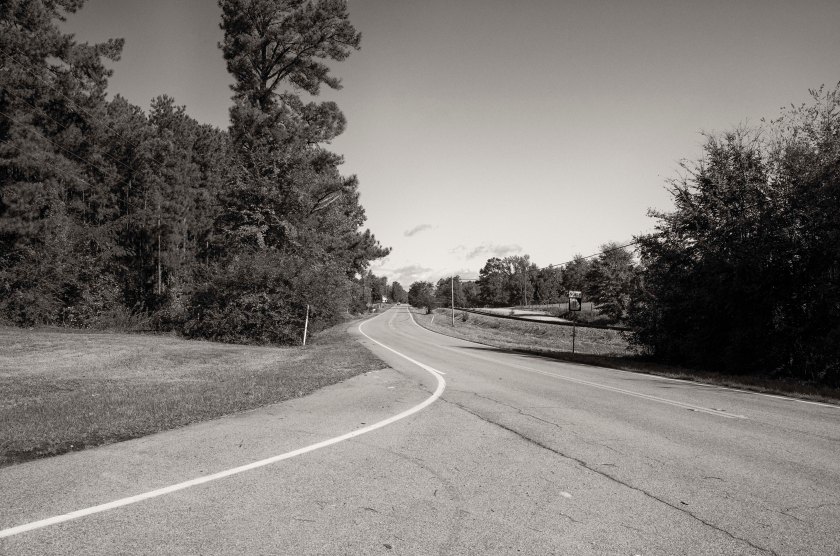
Elements of the Right Wing marched down this road through Round Oak on their way to Clinton.  This is also the spot where, during the Battle of Sunshine Church, the Confederates blocked the road with an artillery piece.

November 17th, 1864

November 17th, 1864:

The Right Wing of Sherman’s forces continue their march south and pass through Jackson, Flovilla, Worthville, and Indian Springs.  General Howard’s forces camped for the night near Jackson and prepared to cross the Ocmulgee River on the following day at Planter’s Ferry in the area known as Seven Islands.

The Left Wing, accompanied by General Sherman, moves through Conyers, Covington, and Social Circle while also crossing the Alcovy River.  While in Covington, the Federal Troops march through the town with their flags waving and their bands playing.  They are greeted with much trepidation from the southerns, but the slaves were joyous in their arrival and began to sing, dance and pray.  They crowed around General Sherman on his horse in great celebration.  Sherman camped for the night by the Ulcofauhachee River about four miles east of Covington.  Here, Sherman met an elderly slave and engaged him in conversation.  He asked the old man to spread the word to others to not follow the army as it would hamper their movements and burden them with more mouths to feed and people to care for.  He also said that the army would hire young and strong men to work for the army along the way as pioneers and some as teamsters and cooks.  Sherman told the old man he would not be successful in his mission if he was encumbered by masses of freed slaves as he attempted to move through the country and fight the Confederates.  The old man agreed and began to spread the word.  During the March to the Sea, many freed slaves did follow the army, but not nearly as many as could have.

On this day, Confederate President Jefferson Davis, appointed General William Hardee to command all the Confederate forces in Georgia.  Confederate Cavalry General Joseph Wheeler had made his Headquarters in Griffin and on the 17th, he ordered his men to place pickets on all the roads to Macon, Columbus and Augusta.  Wheeler and his men were to harass and slowdown Sherman’s Army as much as possible.

On the morning of the 17th, the Federal Cavalry under the command of General Kilpatrick, moved from Hampton towards Griffin and Forsyth.  The threat was really a feint to distract Wheeler, but was enough of a threat to cause Wheeler to burn the bridge over the Towaliga River and start a small firefight.
November 13th, 1864

November 13th, 1864

Sherman and his staff continue on toward Atlanta.  They move south from Allatoona and passed through Acworth.  All but a few homes in Acworth were destroyed.  Major Connolly described it as “a heap of ruins”.  Many officers were unable to or perhaps unwilling to stop the destructive and plundering nature of the soldiers under their command.  As Sherman and his staff approached Marietta, they passed through some of the earthworks that had been abandoned during the summer.  As they traveled they were able to see large, black columns of smoke coming form Marietta.  General Kilpatrick and his cavalry were in the town.  Guards had been posted to prevent Arson and looting, but were not able to do so and some officers were greatly disturbed by the unauthorized burning of the town.  While in Marietta, Sherman reviewed General Kilpatrick’s command.  He rode past and reviewed 5000 cavalry and at the end he took up a position to watch as they all road past cheering their General.  The business district of the town around the square had been burned and destroyed.


_dsc0142-bw
Much of Acworth was destroyed by the time Sherman made his way through and as the last trains passed through the tracks were rendered useless.
_cmb0005-bw
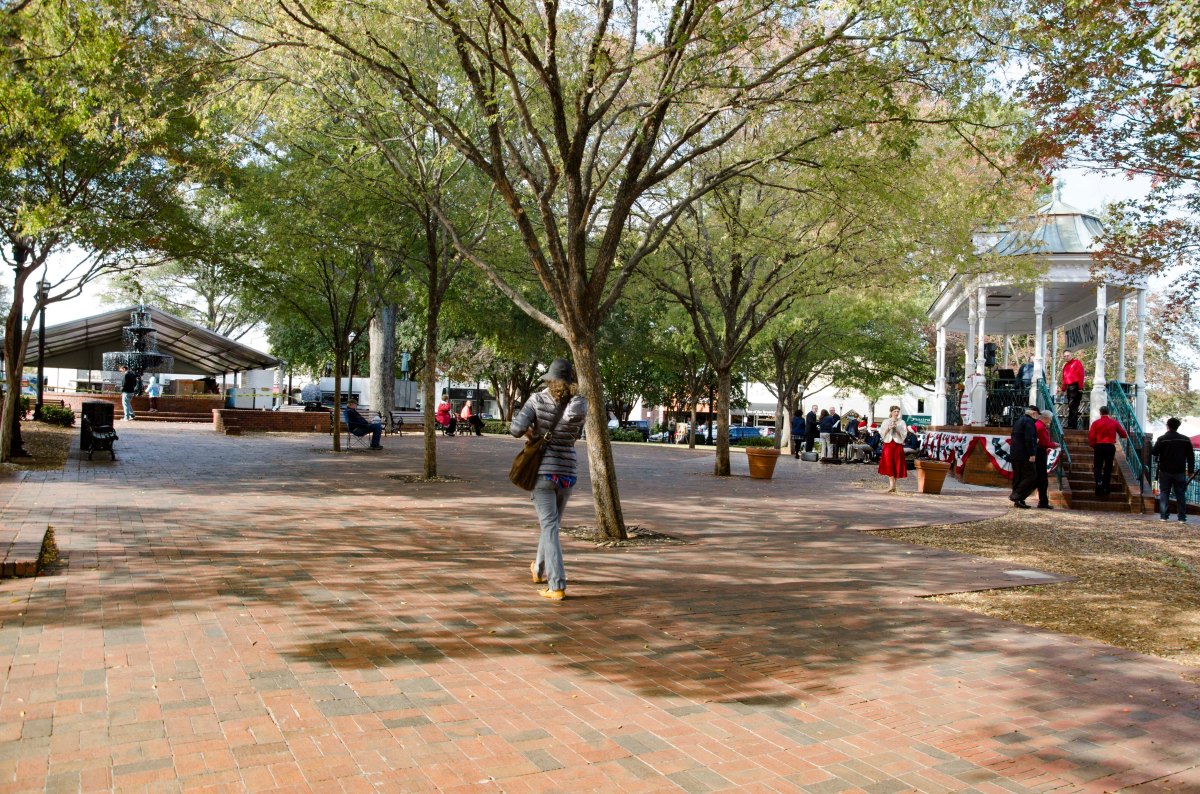
The Marietta Square saw a great deal of action during the civil war.  As Sherman’s troops were preparing to leave, some of them began burning the town.  Only a few period buildings remain.
_cmb0008-bw
Marietta has grown into a large suburb of Atlanta and is known for hosting special events on the town square.
_cmb0029-bw
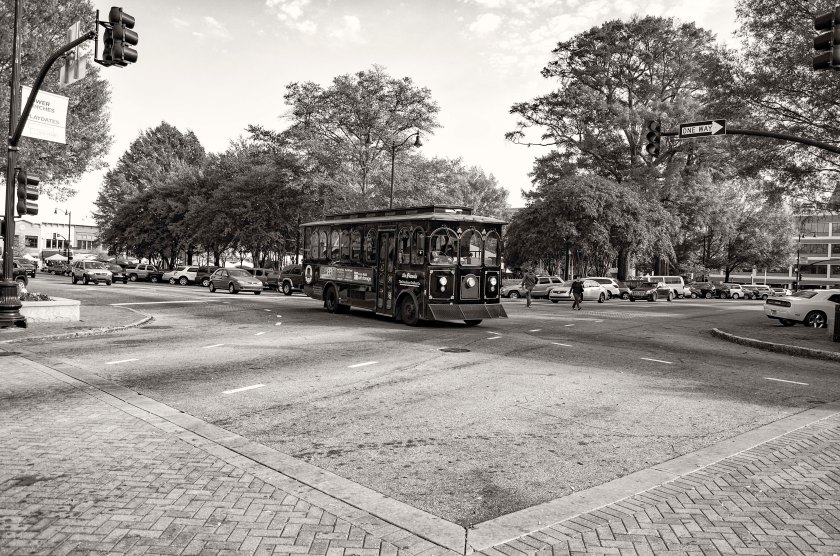
Suburbanites not soldiers now fill the streets as they shop at the Saturday morning Farmers Market.
_cmb0034-bw
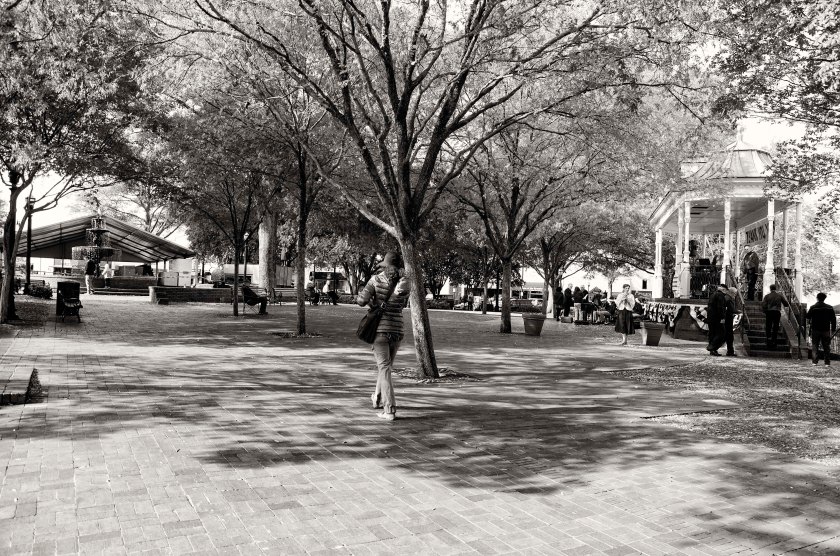
The Marietta Museum of History in the historic Kennesaw House, is one of the few surviving period structures in the downtown business district.  At one time it functioned as a hotel and several of Andrew’s Raiders stayed here before stealing a train.  During the later part of the war, it functioned as a hospital for soldiers of both sides.
November 12th 1864

November 12th, 1864

General Sherman and his staff departed from Kingston on the morning of the 12th and began their journey to Atlanta.  They reached  Cartersville around noon where they sat on a porch at the telegraph operators office to rest.  Sherman received a dispatch from General Thomas in Nashville.  Sherman replied with “Dispatch received-all right”.  As Sherman ended his message the telegraph line linking him to Chattanooga and the remainder of the Federal Army, was cut.  Sherman and his forces were now cut off and on their own until they reached the coast.  Just below Cartersville they stopped to watched the last trains cross the bridge over the Etowah River, and then crossed the river and continued south.  They traveled about 20 miles for the day and camped near Allatoona.

The Federal troops in the outpost there had been protecting and garrisoning locations throughout North Georgia, were ordered to march toward Atlanta as quickly as possible and to destroy the railroad and make the country “untenable” for the enemy.  Bridges, mills, homes, barns, and other buildings were burned and food as well as livestock were taken.  What they could not carry, they destroyed.

_DSC0240.bw
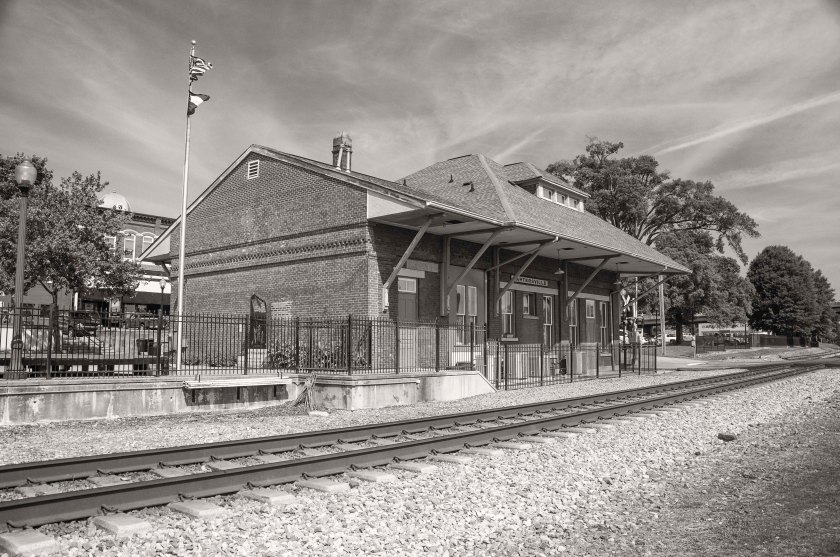
The train depot of Cartersville was mostly destroyed during the Atlanta Campaign of the summer.  General Sherman stopped near here on his way to Atlanta from Kingston to send his final telegraph before the lines were cut.
_DSC0397.bw
The original railroad bridge crossed the Etowah River here and it is where General Sherman watched the last trains cross the river before the bridge was destroyed.
_DSC0003
Original pillars of the railroad bridge across the Etowah River.

November 10th, 1864

November 10th, 1864

General Sherman sent word via telegraph to General Corse, who was in command of the garrison at Rome.  Corse, who had distinguished himself in early October at the Battle of Allatoona Pass, was to begin destroying anything in Rome that had or could have military value to the Confederates.  The most important items of military value were the Noble Foundry and the Rail Road.  The Foundry was destroyed with explosive charges and the remainder of the majority of the city was put to the torch.  While many buildings were not designated as being of military value, some were set on fire by over zealous soldiers and others burned because of their proximity to military targets.  By morning there were very few buildings still standing.  The ones that survived were isolated from the main part of town that burned.  The Federals destroyed two train depots and a warehouse as well as a livery stable still containing horses.  As Corse and his men moved south to rendezvous with the remainder of Sherman’s Army, they began to destroy the railroad.

In Atlanta, Sherman’s Chief Engineer, Capt. Orlando Poe, was busy at work destroying anything of military value and was focusing much attention on the railroad and its related facilities.  Poe had built a battering ram with an iron bar that was just over 21 feet long and suspended from a ten foot tall wooden suspension system.  This was used to destroy the round house and depot.  Some buildings were also rigged with explosives to be set off upon their departure.  In five days, as the Federals leave Atlanta, it will be nothing more that a smoldering ruin.

_cmb0132-bw
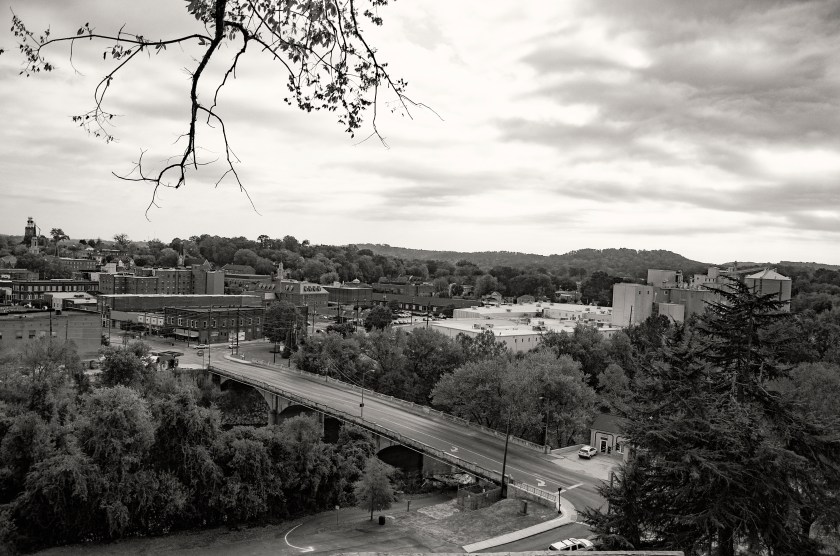
Downtown Rome, Georgia.  Noble Foundry, which produced arms, including cannons, once stood on the site of what is now Southeaster Mills.  Here at First St. and Broad St.  In this image the Broad Street bridge crosses the Etowah River and the factory to the right is former location of Noble Foundry.  Taken from the top of the hill at Myrtle Hill Cemetery near the Confederate Monument.
_cmb0066-bw
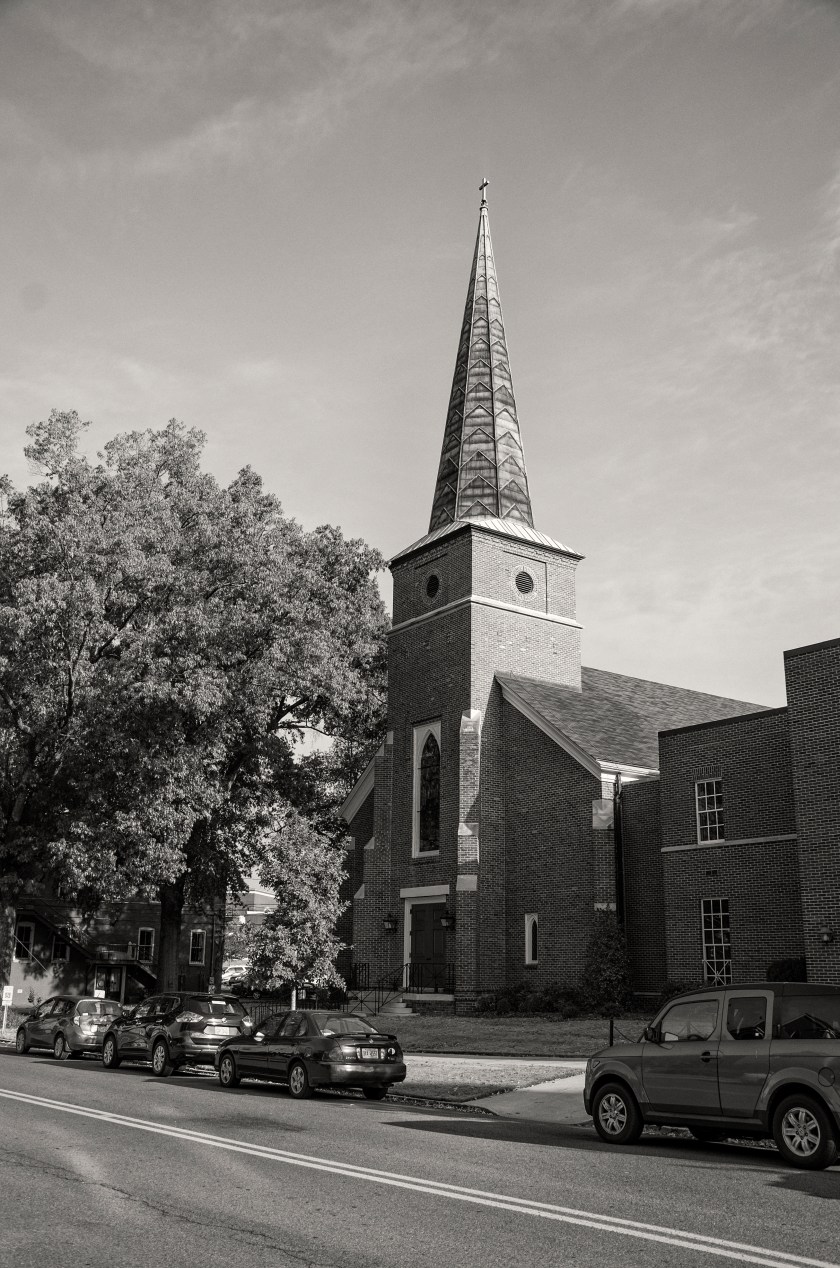
The First Presbyterian Church of Rome is one of the few remaining period structures from the Civil War in Rome.  It was used by the Federal occupation forces as a warehouse for food and supplies.  Federal troops also poured molasses down the organ pipes and removed the pews to build horse stalls.
_cmb0082-bw
Remains of some earthworks at Fort Norton, which sits upon Civic Center Hill in Rome and is part of a city park with walking trails.  This fort was one of three forts used to protect Rome and manufacturing facilities from the Federals. 
_cmb0094-bw
Remnants of earthworks at Fort Norton, Rome Ga.
_cmb0168-bw
The railroad the lead from Rome through Kingston to Cartersville.  General Corse used this railroad to reinforce Allatoona Pass in October of 1864.  As the order was given to abandon Rome, the Federals destroyed most of the city and as they marched east to link up with other Federal forces to move towards Atlanta, they destroyed as much of the railroad as possible.


November 9th, 1864

November 9th, 1864

After playing cat and mouse with General Hood in North Georgia during October, General Sherman stopped the chase and established his headquarters in Kingston Ga.  From here, he was in a position to lash out at Hood if he reentered North Georgia, and he could also direct and finalize the logistical components of his March to the Sea.

Sherman had ordered the removal of all civilians in Atlanta and had also directed that all military personnel not going on the March to the Sea, should return to Chattanooga and other parts north.  Civilians not wanting to travel north, were transported to Rough and Ready where they were transferred through to the Confederate lines.  Sherman also ordered all the excess equipment and unnecessary war material to be sent back to the Federal lines in the north and that anything that could be of any possible military value to the Confederates was to be rendered useless and destroyed.  Once the last train had left Atlanta, the railroad was to be destroyed as well as the telegraph lines.  This would completely cut off General Sherman from any support until he reached the coast and could be resupplied by the Federal Navy.

_cmb0023-bw
The Kingston Museum houses artifacts from the early years of the town and from the Civil War.
_cmb0032-bw
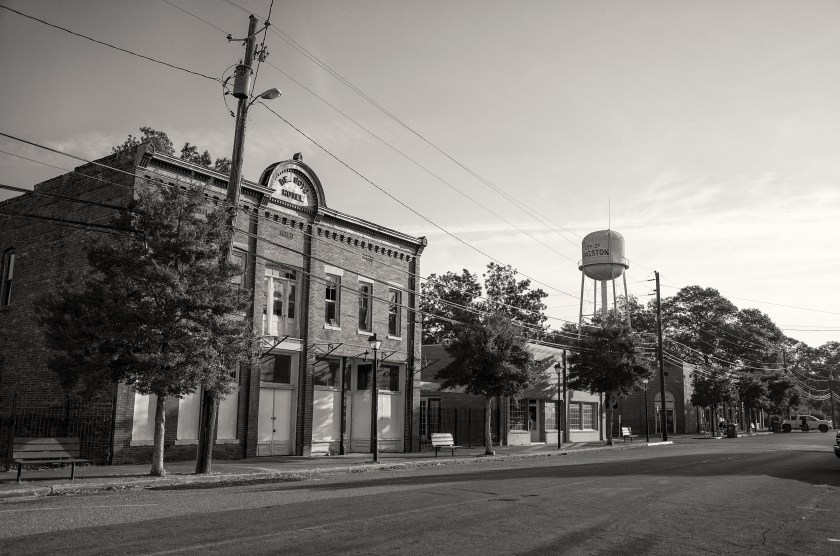
Downtown Kingston is mostly empty now, with only a few businesses operating and many buildings boarded up.
_cmb0049-bw
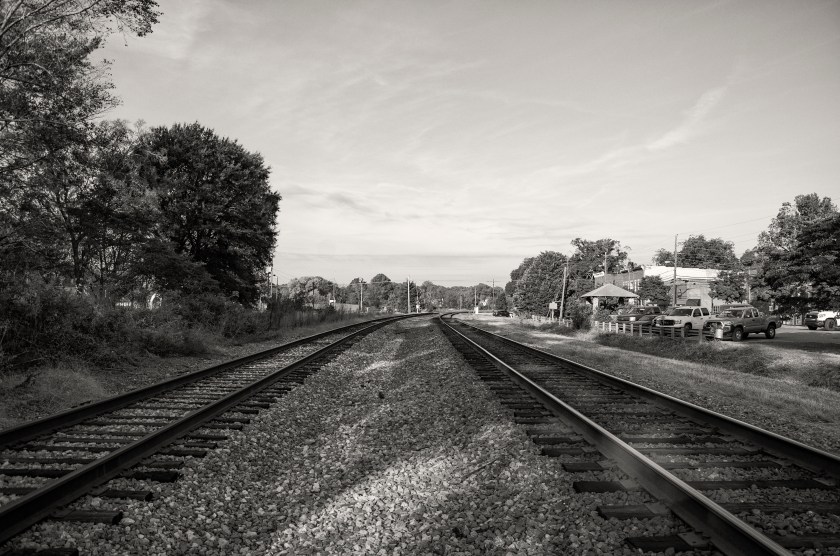
Looking west along the railroad tracks through Kingston towards Rome, Ga.  These tracks were an important supply route and were also the route General Corse took as he went to reinforce the fort at Allatooan Pass.
_cmb0018-bw
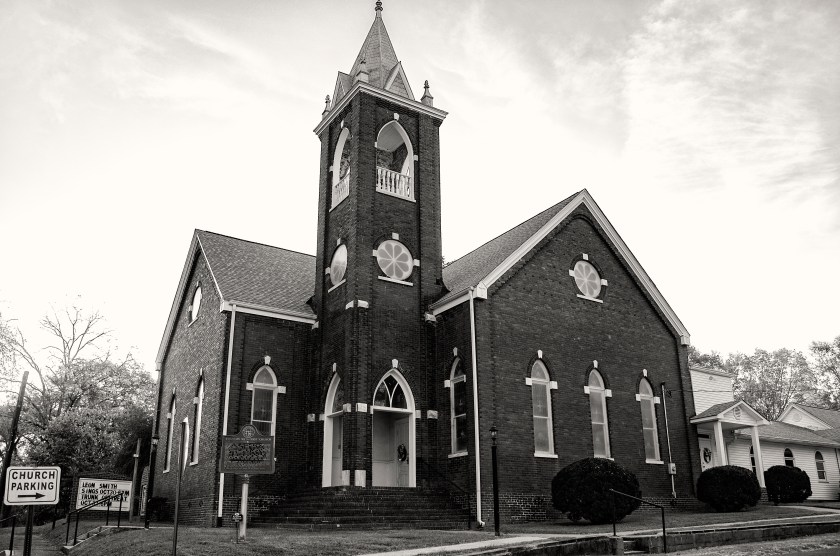
The Kingston Methodist Church is the only Church in Kingston to have survived the burning of the town in November of 1864.  After the Federal Army had left for their March to the Sea, the Church was open to all denominations as a house of worship, which fostered a great sense of community within the towns people.