With the City of Atlanta a still smoldering ruin, General Sherman and his staff, along with the 14th Corps, moved east out of the city towards Decatur. The right wing’s rear guard moved out towards Jonesboro to catchup with the rest of their wing. General Sherman and his staff left their headquarters at the Lyon’s house around 7:00am. The Lyon’s house was located where the current Atlanta City Hall now sits. As they moved east the day was bright, clear and crisp. The roads to the east were crowded with the soldiers and wagons of the 14th Corps. Sherman and his staff made their way to Lithonia, near the Yellow River, where they camped for the night. Along the way, Sherman’s Soldiers, destroyed the railroad by burning the cross ties and bending the rails around trees and telegraph poles.
The right wing of the army continues to make their way south. They pass through Jonesboro where they had fought a serious engagement in September, and then passed through Love Joy’s Station and Stockbridge. They Stop near McDonough for the night.
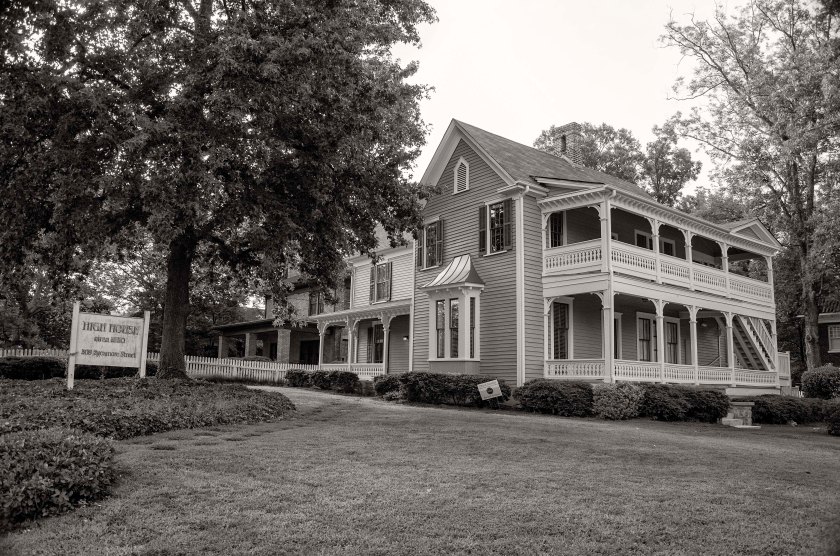
Atlanta City Hall now stands where the Lyon’s House once stood. General Sherman had made the Lyon’s House his headquarters while in town and on the morning of the 16th, Sherman and his staff departed for Savannah.The historic High House in Decatur was built around 1830 and was the first two story home in Decatur. Local legend holds that General Sherman stopped here with his staff to water their horses after leaving Atlanta with the remaining elements of the Left Wing on the morning of the 16th.The Right Wing of Sherman’s Army continued to move south through Jonesboro while their rear guard was leaving Atlanta.After moving through Jonesboro, the Right Wing moved through Love Joy’s Station and made camp near present day McDonough.
The March to the Sea began this morning. The right wing and Kilpatirck’s cavalry move southeast along the railroad towards Jonesboro. Slocum’s 20th Corps, part of the left wing, moved east toward Decatur and Stone Mountain. Sherman, along with the remainder of the left wing and the rear guard of the right wing, stayed in Atlanta. Sherman supervised the last details of loading the wagon trains and the final destruction of Atlanta. In the late afternoon of the 15th the orders were given and the torch was put to Atlanta. An enormous fire soon erupted and began to consume the city. Artillery shells and other explosives had been placed in some structures and as the fire raged, they began to explode, sending debris and shell fragments through the air in all directions. Some soldiers remarked that they could not sleep because the light from the fire was too bright. Sherman remarked to a staffer that he thought the fire could possibly be seen as far away as Griffin, nearly 40 miles away.
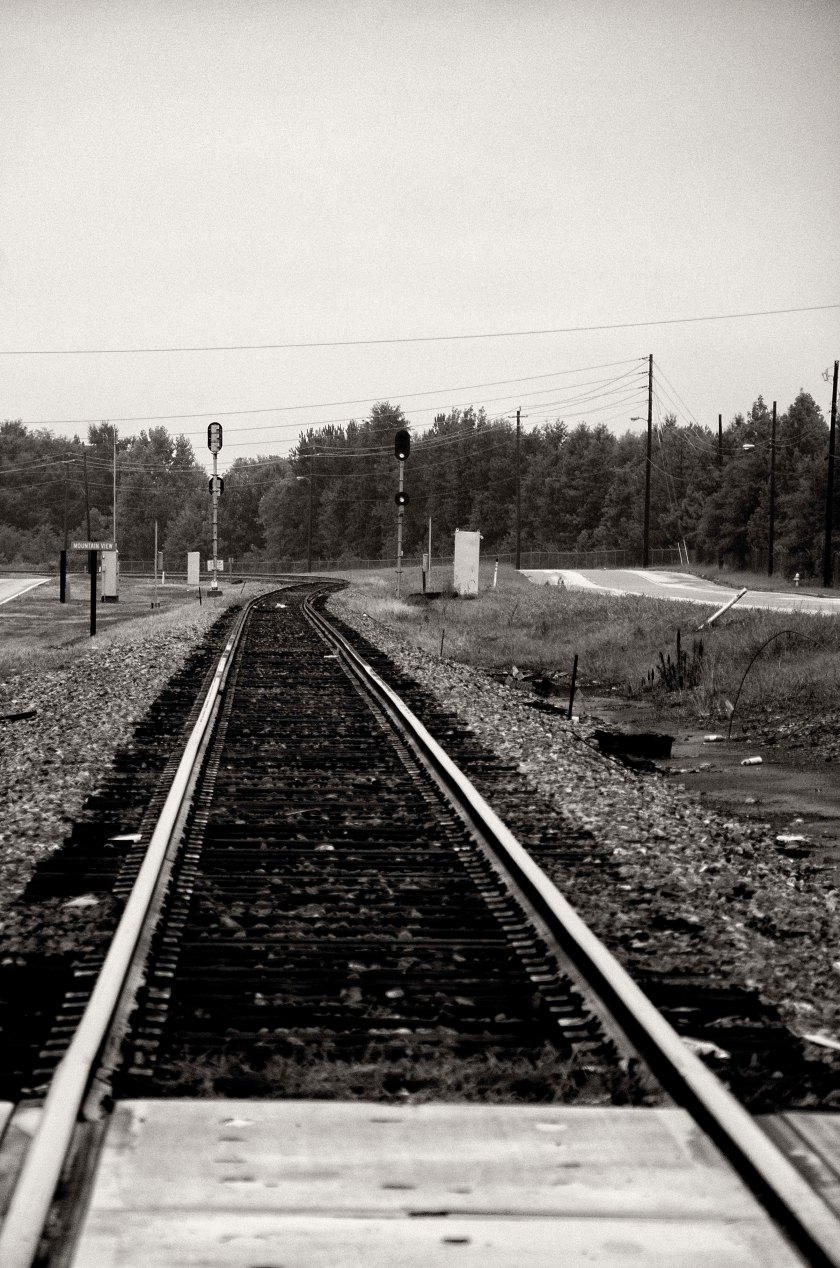
The railroad at Rough and Ready. The Right Wing of Sherman’s Army moved south along the railroad towards Jonesboro.After giving the order to put the torch to Atlanta, the Left Wing of Sherman’s Army moves towards Decatur.
General Sherman and his staff moved south from Marietta, towards Atlanta. Along the way the roads were nearly impassable due to the numbers of soldiers marching south to the city. The railroad had been completely destroyed. They pulled up the rails and then made fires with the cross ties. The rails were placed onto of the fires and the rails were heated red hot and then bent or twisted into an unusable shape. Sherman and his staff crossed the Chattahoochee River on a wagon bridge near the railroad bridge that had been destroyed earlier in the day. When General Sherman reached Atlanta, he established his headquarters at the Lyons House.
By the end of the day, nearly all of Sherman’s army was in or on the outskirts of Atlanta. They had been organized into two different wings. The Left Wing and the Right Wing. The Right Wing was commanded by Major General O.O. Howard and was composed of the 15th Corps, commanded by Major General P.J. Osterhaus, and the 17th Corps, commanded by Major General F. P. Blair. The left wing was under the command of Major General H. W. Slocum and was composed of the 14th Corps, commanded by Major General Jefferson C. Davis (not to be confused with Confederate President Jefferson Davis) and the 20th Corps under the command of Brigadier General A. S. Williams. Brigadier General Judson Kilpatrick was in command of a Cavalry Division that was to operate as a separate unit operating independently and in support of the two wings.
Having sent all the sick and injured, as well as nearly all the non combatants, back north, Sherman fielded an army that consisted of 55,329 infantry, 5,063 Cavalry, 1,812 Artillery. A total of 62,204 soldiers. They carried all they needed with them and were to forage off the surrounding country side. This is such an impressive number of men and material to move in coordination with each other, on foot, horseback and by wagon. Many accounts exist of how well fed everyone was during most of the march due to the region being fairly untouched by the war until now. Some accounts report that by the end of the march in December, that their livestock was in better condition than when they started out from Atlanta.
Sherman and his party moved south from Marietta along what is now South Atlanta Road which changes names to Marietta Blvd. on the south side of the Chattahoochee River. Upon reaching the river, they crossed on a wagon bridge that was next to the destroyed railroad bridge.
Sherman and his staff continue on toward Atlanta. They move south from Allatoona and passed through Acworth. All but a few homes in Acworth were destroyed. Major Connolly described it as “a heap of ruins”. Many officers were unable to or perhaps unwilling to stop the destructive and plundering nature of the soldiers under their command. As Sherman and his staff approached Marietta, they passed through some of the earthworks that had been abandoned during the summer. As they traveled they were able to see large, black columns of smoke coming form Marietta. General Kilpatrick and his cavalry were in the town. Guards had been posted to prevent Arson and looting, but were not able to do so and some officers were greatly disturbed by the unauthorized burning of the town. While in Marietta, Sherman reviewed General Kilpatrick’s command. He rode past and reviewed 5000 cavalry and at the end he took up a position to watch as they all road past cheering their General. The business district of the town around the square had been burned and destroyed.
Much of Acworth was destroyed by the time Sherman made his way through and as the last trains passed through the tracks were rendered useless.The Marietta Square saw a great deal of action during the civil war. As Sherman’s troops were preparing to leave, some of them began burning the town. Only a few period buildings remain.Marietta has grown into a large suburb of Atlanta and is known for hosting special events on the town square.Suburbanites not soldiers now fill the streets as they shop at the Saturday morning Farmers Market.The Marietta Museum of History in the historic Kennesaw House, is one of the few surviving period structures in the downtown business district. At one time it functioned as a hotel and several of Andrew’s Raiders stayed here before stealing a train. During the later part of the war, it functioned as a hospital for soldiers of both sides.
General Sherman and his staff departed from Kingston on the morning of the 12th and began their journey to Atlanta. They reached Cartersville around noon where they sat on a porch at the telegraph operators office to rest. Sherman received a dispatch from General Thomas in Nashville. Sherman replied with “Dispatch received-all right”. As Sherman ended his message the telegraph line linking him to Chattanooga and the remainder of the Federal Army, was cut. Sherman and his forces were now cut off and on their own until they reached the coast. Just below Cartersville they stopped to watched the last trains cross the bridge over the Etowah River, and then crossed the river and continued south. They traveled about 20 miles for the day and camped near Allatoona.
The Federal troops in the outpost there had been protecting and garrisoning locations throughout North Georgia, were ordered to march toward Atlanta as quickly as possible and to destroy the railroad and make the country “untenable” for the enemy. Bridges, mills, homes, barns, and other buildings were burned and food as well as livestock were taken. What they could not carry, they destroyed.
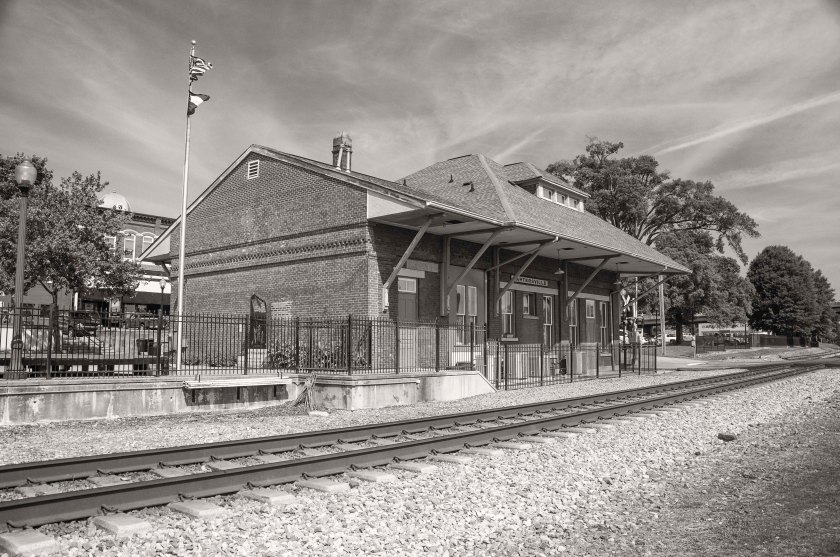
The train depot of Cartersville was mostly destroyed during the Atlanta Campaign of the summer. General Sherman stopped near here on his way to Atlanta from Kingston to send his final telegraph before the lines were cut.The original railroad bridge crossed the Etowah River here and it is where General Sherman watched the last trains cross the river before the bridge was destroyed.Original pillars of the railroad bridge across the Etowah River.
General Sherman sent word via telegraph to General Corse, who was in command of the garrison at Rome. Corse, who had distinguished himself in early October at the Battle of Allatoona Pass, was to begin destroying anything in Rome that had or could have military value to the Confederates. The most important items of military value were the Noble Foundry and the Rail Road. The Foundry was destroyed with explosive charges and the remainder of the majority of the city was put to the torch. While many buildings were not designated as being of military value, some were set on fire by over zealous soldiers and others burned because of their proximity to military targets. By morning there were very few buildings still standing. The ones that survived were isolated from the main part of town that burned. The Federals destroyed two train depots and a warehouse as well as a livery stable still containing horses. As Corse and his men moved south to rendezvous with the remainder of Sherman’s Army, they began to destroy the railroad.
In Atlanta, Sherman’s Chief Engineer, Capt. Orlando Poe, was busy at work destroying anything of military value and was focusing much attention on the railroad and its related facilities. Poe had built a battering ram with an iron bar that was just over 21 feet long and suspended from a ten foot tall wooden suspension system. This was used to destroy the round house and depot. Some buildings were also rigged with explosives to be set off upon their departure. In five days, as the Federals leave Atlanta, it will be nothing more that a smoldering ruin.
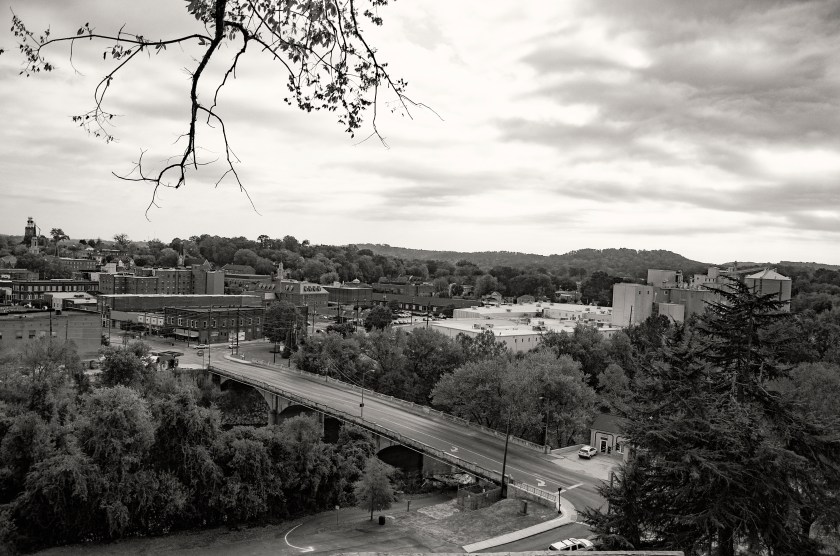
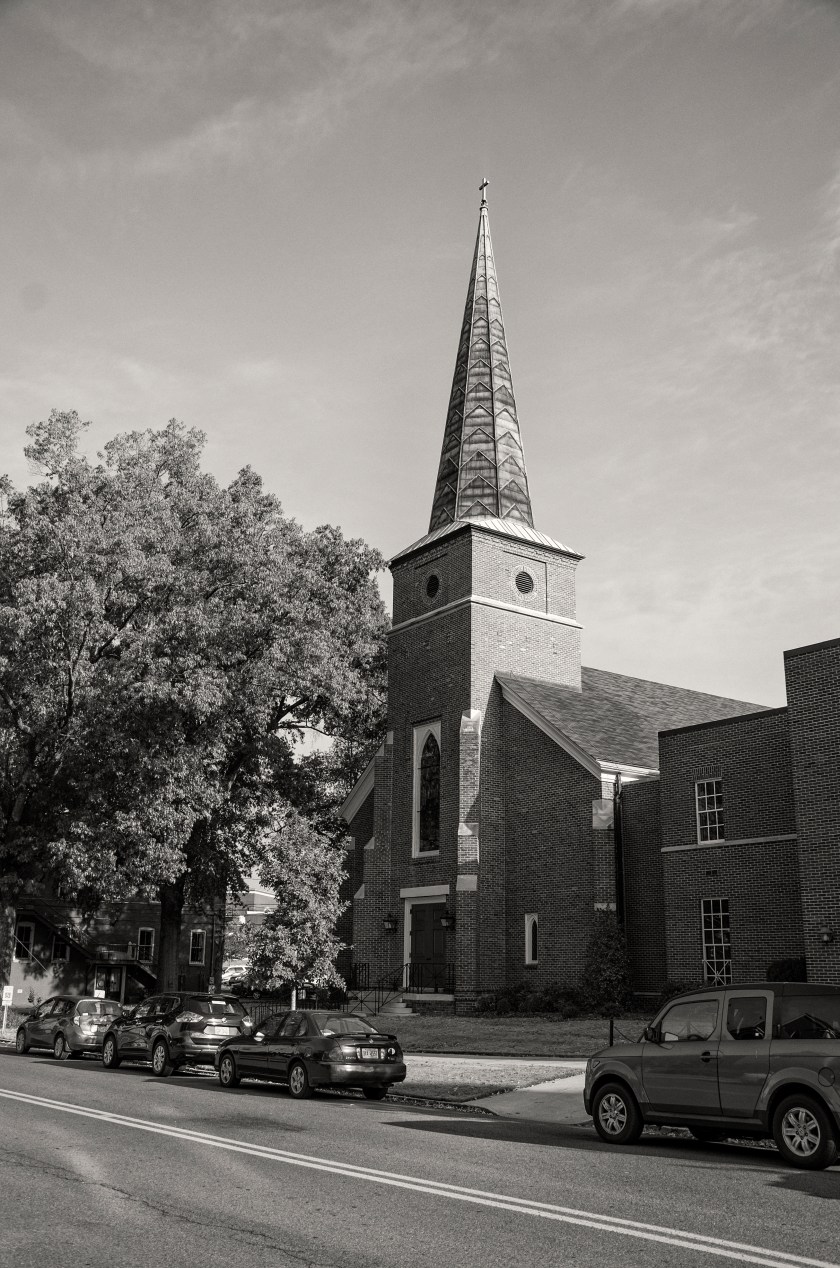
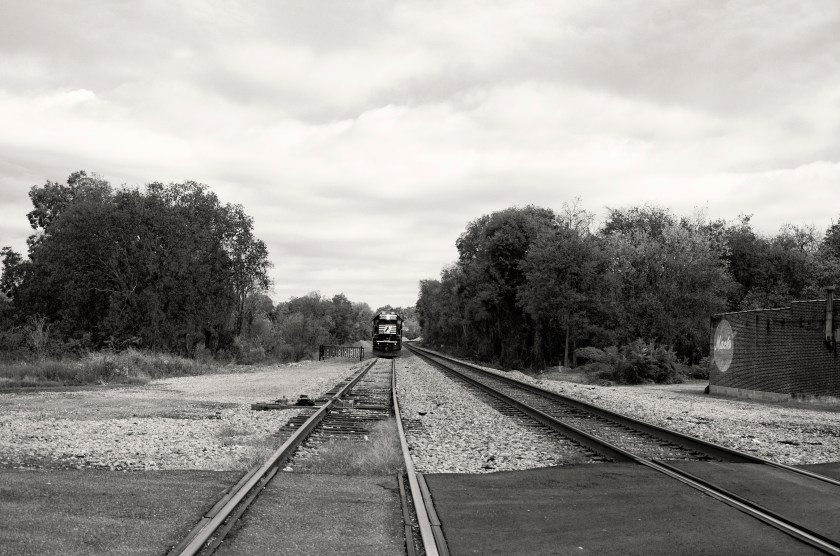
Downtown Rome, Georgia. Noble Foundry, which produced arms, including cannons, once stood on the site of what is now Southeaster Mills. Here at First St. and Broad St. In this image the Broad Street bridge crosses the Etowah River and the factory to the right is former location of Noble Foundry. Taken from the top of the hill at Myrtle Hill Cemetery near the Confederate Monument.The First Presbyterian Church of Rome is one of the few remaining period structures from the Civil War in Rome. It was used by the Federal occupation forces as a warehouse for food and supplies. Federal troops also poured molasses down the organ pipes and removed the pews to build horse stalls.Remains of some earthworks at Fort Norton, which sits upon Civic Center Hill in Rome and is part of a city park with walking trails. This fort was one of three forts used to protect Rome and manufacturing facilities from the Federals. Remnants of earthworks at Fort Norton, Rome Ga.The railroad the lead from Rome through Kingston to Cartersville. General Corse used this railroad to reinforce Allatoona Pass in October of 1864. As the order was given to abandon Rome, the Federals destroyed most of the city and as they marched east to link up with other Federal forces to move towards Atlanta, they destroyed as much of the railroad as possible.
After playing cat and mouse with General Hood in North Georgia during October, General Sherman stopped the chase and established his headquarters in Kingston Ga. From here, he was in a position to lash out at Hood if he reentered North Georgia, and he could also direct and finalize the logistical components of his March to the Sea.
Sherman had ordered the removal of all civilians in Atlanta and had also directed that all military personnel not going on the March to the Sea, should return to Chattanooga and other parts north. Civilians not wanting to travel north, were transported to Rough and Ready where they were transferred through to the Confederate lines. Sherman also ordered all the excess equipment and unnecessary war material to be sent back to the Federal lines in the north and that anything that could be of any possible military value to the Confederates was to be rendered useless and destroyed. Once the last train had left Atlanta, the railroad was to be destroyed as well as the telegraph lines. This would completely cut off General Sherman from any support until he reached the coast and could be resupplied by the Federal Navy.
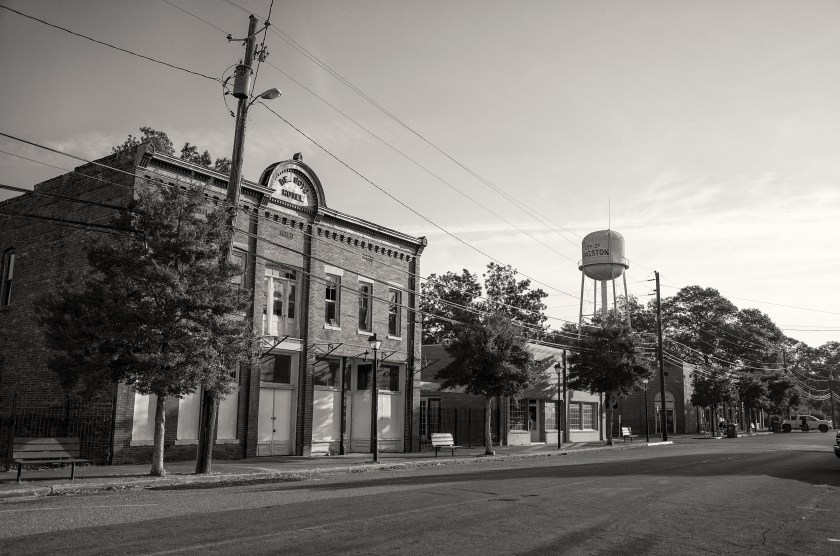
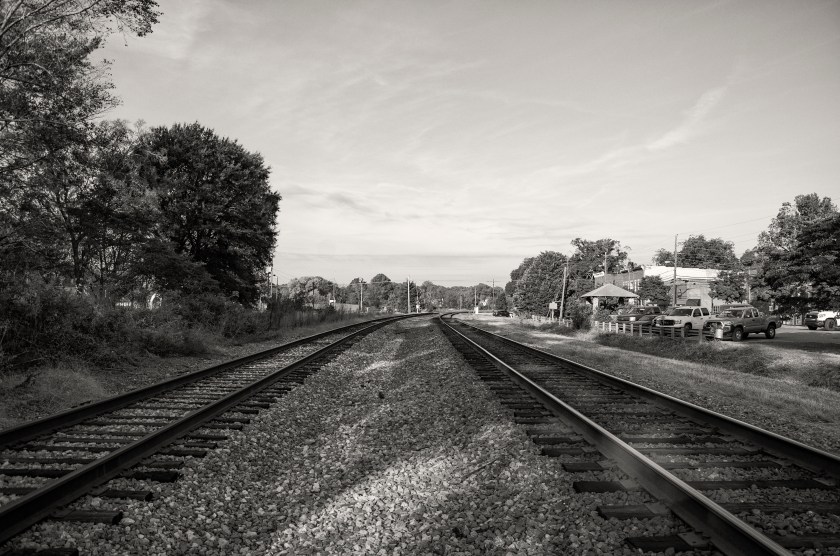
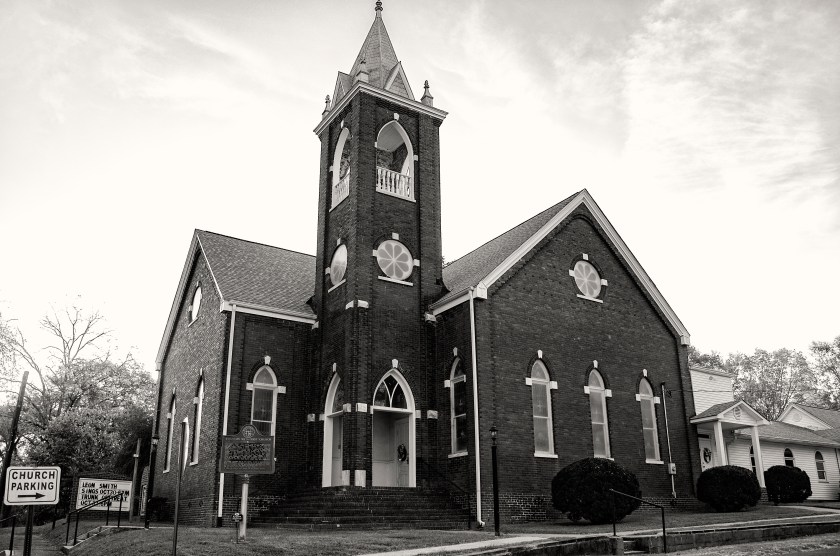
The Kingston Museum houses artifacts from the early years of the town and from the Civil War.Downtown Kingston is mostly empty now, with only a few businesses operating and many buildings boarded up.Looking west along the railroad tracks through Kingston towards Rome, Ga. These tracks were an important supply route and were also the route General Corse took as he went to reinforce the fort at Allatooan Pass.The Kingston Methodist Church is the only Church in Kingston to have survived the burning of the town in November of 1864. After the Federal Army had left for their March to the Sea, the Church was open to all denominations as a house of worship, which fostered a great sense of community within the towns people.














 War Was Here