Heavy skirmishing continued along the Lost Mountain, Mud Creek, Brushy Mountain Line. Heavy engagements happened in the area of Latimer’s Farm, now the Marietta Country Club. Calvary actions were also happening continuously on both flanks. General Johnston begins planning to move to his next defensive position at Kennesaw Mountain. General Sherman, who has become frustrated, begins to contemplate a direct assault on the Confederate lines as opposed to a flanking movement.
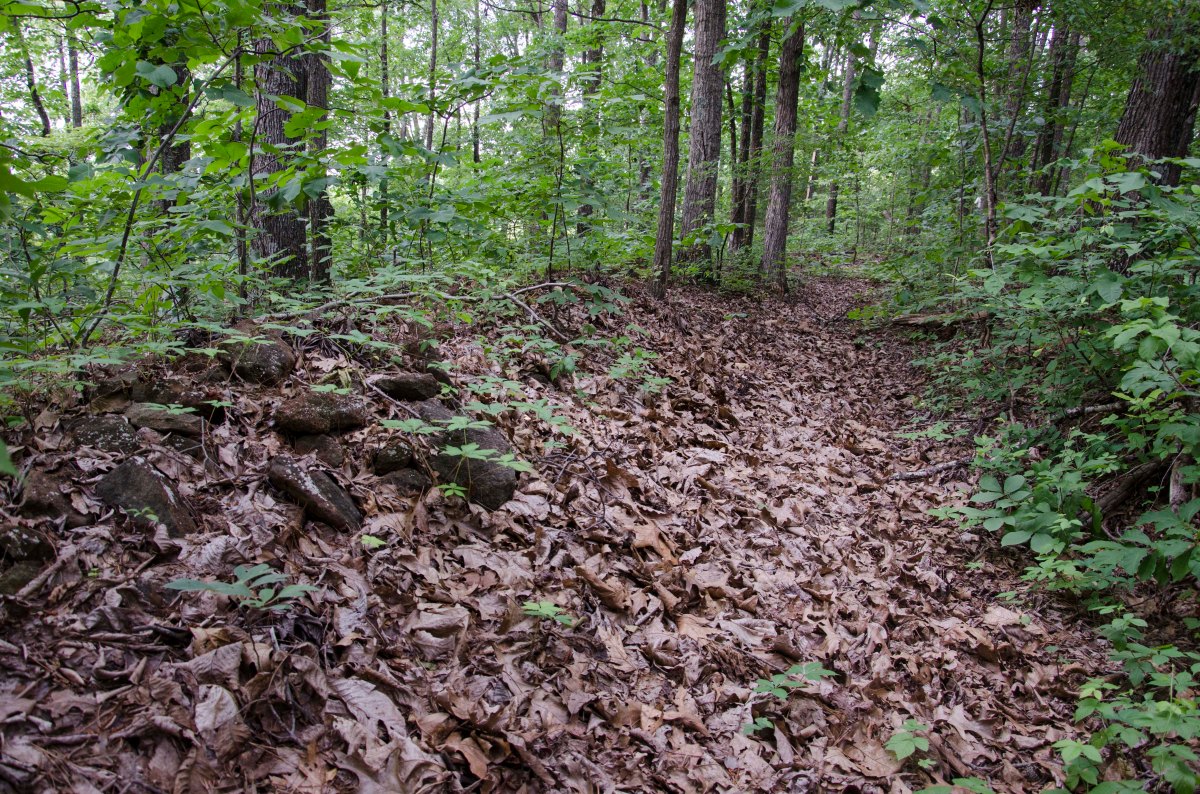
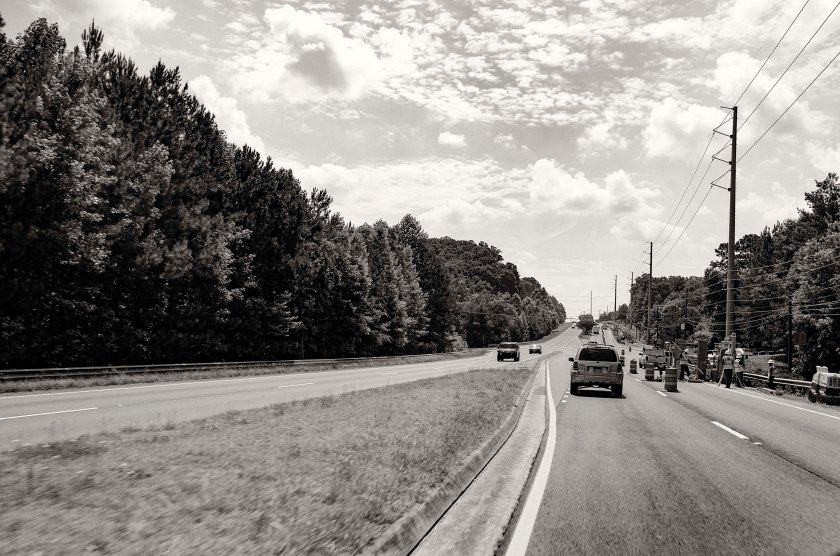
Looking south east along Hwy 120 where it crosses Mud Creek. The Confederates dug in atop the low rise in the distance in an attempt to stall the Federal advance as it crossed Mud Creek. Many, if not all, of the earthworks are now gone and are covered my subdivisions and shopping centers.Confederate earthworks at the far left (west end) of the Brushy Mountain Lost Mountain line. These works were manned by Jackson’s Calvary. These works were preserved by the local SCV Camp McDonald in conjunction with the Subdivisions builder and HOA. They are now preserved as a small park for the subdivision. Earthworks on the extreme right (East side) of the Brushy Mountain Lost Mountain line. These works are located on Brushy Mountain in a small subdivision. They are protected as a small park with historical information signs.“Hoods Fort” on Brushy Mountain stands a large earthwork fortification along with several thousand feet of preserved trenches. The exact purpose of the large fortification is unknown, but many speculate it was used as a ammunition bunker. You can get a sense of the scale from this image as you can look down the slope to the base of the fortification. A section of trenches curves its way around the base of the site known as “Hood’s Fort”
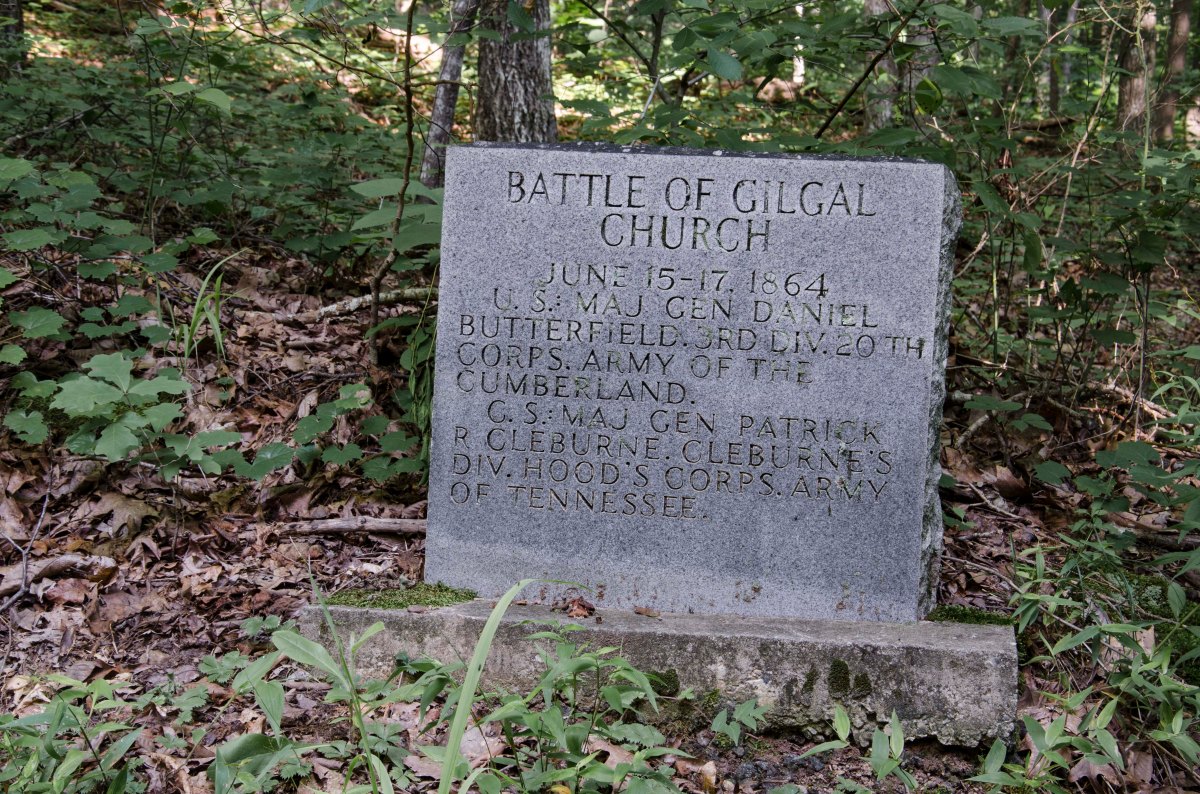
After the fighting at Gilgal Church on the 15th and continued fighting on the 16th, the Union Army has figured out that lines in the area form a salient and begin to pour in enfilading fire on the Confederates. Other Union forces move against the thin line of southern soldiers west of Gilgal Church towards Lost Mountain. Schofield’s XXIII Corps is now in a position to turn Johnston’s left flank, Schofield may or may not realize that he is in such an advantageous position, but Johnston does and orders Hardee’s Corp to pull back at dark, to the far side of Mud Creek and establish a new line. During this retrograde movement, a Union artillery shell explodes near Brigadier General Lucius Polk. He is the nephew of Lt. Gen. Leonidas Polk and only two days after the death of his Uncle, Lucius Polk is wounded and loses his leg.
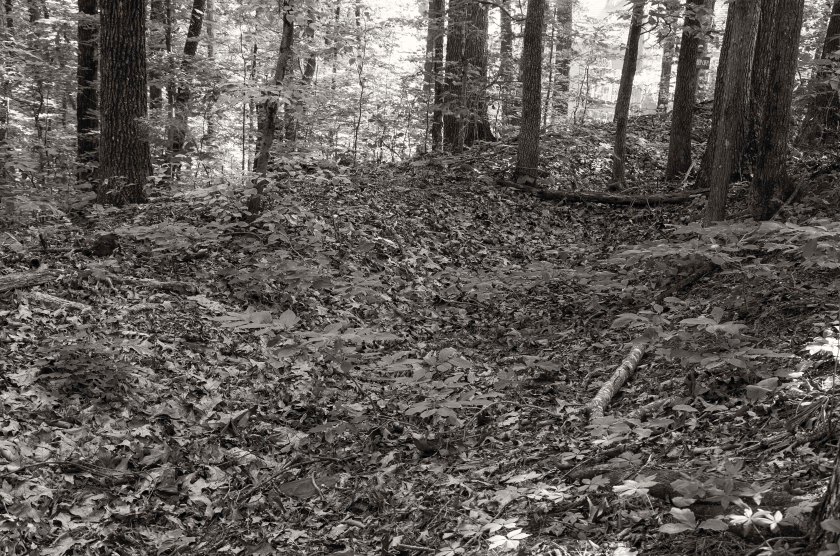
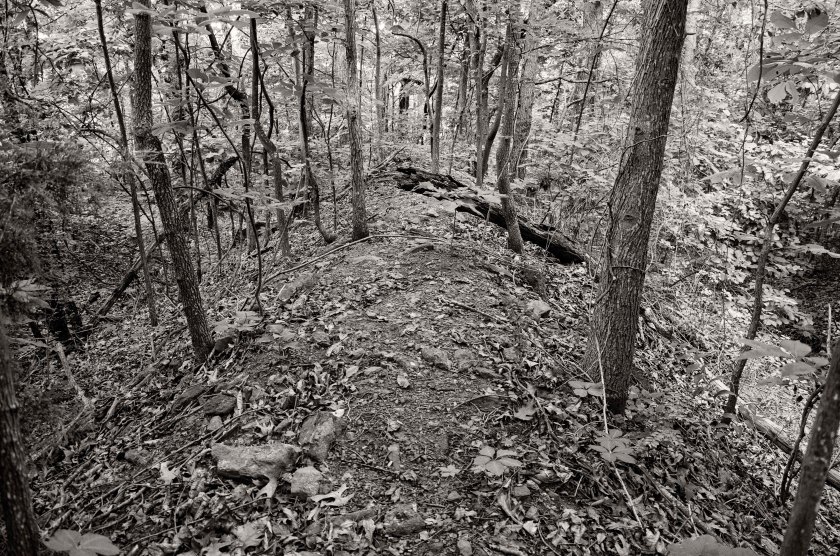
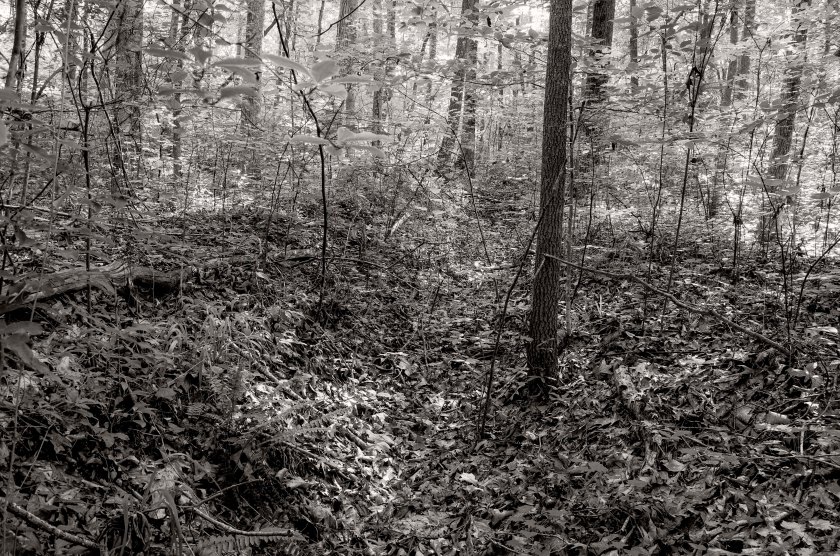
Recreation of what Confederate earthworks may have looked like. Remnants of Confederate earthworks at the site of the Battle of Gilgal Church.
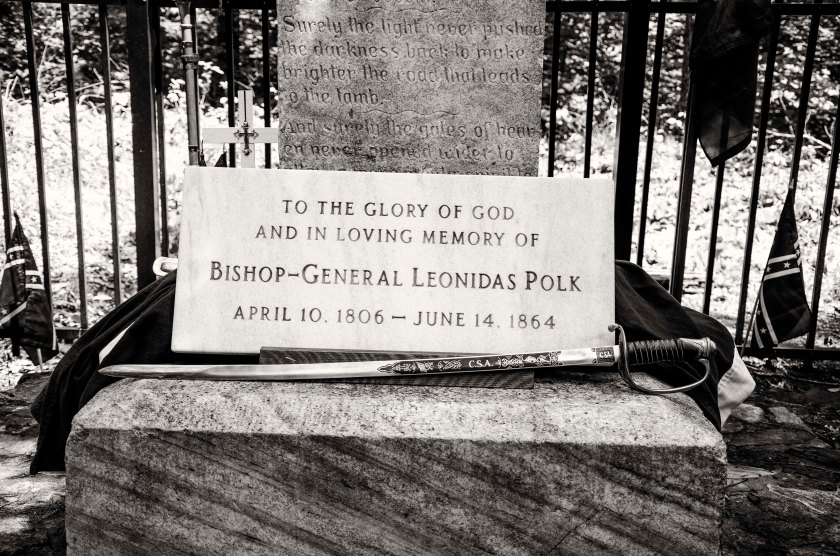
Being concerned that the position of Bate’s Division on Pine Mountain was quickly becoming compromised, Confederate Generals Johnston, Polk and Hardee, rode to the top of the mountain on the morning of the 14th. As the Generals were inspecting the position, they were observed by members of a Federal artillery battery located about a mile to the north east of the mountain. This was the 5th Indiana Battery. They observed what appeared to be officers on the mountain and opened fire. The first round buried it’s self in the parapet of the Confederate position and the second round struck General Leonidas Polk in the chest killing him instantly. Polk, also called the Bishop General was the Episcopal Bishop of Louisiana and was greatly revered by his men. His death struck a serious blow to the Confederacy.
Later on the 14th, Federal forces attacked Pine Mountain in an attempt to cut it off from the main Brushy Mountain Lost Mountain line. Pine Mountain formed a salient in the Confederate lines and was just over a mile to the north of the main line. The Federals pushed hard to cut Pine Mountain off from their main line, but were repeatedly repulsed by the well entrenched and fortified positions of the Confederates of Bate’s Division. General Johnston ordered Bate’s Division to with draw from the position on the night of the 14th under the cover of darkness.
Location on top of Pine Mountain were General Leonidas Polk was fatal struck by an artillery round from the 5th Indiana BatteryRemnants of the parapet the took the first round from the 5th Indiana Battery. Earthworks atop Pine Mountain. These were manned by Bate’s Division.
Now located behind a church, this is the position of the 5th Indiana Battery that fired the fatal shot killing General Leonidas Polk. It has been turned into a small nature trail for the church.Looking through the notch in the parapet wall of the 5th Indiana. One of the artillery pieces would have fired through this notch in the wall.From the 150th anniversary memorial ceremony held on Pine Mountain, June 14th 2014.F.D.Polk IV, 3rd Great Grandson of the General Leonidas Polk was present at the memorial service.During the memorial service a reenactor was portraying a Reverend and presided over the memorial service.Surviving Confederate earthworks of Bate’s Division where they repulsed the Federal attack on June 14th along the base and slopes of Pine Mountain.
Surviving Confederate earthworks of Bate’s Division where they repulsed the Federal attack on June 14th along the base and slopes of Pine Mountain.
Surviving Confederate earthworks of Bate’s Division where they repulsed the Federal attack on June 14th along the base and slopes of Pine Mountain.
November 22, 1864: The 20th Corps, part of the Sherman’s Left Wing, reached Milledgeville. They marched into town past unoccupied Confederate earthworks and were completely unopposed. Mayor R.B. DeGraffenreid surrendered the town and asked for protection from looting and destruction. Two regiments camped on the state house grounds and acted as the provost. They also raised the first U.S. Flag over the state house since the start of the war. The Right Wing fought what is thought to be the largest battle of The March to the Sea at the Battle of Griswoldville. On the morning of the 22nd, General Hardee dispatched three brigades of Georgia Militia from Macon to August to help defend the city. Hardee was hoping that the Federal column had already passed and that the militia would be moving behind them and have a clear path to August. Weather and choked roads, along with delaying actions by Wheelers cavalry, had caused the Right Wing to slow down. The Militia were under orders to retreat if the encountered any resistance. General P.J. Phillips was in command of the Militia, after they marched north east from Macon they met up with the 4th Brigade that had marched out the night before. They told Gen. Phillips about the skirmishing between Wheeler and the Federals. Phillips also learned that his detachment outnumbered the Federals and decided to disobey his orders and attempt to overrun the Federal position. They were to attack across open fields that were nearly 700 yards in distance and try to reach a deep ravine about 100 yards from the Federal lines. The Federals were caught off guard by the attack as it came unexpectedly, but they quickly regrouped and formed up for a fight. The Militia, made up of old men and young boys, made a concerted, if not confused, effort to attack the Federal position. Many of the Militia had never seen combat, some fired on their own men by mistake, some even attacked in the wrong direction. The battle hardened veterans of the Federal army opened up with a withering fire from their position and the bodies of the dead and dying Militia were littering the field. Yet they still advanced, time and time again under the constant fire of the Federals. The Militia reached within 50 yards of the Federal line before they finally retreated. The Militia lost 51 men killed and 472 wounded. The Federals lost 13 men and only had 79 wounded.
November 21, 1864: Parts of the Right Wing of Sherman’s army pass through Gordon and move on east to Irwinton. Their column stretches out for miles as they choke the roads. The Left Wing continues to move closer to Milledgeville. Sherman remarks in his memoirs that they on made 8 miles on this day in a hard, cold, windy day. That night an uncommon early season snow storm blanketed the army with snow. The southern civilians accuse the yankees of bringing the cold weather with them. General Hardee, in command of the Confederate forces in Georgia, is in Macon where he has been preparing to defend the city. His scouts have reported that the Federal columns have turned away from Macon and have started on a move eastward. Hardee now realizes that the Federal objective is most likely Augusta or Savannah. General Hardee begins to shift his troops as well as Wheelers cavalry to the east in an effort to slow down the Federal Advance.
November 19th, 1864: The 20th Corps, part of the Left Wing, made their way through Social Circle and Rutledge to Madison along the way they destroyed the Railroad and any thing that could be used to support the Confederate war effort. From Madison, General Geary took a Division to Buckhead, near the Oconee River. In Buckhead, Geary’s Division burn the Railroad Depot, 500 bales of cotton, 5000 bushels of corn. They also burned the Ferry and boats on the river as well as the railroad bridge that was over 400 yards in length. General Sherman, who was traveling with the 14th Corps of the Left Wing, moved through Shady Dale and Newborn, destroying both as they were working their way towards Milledgeville. Sherman and the 14th Corps also crossed the Alcovy River during the day. The Right Wing continued to make progress on their move south toward Clinton.
November 17th, 1864: The Right Wing of Sherman’s forces continue their march south and pass through Jackson, Flovilla, Worthville, and Indian Springs. General Howard’s forces camped for the night near Jackson and prepared to cross the Ocmulgee River on the following day at Planter’s Ferry in the area known as Seven Islands. The Left Wing, accompanied by General Sherman, moves through Conyers, Covington, and Social Circle while also crossing the Alcovy River. While in Covington, the Federal Troops march through the town with their flags waving and their bands playing. They are greeted with much trepidation from the southerns, but the slaves were joyous in their arrival and began to sing, dance and pray. They crowed around General Sherman on his horse in great celebration. Sherman camped for the night by the Ulcofauhachee River about four miles east of Covington. Here, Sherman met an elderly slave and engaged him in conversation. He asked the old man to spread the word to others to not follow the army as it would hamper their movements and burden them with more mouths to feed and people to care for. He also said that the army would hire young and strong men to work for the army along the way as pioneers and some as teamsters and cooks. Sherman told the old man he would not be successful in his mission if he was encumbered by masses of freed slaves as he attempted to move through the country and fight the Confederates. The old man agreed and began to spread the word. During the March to the Sea, many freed slaves did follow the army, but not nearly as many as could have. On this day, Confederate President Jefferson Davis, appointed General William Hardee to command all the Confederate forces in Georgia. Confederate Cavalry General Joseph Wheeler had made his Headquarters in Griffin and on the 17th, he ordered his men to place pickets on all the roads to Macon, Columbus and Augusta. Wheeler and his men were to harass and slowdown Sherman’s Army as much as possible. On the morning of the 17th, the Federal Cavalry under the command of General Kilpatrick, moved from Hampton towards Griffin and Forsyth. The threat was really a feint to distract Wheeler, but was enough of a threat to cause Wheeler to burn the bridge over the Towaliga River and start a small firefight.
November 16th, 1864: With the City of Atlanta a still smoldering ruin, General Sherman and his staff, along with the 14th Corps, moved east out of the city towards Decatur. The right wing’s rear guard moved out towards Jonesboro to catchup with the rest of their wing. General Sherman and his staff left their headquarters at the Lyon’s house around 7:00am. The Lyon’s house was located where the current Atlanta City Hall now sits. As they moved east the day was bright, clear and crisp. The roads to the east were crowded with the soldiers and wagons of the 14th Corps. Sherman and his staff made their way to Lithonia, near the Yellow River, where they camped for the night. Along the way, Sherman’s Soldiers, destroyed the railroad by burning the cross ties and bending the rails around trees and telegraph poles. The right wing of the army continues to make their way south. They pass through Jonesboro where they had fought a serious engagement in September, and then passed through Love Joy’s Station and Stockbridge. They Stop near McDonough for the night.
November 15th, 1864: The March to the Sea began this morning. The right wing and Kilpatirck’s cavalry move southeast along the railroad towards Jonesboro. Slocum’s 20th Corps, part of the left wing, moved east toward Decatur and Stone Mountain. Sherman, along with the remainder of the left wing and the rear guard of the right wing, stayed in Atlanta. Sherman supervised the last details of loading the wagon trains and the final destruction of Atlanta. In the late afternoon of the 15th the orders were given and the torch was put to Atlanta. An enormous fire soon erupted and began to consume the city. Artillery shells and other explosives had been placed in some structures and as the fire raged, they began to explode, sending debris and shell fragments through the air in all directions. Some soldiers remarked that they could not sleep because the light from the fire was too bright. Sherman remarked to a staffer that he thought the fire could possibly be seen as far away as Griffin, nearly 40 miles away.
November 12th, 1864 General Sherman and his staff departed from Kingston on the morning of the 12th and began their journey to Atlanta. They reached Cartersville around noon where they sat on a porch at the telegraph operators to rest. Sherman received a dispatch from General Thomas in Nashville. Sherman replied with “Dispatch received-all right”. As Sherman ended his message the telegraph line linking him to Chattanooga and the remainder of the Federal Army, was cut. Sherman and his forces were now cut off and on their own until they reached the coast. Just below Cartersville the stopped to watched the last trains cross the bridge over the Etowah River, and then crossed the river and continued south. They traveled about 20 miles for the day and camped near Allatoona. The Federal troops in the outpost the had been protecting and garrisoning location throughout North Georgia were ordered to march toward Atlanta as quickly as possible and to destroy the railroad and make the country “untenable” for the enemy. Bridges, mills, homes, barns, and other buildings were burned and food as well as livestock were taken. What they could not carry, they destroyed.







 War Was Here