Photography Day 42 is Done!

     Day 42:  My friend Jeff and I were going to my Dad’s house in Woodbine, Ga. for a weekend of fishing, so, I decided to make the most of the drive and photograph as many locations of the March to the Sea as I could.  We mostly followed the right wing for the trip.  I was able to photograph 11 antebellum structures that were visited by Federal troops on the march.  Three of them by Sherman himself. 
     We started at Jarrell Plantation Historic Site where I photographed the plantation house.  From here we went to Round Oak where I photographed the area around the Battle of Sunshine Church.  Not technically part of the March to the Sea, but for logistical reasons I photographed it out of sequence.  From Round Oak we drove down to Clinton, where I photographed several home.  One of which was Kilpatrick’s Headquarters while the March to the Sea moved through the area.  After Clinton, we drove a short distance to the Griswoldville Battlefield.  This was the site of the only major engagement or battle along the March to the Sea. 
     We left Griswoldville and headed toward Ball’s Ferry.  Along the way we passed through Irwinton and Toomsboro.  I photographed the river and surrounding area at the location of Balls Ferry.  From here we traveled through Wrightsville and Kite and then made our way into Swainsboro, where we had lunch at the Crossroads Cafe.  I had the Reuben and it was really good, but the best thing I had was their Chocolate Chip Toffee cookie. 
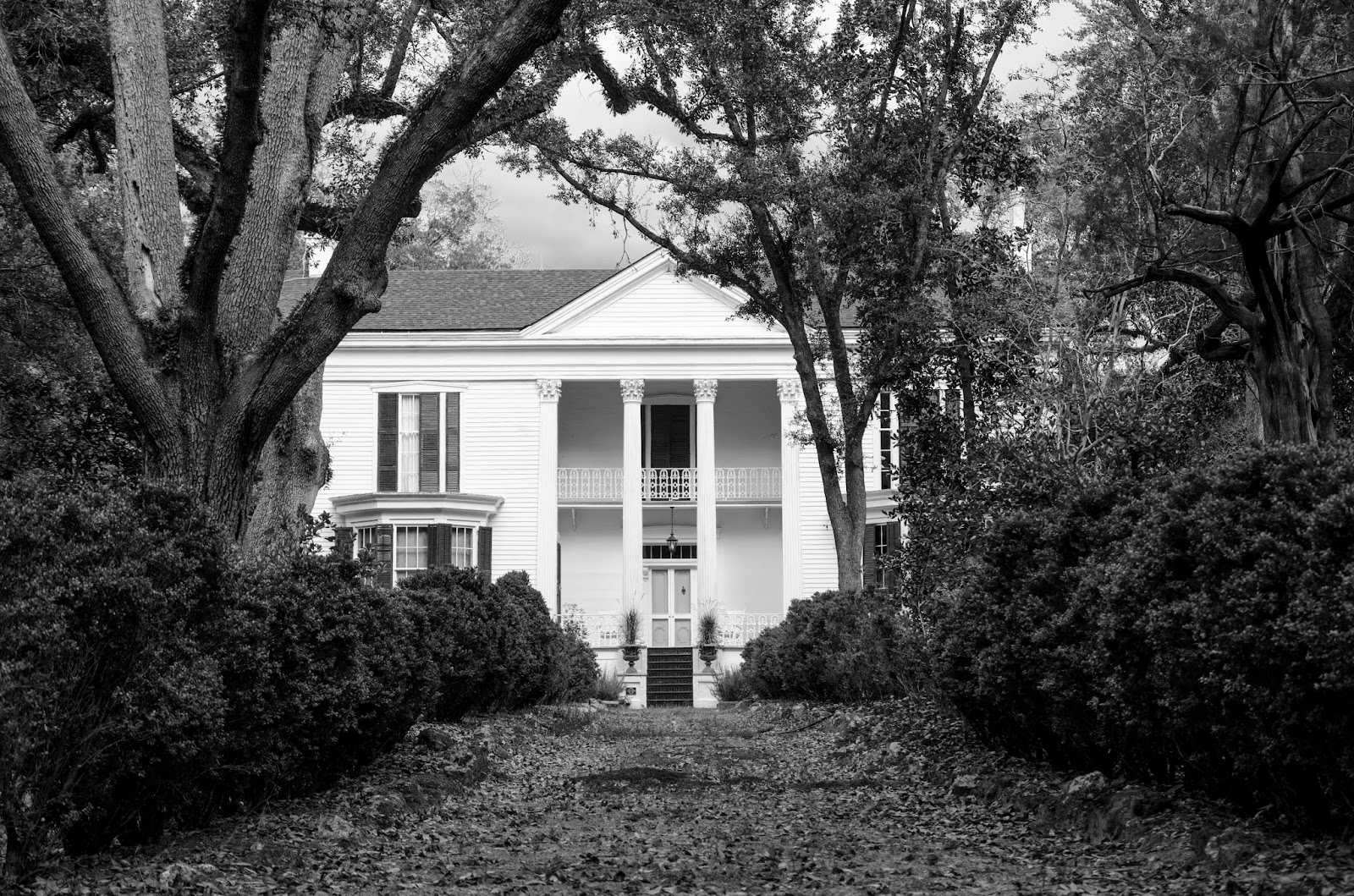
     From Swainsboro we traveled north toward Midville where we took Ga. 17 east toward Millen.  Along the way I stopped at several cotton fields to make images.  Before Millen, we took a detour to a place called Birdsville.  It is the site of an antebellum plantation that suffered tragically from the passing of Sherman’s Army.  It is you classic plantation with the ancient Live Oaks overhanging the lane that leads to the front of the house.  It was truly a beautiful location.  It has been in the same family since the King granted them the land in 1785.  From Birdsville we went to Buckhead Church on Buckhead Creek. 
     After leaving Buckhead Church, we drove through Millen and then continued on Ga. 17 towards Savannah.  Along the way we stopped to photograph the Little Ogeechee Baptist Church and then passed through Guyton and between Guyton and Bloomingdale, I photographed Zion Lutheran Church. 
     All in all it was a very productive day and I turned what is normally a six hour drive in to a 12 hour drive.

Below is an image of Birdsville Plantation.

Catching Up: Photography Days 38, 39, 40, and 41 are complete

I have been very busy of late and have not been able to update the website as quickly as I would like so I am combining multiple post here.

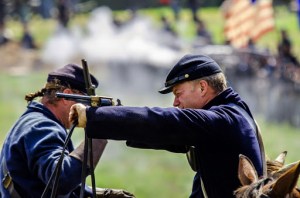
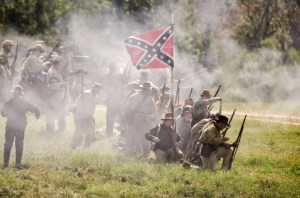
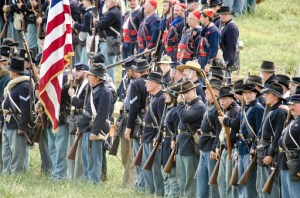
Day 38:  I photographed the Battle of Atlanta reenactment and had a fantastic time.  It was really one of the best reenactments that I have seen this year.  The field was covered with infantry and cavalry.  There were about 40 cannons firing as well.  I am looking forward to next years event.

Day 39:  I went to the Living History event at Allatoona Pass on Saturday morning to make some candid shots of the reenactors during the day then went home for a little while, before returning to make images of the cannons firing at night during the candle light tour.  Really great shots.

Day 40:  I returned to the Living History event at Allatoona Pass and took my boys with me.  They love to see the cannon fire.  I was able to capture more candid images as well as a great shot of the Cherokee Battery firing. 

Day 41:  I again returned to Allatoona Pass on Monday to do an extensive photographic study of the earthworks and the old railroad bed. 

Photographing Cannons

Wanted to share this blog post I wrote for my photography blog here because I think most of you will be interested and will like the images.

How to Photograph Cannons

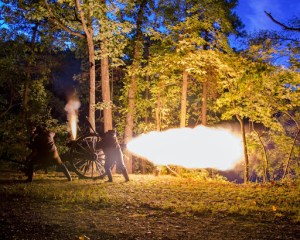
The image below is from the recent living history event at Allatoona Pass.  I was allowed to set up and photograph the nighttime artillery demonstration.  It was a great event and the images really turned out well.

150 Years Ago Today: October 5th, 1864 The Battle of Allatoona Pass

October 5th, 1864:  The Battle of Allatoona Pass
     Late on the evening of the 4th, along the way from Acworth to Allatoona, French’s Division crossed Allatoona Creek.  The railroad crossed the same creek and near the bridge was a Blockhouse occupied by a small garrison of Federals.  French assigned the 4th Mississippi of Sear’s Brigade, along with one artillery piece, to stay behind and capture the blockhouse.
     French’s Division continued on with the assistance of a local guide and around 3:00am on the 5th they reached point about 1200 yards from the pass called Moore’s Hill (Allatoona Landing Marina and Campground).  On this hill he place 11 cannons and ordered two infantry regiments to stay and support them.  Not wanting to attack directly across open ground through the village and along the railroad tracks, French made a flanking movement to the west allowing him to be in a better position for the attack.  The terrain was very difficult to traverse, with dense woods and steep sided ravines.  At one point French stopped to rest his men who had been in constant motion for two days.  French’s Division did not gain their position on the ridge west of the Federals until after day break.  Throughout the night the Confederates could hear train cars arriving in the pass.  General Corse had arrived with reinforcements.
     After the Confederates abandoned Allatoona Pass in the spring, Sherman had made it his “second Chattanooga”, meaning that it was his second most important supply depot.  A warehouse was built to store supplies for the Federal Army and to protect it, Sherman ordered his Chief Engineer, Orlando Poe, to construct fortifications at the pass.  Poe constructed several earth forts.  The Eastern Redoubt was on a knoll on the eastern side of the pass and to the east of the Tennessee Road.  There were several cannons in the redoubt along with infantry.  There was a line of infantry trenches that faced north and moved west from the redoubt to the Tennessee Road.  They crossed the road on high ground and went all the way to the edge of the pass.  West of the pass was and situated on the high ground, was the Star Fort.  It also contained artillery and infantry.  The for gets it’s name from it’s shape.  There are infantry trenches around the fort and moving west from the pass on the north side of the fort.  The hillside is also covered with rifle pits.  West of the Star Fort, spanning the Cartersville Road, was Rowett’s Redoubt.  There were several cannons as well as infantry positioned here.  Rowett’s Redoubt was facing west and take the initial brunt of the attack.
     After being reinforced, the Federals were able to man their position with just under 2000 personnel.  The Confederates had arrived with around 3200 soldiers, but had been on the move two days.  The Federals may have been outnumbered, but they held a strong position on the high ground and a large number of the infantry were armed with the new Henry Repeating Rifle, giving them the advantage in firepower.
     French sent Sear’s Brigade to the North, where they were to attack the pass from the north west.  Cockrell’s Brigade was west of Rowett’s Redoubt, they were spread across the ridge from north to south.  Ector’s Brigade was supporting Cockrell’s on the left, stretching north.  Ector’s Brigade was being commanded by General William Young.
    After the deployment of his troops, French, sent a message to the General Corse stating that he was out numbered and asking the Federals to surrender.  Corse declined to surrender.  Upon the refusal to surrender, the order to attack was given.  Cockrell’s Brigade advanced from the west and quickly took the first line of Federal works.  They were stuck at the second line until Ector’s Brigade moved up in support and they were able to carry the second line.  They fought their way to the third line of works and engaged the Federals in hand to hand combat with muskets as clubs, bayonets striking and stabbing and even rocks were used.  Amidst the heavy fire coming from the Star Fort, the Confederates were able to make it within several yards of the prize.
     Sear’s Brigade attacked from the north and moved south astride the railroad and up the steep hill towards the Star Fort on the western side and the toward the trench lines on the eastern side.  For a short time, Sear’s Brigade, was slowed down by enfilading fire from the Eastern Redoubt, but were able to rally and press forward.
     Ammunition was starting to run low for both sides.  During the hot conflict at the Star Fort, the started to run out of ammunition for the artillery.  Volunteers, ran under intense fire, across a small foot bridge that crossed the pass some 90′ in the air and ran to the Eastern Redoubt to retrieve ammunition and carry it by hand back to the Star Fort.  Several were shot off of the bridge.  They Federals were on the verge of collapsing under the pressure of French’s assault.
     Around noon, French received word that Federal Cavalry was approaching and were currently in Big Shanty some eight miles away.  With his supply wagons nearly a mile from the front, French felt he could not resupply his assault force in time to capture the forts and then be able to withstand an attack from Cavalry.  French called off his assault and began to withdraw from the field.  They fight was over and they Federals were relieved as they on the verge of breaking and being overrun.  French’s forces withdrew and marched back towards New Hope Church to link up with the remainder of the Confederate Army.
     They Battle of Allatoona Pass is often over looked and glossed over, but it was one of the most fierce engagements of the war with casualty rate of 33% in only a few short hours.  The casualty rate at Gettysburg was 32.5% over a three day period.  Chickamauga had a casualty rate of 27.5% over two days.  The Clayton House, which still stands today, is visible in the period image by George Barnard.  It sits just south of the Star Fort and across from the rail road.  It was used as a headquarters for the garrison and during the battle the house was used for a hospital.  I was able to tour the home today and witness the scars of battle that still exist.  There are multiple bullet holes in the walls and in the room used for amputations, there is a fairly large blood stain still on the floor where it soaked in to the wood. 
      If you would like a more detailed description of the battle along with information and stories from personal accounts, I highly suggest reading The Battle of Allatoon Pass by Brad Butkovich.  It is a very well written book on the battle. 
150 Years Ago Today: October 4th, 1864

October 4th, 1864:
     On the 3rd, Stewart’s Corps marched on and took Big Shanty and the garrison there, they began destroying the railroad.  Lroing’s Division was sent to Acworth and Walthall’s Division went to Moon Station about two miles north of Big Shanty.  Upon arriving at Acworth, Loring’s Division camped just outside of town.
     On the morning of the 4th, the acting commander of the Federals in Acworth, attacked the Loring.  The Federals had been up all night and were preparing for the Rebels to attack at first light, when they did not attack, the Federals did.  The attack was a surprise to many of the men, but once the Confederates reorganized after the initial assault, they were able to surround the town and force the Federals to surrender.  The Federal prisoners were rounded up and sent on their way, meanwhile the Confederates began to destroy the railroad.  In all they were able to destroy about eight miles of track running north from Big Shanty. 
     Around noon on the 3rd Stewart received an order from Hood, directing him to send two of his Divisions back toward the main Confederate Army and send French’s further north to Allatoona Pass to destroy the tacks and fill in the railroad cut.  After that they were to march to New Hope Church and link up with the other Divisions of the Corps.  If French was able to determine if the garrison at the bridge over the Etowah was small, he was to attack and destroy the bridge if possible. 
     Having marched all the previous day and having spent all night and the morning destroying the railroad, French’s Division began marching north toward Allatoona.  They were the furthest Division of their Corps, but were ordered their straight away.  They had 8 miles to march, Loring’s Division, also the largest of the Corps, was only 4 miles away, but had been ordered to return back to the Confederate Army. 
     Sherman’s forces were also on the move.  They were making their way toward Marietta and had already crossed the Chattahoochee by the the end of the day.  Sherman also sent word to General Corse, who was in garrison at Rome, to move his division to Cartersville and to be ready to offer support when needed.  Late in the afternoon, Sherman changed his orders to Corse and ordered him to Allatoona. 
     French’s Divison was on the move to Allatoona by foot and Corse was moving a greater distance, but had the advantage of using the railroad.  It was essentially a race, yet the racers did not know they were racing. 

150 Years Ago Today: October 2nd, 1864

October 2, 1864
     Sherman began to receive reports that General Hood had crossed the Chattahoochee River and were moving toward Marietta.  Sherman, unsure of where Hood was moving, began send messages to all points along his supply line and also sent additional troops to Chattanooga.  He thought Hood would do one of two things; attack the supply line between Atlanta and Chattanooga or move toward northern Alabama to meet up with General Forrest to attack the supply depots in Tennessee.  Sherman also mobilized his troops in Atlanta in an attempt to chase down and engage Hood.  He left the XX Corps to garrison Atlanta and move the remaining troops northwest toward Marietta.
     Hood was moving toward the northwest as well.  He was not moving on Marietta directly and was making a wide move around it and the formidable Kennesaw Mountain.  As the Confederate Army was marching, General Stewart’s Corps was the farthest to the right (east) of the column.  They marched throughout the day and Stewart’s Corps made camp a few miles south of Lost Mountain.  Hood and the remainder of his army camped in area southeast of Dallas near Flint Hill Church.
     On the evening of the October 2nd, Hood sent orders to Stewart.  His orders were to move his entire Corps, in the morning, to Big Shanty (now called Kennesaw).  Stewart was assigned to capture and destroy as much of the railroad as possible and if he was able to take Big Shanty, he was to send a Division to Acworth to do the same thing there.  Hood suggested that he should be back in two days to link up with the remainder of the army.  These actions, were to set into motion, all the pieces for the Battle of Allatoona Pass.

Allatoona Pass Living History

     This weekend marks the 150th Anniversary of the Battle of Allatoona Pass.  In honor of this the Georgia State Parks and the Friends of Georgia State Parks along with several reenactment groups are hosting a living history event.  There will be a “tent city” area showing what life was like for the soldiers and civilians of the time as well as musket firing and artillery demonstrations.  I have been told that they will be placing a cannon in one of the original existing fortifications to do the artillery demonstration. 
     The day time demos will take place on Saturday from 9am to 4pm and on Sunday from 9am to 2pm.  There is a special candle light tour on Saturday night with tours that start every half hour from 7pm until 9pm.  There is a cost of $10.00 per person for the night tour.  You must reserve your tour here:  Allatoona Pass Nighttime Tours
The information for the tour states that it is not appropriate for children due to the darkness, terrain, and loudness of cannon fire.  It is also not ADA compliant.  I have been on the trails there and they can be steep with some tripping hazards, especially in the dark.  It will be cold so dress warm.

For more information about the daytime events to the state park website here:  Allatoona Pass Living History

150 Years Ago Today: Late September

Late September 1864:
     Sherman has fortified Atlanta extensively and has started to build up supplies and rest his troops.  The Confederates are not sitting idle, and Hood has ordered all the Federal prisoners kept at Andersonville to be moved to different prisons out of the reach of Sherman’s forces.  Hood then shifts his Army from Love Joy’s Station to Palmetto, which lies along the railroad to West Point and further into Alabama.  Hood is resting his troops, building up supplies and making plans for a move to the north to attack Sherman’s supply line.
     Confederate President Davis arrives in Palmetto on September 25th.  The next morning he begins a review of the troops and is greeted with silence, not cheers for their President.  A few soldiers yell out to the President asking for General Johnston to be place back in command, but these remarks fall upon deaf ears.  Bringing Johnston back would be like admitting the he made a mistake in removing him.
     On the 27th, Davis meets will Hood and all his Corps Commanders and some of the Divisional Commanders.  A great deal is discussed including a plan to strike Sherman’s supply and communications lines north of Atlanta, there by cutting him off and forcing him to retreat back to Tennessee, all the while being engaged by Hood.  Hood then thinks he can move on the Federals in Tennessee and turn the tide of the war in the western theater and possibly as a whole.  Hood also complains to Davis about General Hardee and blames the loss at Jonesboro on him.  He ask Davis to remove him.  Davis agrees and Hardee readily accepts the offer to command the coastal defenses of Georgia, South Carolina, and Florida.  Hardee is relieved to out from under Hood’s command.  On the 28th, Hood receives word from Davis that he may move forward with his plans to on North.
     On September 29th and 30th, the Confederate Army of Tennessee begins their next march and cross the Chattahoochee River near Palmetto and Campbellton about 40,000 troops.  By late in the evening of October 1st, Hoods army has moved about 8 miles from the river crossing in the direction of Marietta.  Sherman, who had anticipated this move to the north by Hood a week earlier, had already sent troops to Rome and to Chattanooga to help protect those areas from the threat of Hood and from the threat of General Nathan Bedford Forrest cavalry that has started operating in the northern part of Alabama and into Tennessee.

More Battle of Atlanta Images

I have added some more images to the gallery for the 2014 Battle of Atlanta.  I added 18 new images to the Battle gallery and then added images the camps to another gallery. 

Here is the link again:  Battle of Atlanta 2014 Images

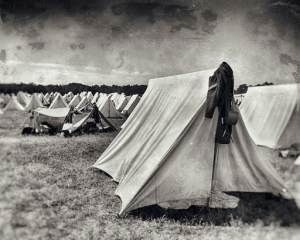
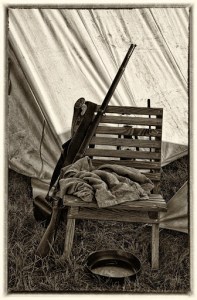
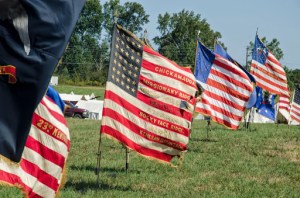
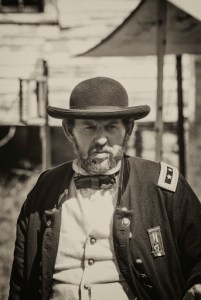
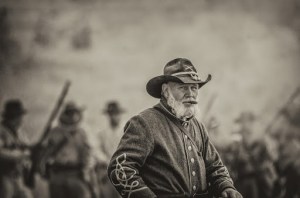
Here are a few of the images from the camps.

The Battle of Atlanta Reenactment 2014

     I have to say that this was probably the best reenactment I have seen.  It is obvious that it was a well planned and extremely well executed event.  I was only able to attend on Sunday, but was really happy I made it for at least one day.  The action on the field was great.  The reenactors were really into their roles and played them out really well.  The Confederate charge followed by the Federal counter charge was just awesome.  The artillery display was especially good.  There so many cannons firing that sometime you could not see the field for all the smoke and I have to think that in many battles throughout the war, that was the case. 

Here is a link to the images from the battle:  Battle of Atlanta 2014
I also have some images from the camps the I will post in a few days.
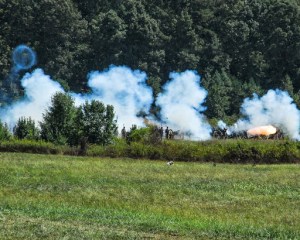
Here a few of my favorite images.
The first image has a smoke ring from one cannon and fire form another.  If you look close in the center, you will see a bird in the smoke.