June 3, 1864
General Schofield advances to the crossroads at the Allatoona Church, the current intersection of Hwy 92, Dallas – Acworth Hwy, and Cedarcrest Rd. His lead division moves slowly for fear of Confederate attack and being separated from the main body of the Federal army. They take the entire day to advance and when they reach the crossroads, they discover the Confederates are gone. General Sherman’s route to Acworth and the railroad now stands unopposed.
General Johnston issues orders to the Confederate army to fall back from the main line and move to the newly prepared lines the stretch from the railroad south of Big Shanty, west to Lost Mountain.
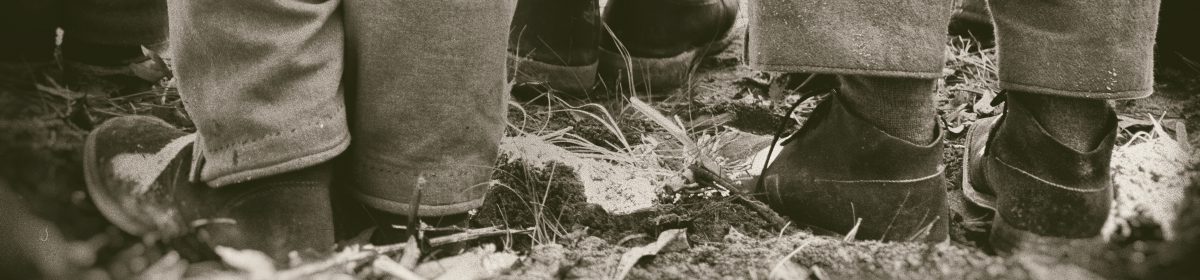
Pickett’s Mill Reenactment Images
Here is a link that will take you to the images I made this past weekend at the Pickett’s Mill 150th Anniversary Reenactment. When you open the link you will also see a gallery for the Resaca Reenactment.
I have only edited or altered a few of the images in these galleries. I will be picking out the best shots later and adding a special gallery selected images that are my favorites.
150 Years Ago Today: New Hope – Pickett’s Mill Line
Heavy skirmishing continues all along the line and both armies continue to extend their lines toward the east in the direction of the railroad. General Sherman has ordered General Schofield to move the line to Allatoona Creek. As the Union soldiers reach the creek they are met with stiff resistance from entrenched Confederate troops. They attempt to turn the Confederate right flank, but Butterfield, who is assigned to support Schofield, refuses to add his troops to the assault. He states that he was assigned to support the movement east, but not engage in an attack. Schofield entrenches for the night. This turns out to be a good idea, because General Johnston has moved Cleburne’s and Walkers Divisons toward the end of his lines. Schofield would have been open to a severe counter attack if he had attempted to turn the Confederate right.
Meanwhile, Union Cavalry units operating in the area south of the Etowah river, report to General Sherman that the railroad is intact and usable down to Acworth. The railroad is Sherman’s goal and he is inching closer and closer to it each day.
Pickett’s Mill Reenactment: Cannon Fire
I thought this shot was really cool and wanted to share it with all of you. It is straight from the camera. All I did was crop to 8×10 and add the copyright at the bottom. I did not adjust anything.
Both cannons were firing at the same time. These are 12 pounder Howitzers placed at the location of Key’s Battery during the battle.

150 Years Ago Today: Along the Dallas – New Hope line
May 30th, 1864:
General Sherman has decided he wants to shift his armies back east toward the railroad near Acworth. His plan is to begin leap frogging his units from Dallas and move to the east toward Acworth. Sherman has ordered McPherson to begin his movement several times, but Confederate attacks on his lines have prevented his withdrawal. On the night of the 29th, what was thought to be a large scale attack, kept both sides up all night in constant heavy skirmishing. The Union troops thought the Confederates were attacking and the Confederates thought the Union troops were attacking. On the morning of the 30th, Sherman inspected the lines with McPherson, and decided the men were in no condition to move after fighting all night. He then ordered their withdrawal to take place on the night of the 31st.
There was constant skirmishing all along the lines and both armies were trying to extend their lines toward the railroad. Sherman was trying to get back to a steady supply line and General Johnston was trying to stop him.
Photography Day 6 and 7, Done!
On May 28th I photographed the area where the Battle of Dallas took place. This was a really great day. It was the 150th anniversary of the battle to the day. I was able to make images of some earthworks that were used in the battle. They were still deep enough to be defensible positions. The highlight of the day was photographing a historic home that was used as a Headquarters by General McPherson. It was also used as a field hospital. Today it is a law office. I went in the office to introduce myself and ask permission to photograph the house. They gave me permission and then we talked for awhile about the house and its history. She gave me a tour of the first floor and showed me the room used as an operating room. Then, she really surprised me, by bringing out a box containing human bone fragments. One was obviously from an amputated limb since it had been cleanly cut with a saw. She then told me about some of the strange things that happen in the house from time to time.
On the 29th I went to Pickett’s Mill to make images of the earthworks and key points of battle and the terrain. Since the park was closed on the actual anniversary of the battle, this was the first day I was able to get in there to photograph it. The lines here were occupied frm May 27th through June 6. I will be going back tomorrow to photograph the reenactment.
150 Years Ago Today: The Battle of Dallas, Georgia
May 28th, 1864:
After suffering heavy losses and gaining no ground since the Battle of New Hope Church on May 25th, General Sherman decided to begin withdrawing from the Dallas-New Hope line and make his way back to the railroad where the supply trains could reach him. Sherman had ordered General McPherson to begin moving his Army of the Tennessee, who were entrenched in Dallas, back to the east and toward the railroad near Acworth.
Confederate General Johnston was unsure of Sherman’s intentions and his troop movements. He ordered General Hardee to do a reconnaissance by force to try and ascertain the strength of McPherson’s position. General Hardee selected Bate’s Division supported by Jackson’s Cavalry to carry out the mission. General Bate’s was going to have just one brigade attack and if they found the Federal lines to be weak they would signal the remainder of the units to attack. The first brigade in made fairly good headway and then was repulsed by heavy fire. They found the Federals still heavily entrenched and still in place. Even though McPherson had given orders to begin moving out, his units in this section of the line had not started their movement. The signal to attack was not given. In the turmoil and uncertainty of combat, Lewis’ Kentucky Orphan Brigade thought they had missed the signal. He sent an officer down the line to see if the other unit had already attacked, when the officer arrived he found their portion of the line empty and assumed they had moved forward to attack. They had only moved out of their works a short distance in order to be more ready for the attack when the signal came. After hearing the report from the officer, Lewis orders the his Orphan Brigade to attack. Upon seeing this the Florida Brigade began their attack on the left of the line while Lewis was on the right of the line. They were supported by an artillery battery. Both brigades fought hard and made it close to the Federal lines. They were met with heavy fire from fully entrenched Union soldiers. When Bates realized the Federal troops were still in position and still there in full force, he called off the attack. The orders to retreat were late reaching the Orphan Brigade and for a period of time they were fighting their way forward unsupported.
The outcome of this battle is sort of the opposite of what happened at Pickett’s Mill. The Confederate losses were around 1600 and the Federal losses were around 400. Lewis’ Orphan Brigade suffered over 50 losses.
150 Years Ago Today: The Battle of Pickett’s Mill
May 27th, 1864,
After suffering heavy losses at New Hope Church and failing to break the Confederate line, General Sherman again tries to out flank General Johnston’s Confederate Army. Sherman orders General Howard to send Wood’s 3rd Division of the IV Corps, Johnson’s 1st Division of the XIV Corps, and McLean’s 3rd Brigade of Schofield’s XXIII Corps, on a flanking march in an easterly direction, to find the right end of the Confederate line. They hope to find the exposed right end of the line and attack.
General Johnston figured out what the Federals were attempting, and began shifting troops from his left to the right. He moved Hindman’s Division from the far left of Hood’s position and placed them on the far right. This began the extension of the Confederate line to the right. Johnston then moved General Cleburne’s Division of Hardee’s Corps to the right of Hindman. This extended the Confederate line even further to the right. Cleburne began to dig in on a ridge line running east toward Pickett’s Mill. This was the end of the line with the exception of Kelly’s Cavalry being used as a screen put in place beyond the end of the line.
Generals Howard and Wood began their march east to find the Confederate right as they were assigned. The terrain was difficult at best. It was described as jungle by some. It is hilly with deep ravines and lots of underbrush. After traveling some distance the made their first attempt to find the Confederate right, but as they approached the lines the realized they were approaching the rear of the Union lines. They needed to push further east before turning again. After moving about a mile east of this point they turned again and found what the thought was the Confederate right. They reached the area of Pickett’s Mill around mid afternoon. Howard began to form Wood’s and Johnson’s Divisions for attack.
Meanwhile, Cleburne’s scouts reported the movement of the Federals toward the end of the Confederate line. He began deploying further to his right and also deployed several artillery batteries. He place Lucius Polk’s Brigade on his left, Govan’s Brigade in the center and Granbury’s Brigade on his right and the Cavalry screen beyond Granbury.
Wood deployed with Hazen’s 2nd Brigade in the front with Gibson’s 1st Brigade following them and Knefler’s 3rd Brigade behind them. Johnson deployed with Scribner’s 3rd Brigade in front and aligned with Gibson’s Brigade. He then placed King’s 2nd Brigade following Scribner and Carlin’s 1st Brigade behind King. The formation they were using is called a “Column of Brigades” and each Brigade should follow the other closely as to over whelm the enemy with their numbers. The order to attack was given around 4:30pm. Hazen moved forward, but the dense undergrowth along, with the terrain, caused the lines to come apart and become spread out. Gibson’s Brigade did not immediately follow Hazen. Hazen’s men drove in the Confederate pickets and started moving up the steep sided ravine. They were attacking the left and center of Granbury’s Brigade. They thought they were attacking the end of the Confederate line, but Cleburne had been fast enough to extend it to his right. Hazen came under heavy fire and point blank artillery fire from Key’s Battery. Hazen began moving left toward an old cornfield. This movement had been anticipated by Cleburne, who had sent several regiments of Govan’s Brigade further to the right and just past Granbury, to block the Federals. After losing over 450 men, Hazen was withdrawn and only then was Gibson put in. He suffered a similar fate and suffered heavier losses, over 650. Kneffler’s Brigade was finally sent in, but with the purpose to only cover Gibson’s as he withdrew and recovered the wounded. Scribner was delayed in his attack by the cavalry pickets, who held high ground across the creek. He sent a couple of regiments to push them back and finally made it to the cornfield where he was hit by a counter attack from a reserve force that had been sent to reinforce Clerburne. Sribner held his own for a short time before falling back as well.
The battle began to subside around 7:00pm, but skirmishing continued into the night. Cleburne directed Granbury to make a night time assault to probe the location of the Federals and clear his front. They captured over 200 Union troops and drove back many more to their original positions. Total Union casualties are reported as being 1732 while the Confederate casualties were reported at 448. It was a rather lopsided victory for the Confederates.
This is my favorite battle of the campaign, I’m not sure why, but maybe because the battlefield is so well preserved and you can walk through it and really see where events took place. I recommend going to visit the battlefield if you get a chance. Here is a link to their website: Pickett’s Mill State Historic Site. They are having a special event this weekend with reenactments. It should be a really great event. Also, if your interested in learning of the details of the battle, check out this book: The Battle of Pickett’s Mill, Along the Dead Line, by Brad Butkovich.
Book Review: The Campaign For Atlanta, William R. Scaife
The Campaign For Atlanta, by William R. Scaife
Fourth Edition 1993, ISBN 0-9619508-8-9
Kennesaw Mountain Historical Association, Kennesaw Georgia
This is a very well made and printed book. I suspect it was a short run printing and they did a fine job. This book is great for discussions of the details of specific battles throughout the campaign. It is well researched and full of quotes and maps. I have to say that the maps featured in this book are the best I have come across so far in print. They show troop positions and movements along with the terrain and most modern roads. This was a big help while trying to locate areas in Dalton and Resaca. I am sure it will be a big help as I move forward as well. This is probably my favorite book of all the Civil War Books I have.
Here is a link for the book on Amazon. The Campaign for Atlanta, William R. Scaife
It is a little pricy. I lucked out and found the last copy at Pickett’s Mill State Historic Site and it cost me $50.00. You may also be able to find it at the bookstore at the Kennesaw Mountain National Battlefield Park. This bookstore operates in conjunction with the Kennesaw Mountain Historical Association.
Book Review: Fields of Glory
Fields of Glory, A History and Tour Guide of the War in the West, The Atlanta Campaign, 1864
by Jim Miles. Cumberland House Publishing Nashville Tenn. 2002
This has been my most used and trusted book for finding locations related to the Atlanta Campaign. I love the way the chapters are set up. One Chapter gives you a fairly good history of a section of the campaign and then the next chapter is a guided tour of that section. The directions are good and detailed and I have not found any mistakes in the directions other than the mileage being off by a few 10th here and there, but not enough to matter. I like the appendix as well. They offer a few other tours and anecdotes of interest.
I must give Jim Miles a great deal of thanks, because I am not sure I could have found all the locations that I needed to with out his book. If you are looking at a driving tour in Georgia and want to visit some Civil War sites, then this is about the best book to use. I highly recommend this book.
 War Was Here