After learning of the impending attack on Jonesboro and the railroad by the Federals, Hood dispatched Hardee’s Corps and S.D. Lee’s Corps to Jonesboro to protect the railroad.
By mid afternoon, both Hardee’s Corps and S.D. Lee’s Corps were in place at Jonesboro. Hardee deployed with his corps to the left and as he was in overall command of the operations, Cleburne was commanding the corps. Cleburne deployed with Lowery’s Division to the left and Brown’s Division to the Right. He held Maney’s Division in reserve. S.D. Lee’s Corps was deployed to the right of the Confederate line. Stevenson’s Division was on his left adjacent to Hardee’s right and Clayton was on the far right of the Confederate line. Stovall’s and Higley’s Brigades were held in reserve and were later moved forward to the left of S.D. Lee’s lines.
Hardee’s plan was to have Cleburne advance and wheel to their right(north) and attack the Federal right flank. Once they were engaged and the Federals shifted troops to protect the flank, their center would be weakened and then S.D. Lee’s Corp’s would initiate a full frontal assault on the Federal Lines.
Howard deployed his Federals on high ground between the Flint River and Jonesboro. He placed Logan’s XV Corps on the Federal left where they were facing the railroad and the town of Jonesboro. Ransom’s XVI Corps was deployed to the Federal right in a “refuse” in the line connected with Logan’s right and turned back west toward the Flint River and across it. Blair’s XVII Corps was held in reserve.
At 3:00pm Hardee ordered the attack to begin. As the advance began, Lowery’s Division made contact with Kilpatricks Federal Cavalry and was able to push them back rapidly across the Flint River. Lowery’s Division was moving so fast that they were not able to maintain contact with Brown’s Division. Brown’s Division struggled to advance through swampy terrain and a deep ravine. As they were unsupported on their left, Brown’s Division suffered heavy losses from the entrenched Federals on the high ground above the ravine.
S.D. Lee, who had only been in command of a Corps for about a month, ordered an all out assault at the first sounds of rifle fire from Cleburne. His inexperience caused him to attack too quickly and before the Federals could shift troops to the flank that was under attack. So, when Lee’s Corp attacked, they engaged the fully fortified and full strength lines of Logan’s Corps. Lee’s Corps over ran the Federal skirmishers, but were repeatedly repulsed by the Federal main line. Lee suffered heavy losses.
While the Battle of Jonesboro ensued. Schofield’s XXIII Corps and Stanley’s IV Corps reached the Western and Atlantic railroad south of Rough and Ready. After a short skirmish with some Confederate Cavalry, they began destroying the railroad.
Hood, still not convinced that this was the main attack and thinking it was only a diversion, was anticipating an attack on Atlanta. Without knowing the status of the battle in Jonesboro. Hood orders S.D. Lee’s Corps back to Atlanta thinking he is going to be attacked. Around midnight, Lee’s Corps, beaten, crippled, and worn out begins the long march back to Atlanta.
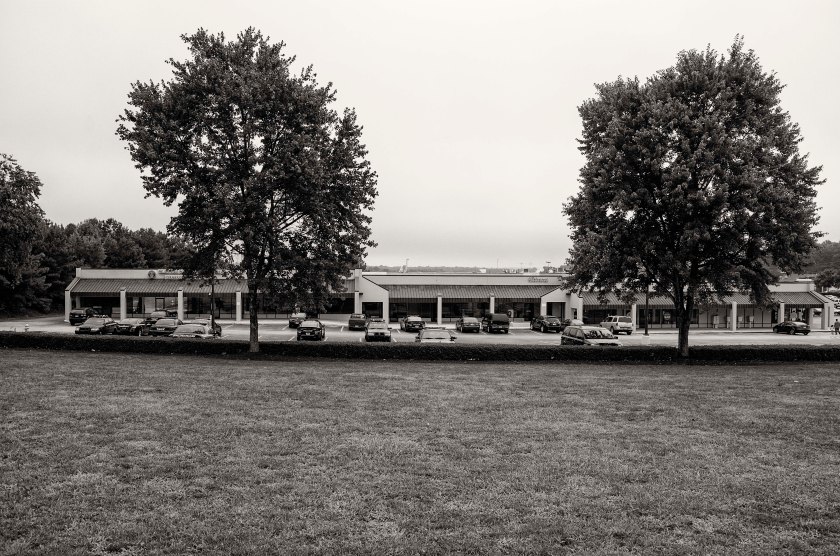
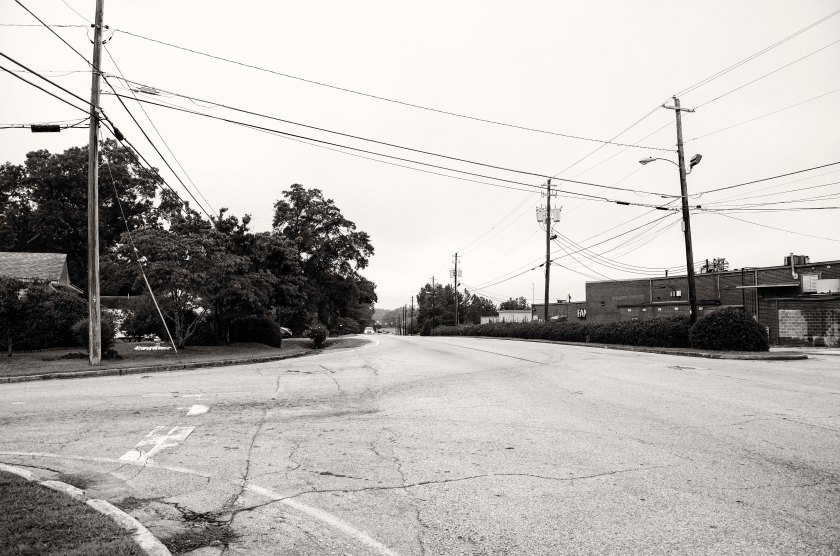
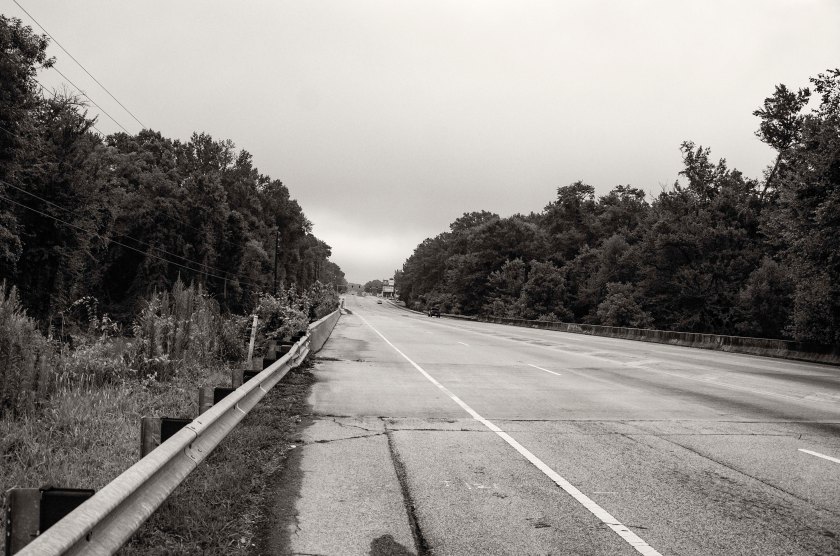
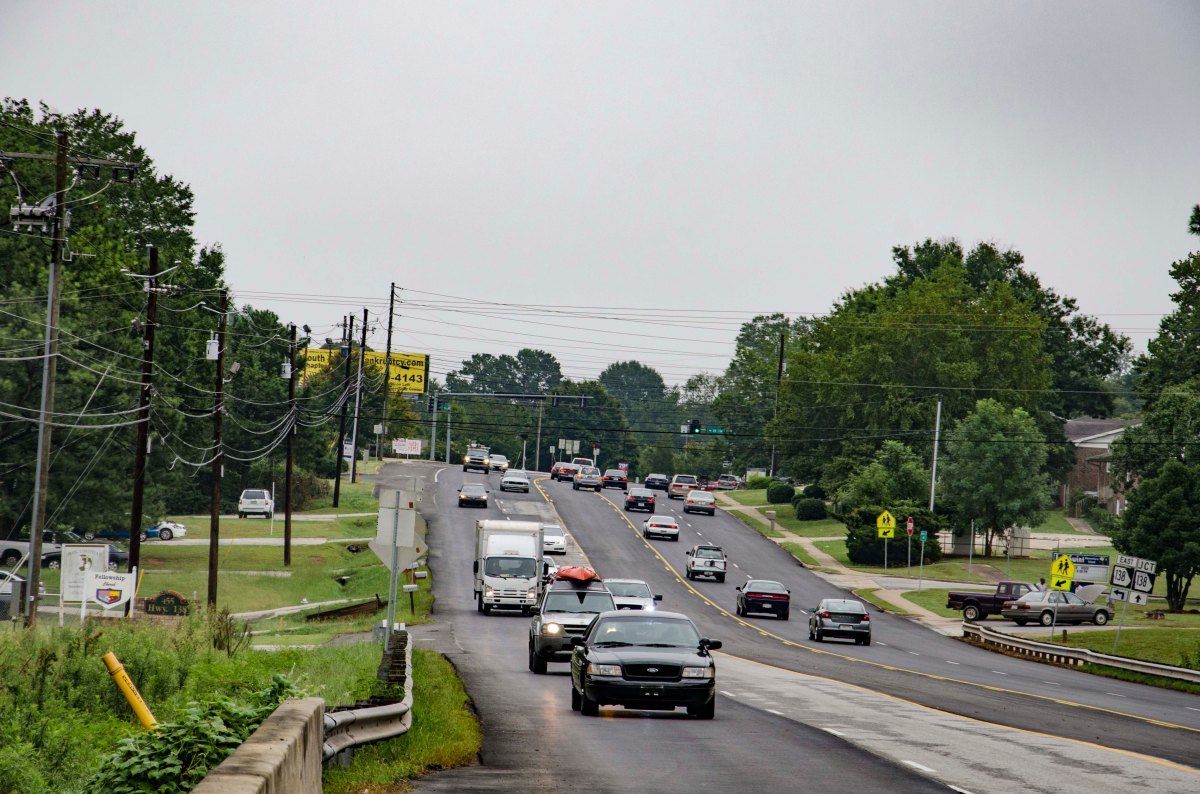
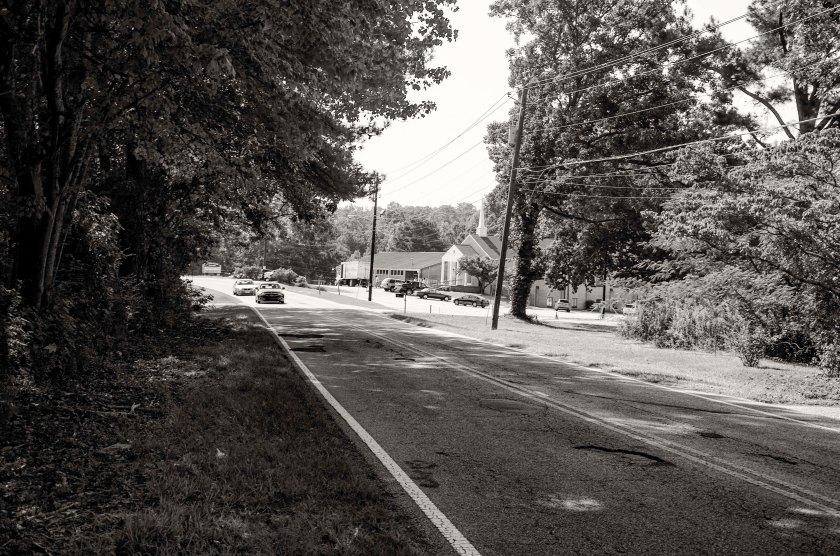
General Hardee marched his Corps (CS) to Jonesboro from train stop called Rough and Ready (now called Mountain View, located east of the Atlanta Airport between I-75 and I-285). Looking south along what was the Macon & Western Railroad. Hardee’s Corps (CS) marched down what is now US Hwy 41 and followed it south towards Jonesboro.In the early morning hours, lead elements of Hardee’s Corps (CS) marching south, encountered a Federal picket line at a bridge over a creek near Chambers’ Mill. The decision was made not to engage in a night fight and Hardee’s Corps (CS) turned left (east) onto a farm road that is now Battle Creek Rd. They continued their march east then when reaching the road to Morrow’s Station, which ran parallel to the Macon & Western Railroad, they turned south and entered Jonesboro.Logan’s 15th Corps of General Howard’s Army of the Tennessee (US) was positioned along this high ground between Jonesboro and the Flint River to their rear. Today, Hynds Springs Road follows what was the Federal line manned by Harrow’s Division of Logan’s 15th Corps.Corse’s Division of Ransom’s 16th Corps, Army of the Tennessee (US), joined the right of Harrow’s Division at a point near a deep ravine and formed a refused line back to the west and across the Flint River. The line was hear along what is now Magnolia Dr. The deep ravine that hampered Cleburne’s (CS) advance on the Federals, proved to be a tactical advantage for Corse’s Division.To Harrow’s left was Hazen’s Division of Logan’s 15th Corps (US). Their lines connected at the intersection of Hwy 138 and Hynds Spring Rd. A Strip mall now stands where Hazen’s soldier had there trenches. S. D. Lee’s(CS) assault on the Federal lines happen here and against Harrow’s Division aligned along Hynds Springs Rd.This heavily wood area is the deep ravine that is marked on battlefield maps and greatly hampered the assault of Hardee’s Corps which was under the command of General Cleburne. The Confederates suffered greatly in the deep ravine.Looking north up Hwy 41 from Veterans Pkwy. The Confederate assault came from camera right moving to the left. Cleburne, commanding Hardee’s Corps, moved from his works here to attack the refused angle of the Federal line. In order to do so he wheeled his forces to the right and move to the north. This area at Fayetteville Road and W. Mill St. is the approximate location of the pivot point where Clerburne’s line joined S.D. Lee’s line.Positioned to Cleburne’s (CS) right was S. D. Lee’s Corps(CS). They moved from their lines in this area along Fayetteville Road and North Ave., to assault the Federal 15th Corps. Looking north along Fayetteville Road the Confederates moved from right to left (east to west).During Cleburne’s assault on the refused Federal line, several brigades of Lowrey’s Division(CS) encountered Kilpatricks Cavalry (US), protecting the Federal right flank. Those Confederate brigades were able to drive Kilpatrick back across the Flint River at this point. The loss of these brigades to driving back Kilpatrick, reduced the number of soldiers for the main assault on the Federal line and along with the deep ravine encountered by the remainder of Cleburne’s command, prevented a successful Confederate assault.
Having left the area of Red Oak and Fairburn, the Federal army advances on Jonesboro and the Western & Atlantic Railroad. Howard’s Corps is the first one to cross the Flint River. Howard’s troops come under fire as they approach the Flint River. The Confederates are trying to delay them and as the retreat across the river toward Jonesboro, they set fire to the bridge. The men of Logan’s XV Corps dash across the burning bridge, some providing cover fire and others putting out the flames and saving a usable portion of the bridge. They purse the Confederates to the edge of the city and then fall back to high ground between the river and Jonesboro. They dig in on the eastern side of the river in an area that is now Hynds Springs Road near the intersection of 138.
Logan’s 15th, along with Ransom’s 16th and Blair’s 17th Corps of the Army of the Tennessee, commanded by General Howard (U.S.), marched from Fairburn to Jonesboro on this road. This view is looking west towards Fairburn. This is Hwy 138 at the Flint River.As Howard’s Army of the Tennessee reached the Flint River, they engaged in a skirmish with the Confederates. The Confederates set the bridge on fire and soldiers from Logan’s Corps sprinted across the burning bridge to provide covering fire for other soldiers to begin putting out the flames on the bridge. They pushed the Confederates back towards town and then the Federal troops entrenched along the ridge line that Hynds Springs Road follows. This view is looking east towards Jonesboro from the Flint River bridge on Hwy 138.Bethsaida Baptist Church sits along Bethsaida road. At the time of the war, this was the main road from Fairburn to Jonesboro. As the Army of the Tennessee (U.S.) left the destroyed railroad in Fairburn and Shadnor Church, the 15th, 16th, and 17th Corps all converged on this road. They skirmished constantly with Confederate Cavalry during their march to Jonesboro. The church was used as temporary headquarters by the Federals during their march and the church pews were used as feed troughs for the horses.On their march from Red Oak, Baird’s Division of the 14th Corps split off from the other two divisions to march along a different road traveling in the same direction. This was common practice as roads were much smaller and the shear volume of soldiers and wagons could quickly bottle neck on a small road. Baird moved his Division along what is now Flat Shoals Road and made a right hand turn onto what is now Riverdale Road heading south towards Jonesboro to link up with the remainder of the 14th Corps. As the division was making its turn to the south, two divisions, Wood’s and Kimball’s, of the 4th Corps (U.S.) were halted at this cross roads on their march to Rough and Ready. The 4th Corps ended up camping here around the crossroads and the farm and home of John A. Mann, which was located a few hundred feet down the road. This view is looking south down Riverdale Road in the direction the Federals marched towards Jonesboro.
The Federal Army, having reached the West Point railroad at Red Oak and Fairburn on the previous day, spend the 29th destroying 12.5 miles of track stretching as far south as Palmetto. They burned the ties and lay the track across them to heat them and then bend them around trees. They fill the railroad cuts with trees, rocks, dirt, and in some cases they rig up artillery shells in the debris to explode if material is moved. There is also a great deal of looting and pillaging of the local populace. Livestock and food stuffs are taken along with anything the looters deem useful. Some things are destroyed just for fun. On the night of the 29th, Sherman issues marching orders for the next day. In the morning they will begin moving toward Jonesboro.
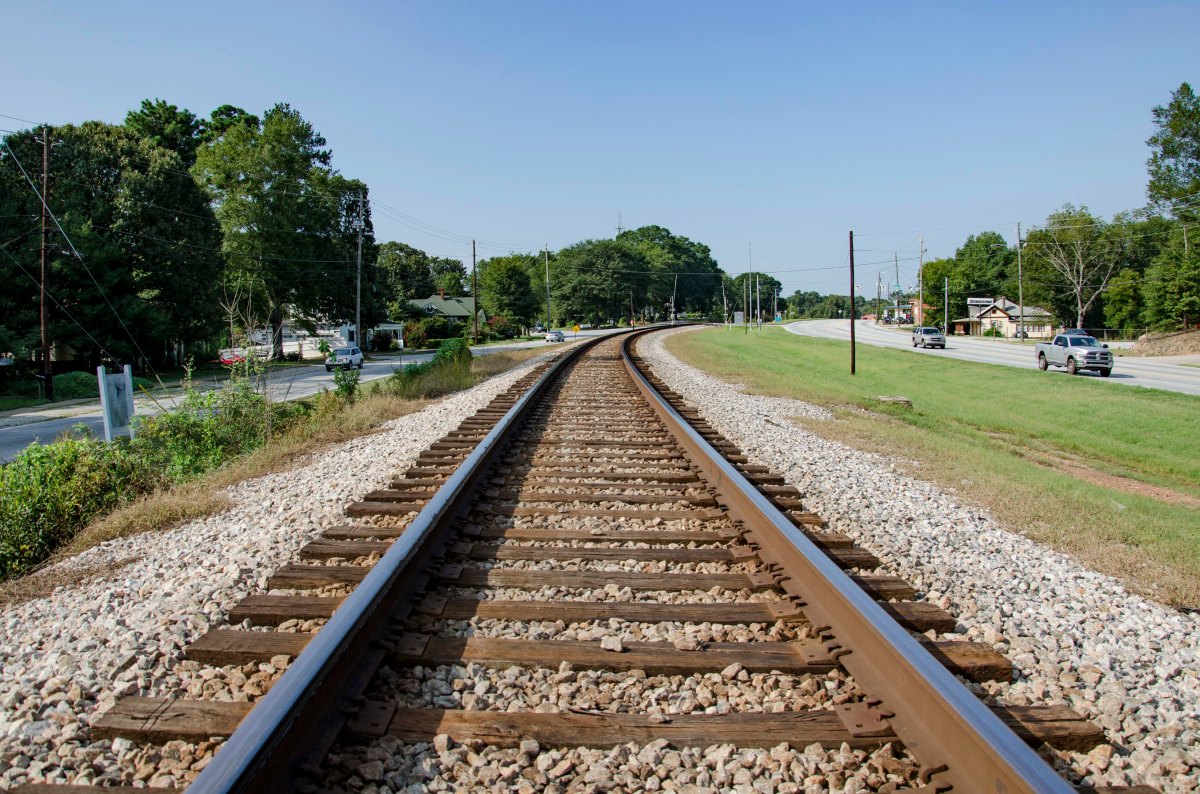
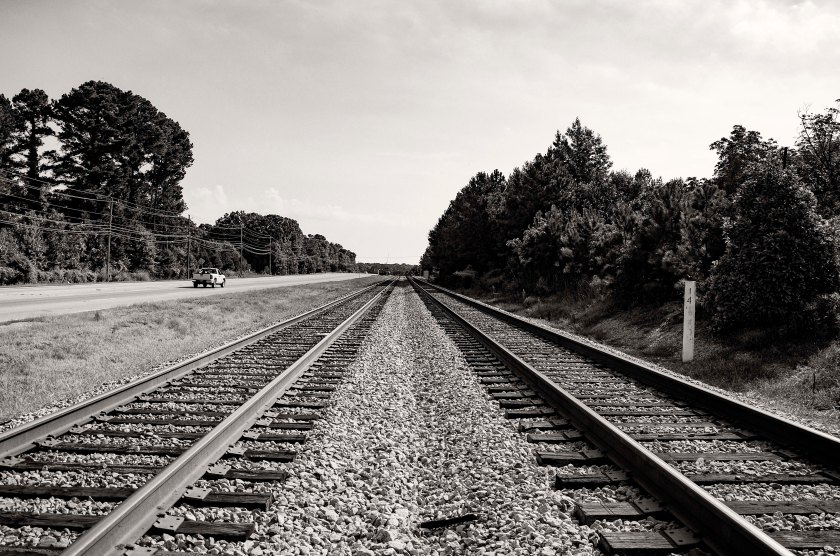
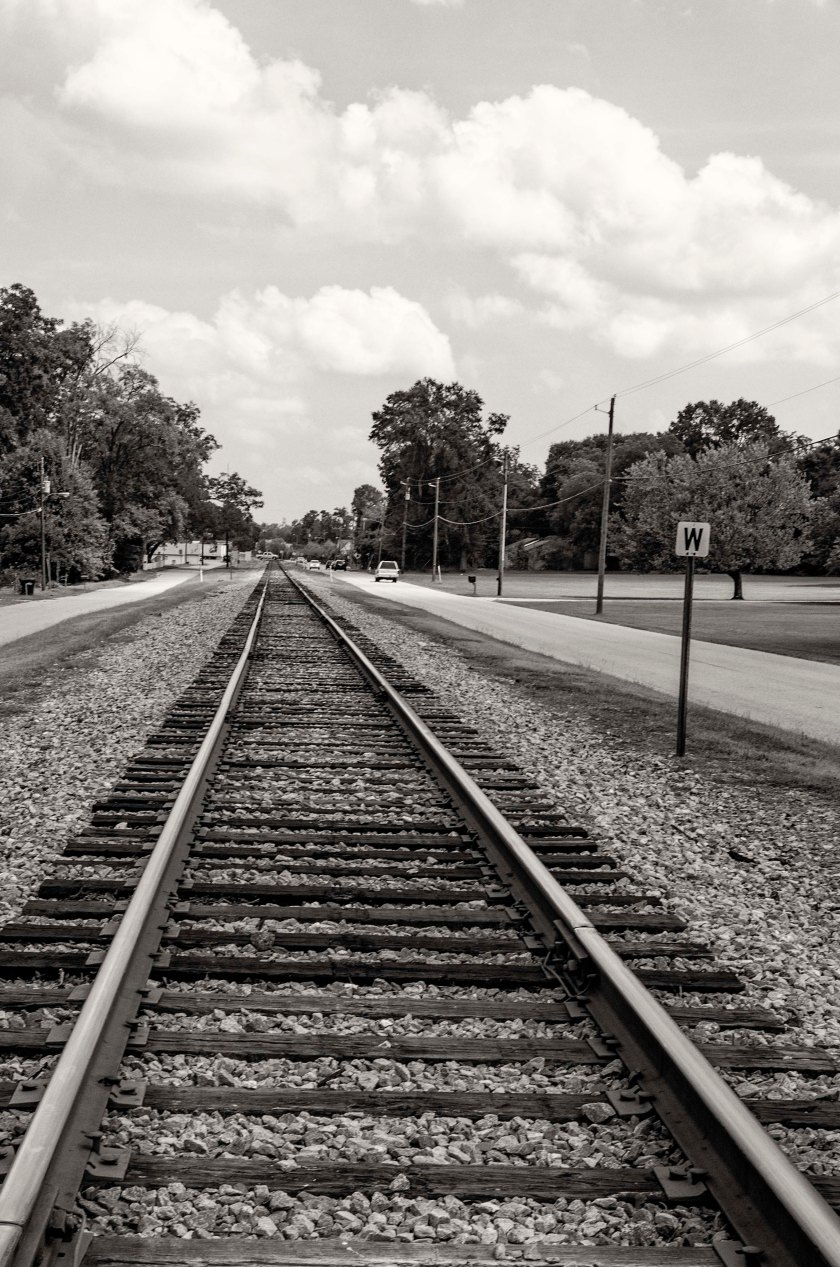
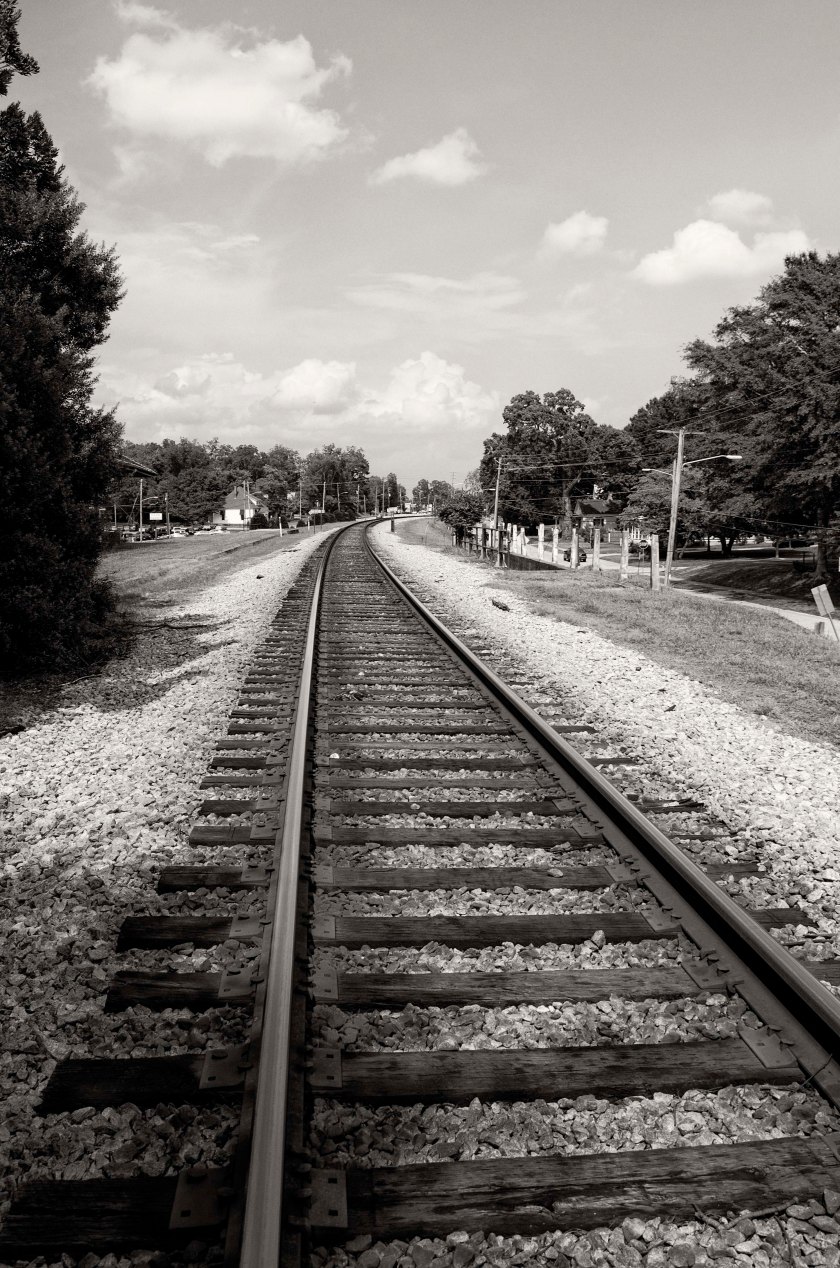
Atlanta – West Point Railroad looking south towards Fairburn. Fairburn Georgia as it stands today. Much of the town and local farms were looted during the two days that Federal forces spent here destroying the railroad prior to their movement to Jonesboro.The Atlanta – West Point Railroad at Red Oak. Looking north from mile marker 14 toward the Confederate held East Point. The Federals destroyed over 12 miles of track in two days time between East Point and Fairburn and further south to Palmetto.
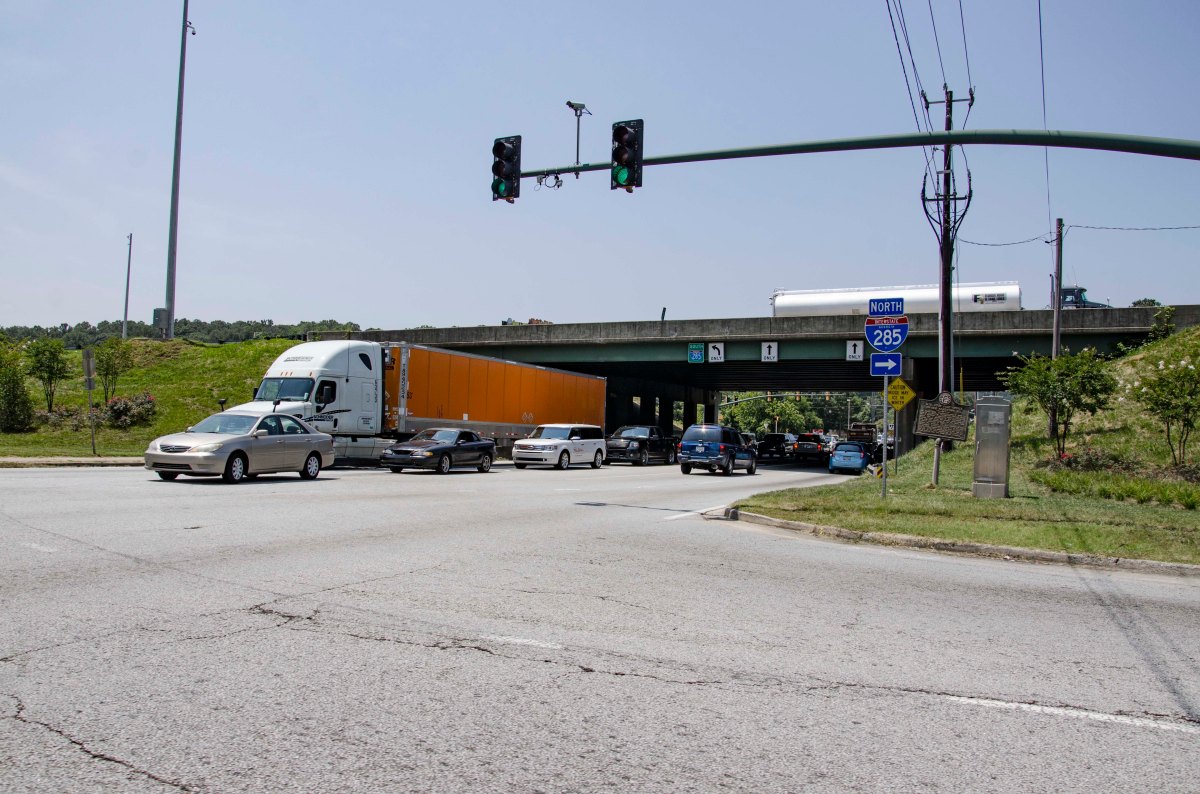
The first of Sherman’s troops reach Camp Creek on the morning of the 27th. The Federal IV Corps is moving toward Camp Creek from the area around Utoy Creek. Hood, is increasingly concerned about the possibility of Sherman attempting a flanking movement to attack the railroad at Rough and Read (now called Mountain View, which is directly east of the Atlanta airport between I-75 and I-285) or possibly at Jonesboro. Hood has received word from some Cavalry scouts that the Federals are massing at Camp Creek. Hood has dispatched French on a reconnaissance to the north and west of Atlanta and he has found the Federal XX corp entrenched in the are of the railroad bridge across the Chattahoochee River. Stewart’s and Lee’s Corps move into the empty Federal trenches and begin to reap the rewards of all the items an army leaves behind. They find everything from food to blankets. Hood sends Sthal’s Brigade to reinforce Hardee at East Point and instructs Jackson to have Armstrong’s Brigade of Cavalry ready to block and delay the Federals if they attempt to cross Camp Creek and move on Rough and Ready. From the south side of Camp Creek all the way to Joneboro, Confederate Cavalry skirmished with the Federals as they advanced. Their efforts did little to stop or slow the Federals.
This crossroads, just east of where “Sandtown” was, was a military landmark during the Civil War. This is the Intersection of Boat Rock Road, New Hope Road, and Campbellton Road. From here the Federal 15th Corps marched southeast and the 16th and 17th Corps marched south crossing Camp Creek and making their way to Shadnor Church (in present day Union City) and to Fairburn.Camp Creek at Stonewall Tell Road. Federal forces crossed this creek on their way towards Shadnor Church and Fairburn.Camp Creek at Enon Rd. Federal forces crossed this creek on their way to Shadnor Church and Fairburn.Owl Rock Church. This historic church was founded in 1828 and was a military landmark for Confederate and Federal forces during the battles around Atlanta. The Federals passed by here on their march south and east toward the Atlanta – West Point Railroad.Owl Rock, the church’s name sake.
Sherman’s siege guns around Atlanta have fallen silent. On the North and East side of the city, the Southern Soldiers find the Federal siege line empty of troops, but full of various items and food left behind by the Federals. Even though he has no hard proof, Hood suspects that Wheeler’s Cavalry raid against Sherman’s supply line in northern Georgia, may have been successful and that Sherman is starting to pull back from Atlanta. Hood also is weary of another flanking attempt by Sherman, and with the bulk of his cavalry in northern Georgia and Tennessee, he lacks critical intelligence on what is actually happening. Hood orders his units on the south west side of the city to be prepared to move quickly if Sherman is attempting to extend his lines south.
During the night of the 26th, Sherman begins moving the remainder of his army. The XIV Corps and the Army of the Tennessee begin moving south of Utoy Creek towards Camp Creek. The XXIII Corps remains in place at East Point opposing Hardee’s Corps. The XXIII staying in place, helps screen the movement of the other Federal Corps.
The Judge William A. Wilson House built around 1856 to 1859. On the night of August 26th the Federal Army of the Tennessee, consisting of the 15th, 16th and 17th Corps, camped on the Wilson Plantation while they were marching south to Fairburn and Palmetto. General Logan made the home his headquarters for the night. This location was listed on the National Register of Historic Landmarks and this was it’s condition as of August 26th 2014. Recently I drove through the area to discover that the home has been completely demolished. Until it’s destroyed, it was one of six antebellum homes still standing in the City of Atlanta.
General Sherman has grown impatient and restless with the siege of Atlanta and the failure of his Cavalry to destroy the Confederate supply line south of Atlanta. He has devised a plan to sweep his entire army with the exception of one Corps, to the south west then move back east towards the railroad. This movement will carry them though Red Oak, Fairburn, and Palmetto. From there they will move on Jonesboro.
On the 25th, Sherman gives the order to begin the movement and late in the evening the XX Corps begins pulling back from the siege lines and moves across the Chattahoochee river. The IV Corps moves as well. They moved to the area that is now I-285 and Cascade Road. They form a line of battle facing toward the north in the direction of the Confederate stronghold of Atlanta. They will act as a rear guard to protect the remainder of the Union army as they begin their march on Jonesboro. The IV Corps will remain in the Atlanta area during the assault on Jonesboro. Sherman has also ordered all the surplus wagons and supplies to be moved from the siege lines and taken across the Chattahoochee where they will be guarded.
Cascade Road at I-285. Sherman ordered his IV Corps to this area where they formed a line of battle facing the Confederate lines in Atlanta. They were to act a the rear guard as the remainder of Sherman’s army moved towards the railroad in Red Oak, Fairburn and Palmetto, before moving on to Jonesboro.
After leaving from Fairburn on the 19th, Kilpatrick moved his column towards Jonesboro. He once again met resistance from Ross’s Texas Brigade, first to his rear and then after Ross moved south below Kilpatrick and made it across the Flint River before Kilpatrick, he was then in Kilpatrick’s front. Ross’s Brigade removed the planks on the bridge over the Flint River and formed a line of battle on the high ground on the east side of the river. Kilpatrick had his artillery open open up on the Confederates and then had his Cavalry dismount and cross the bridge on its stringers. They were able to force Ross’s Brigade, which was a smaller force, back towards and eventually through Jonesboro. Kilpatrick reached Jonesboro around 5:00pm on the 19th and began to destroy the tracks and was able to burn the Railroad Station and other structures. Heavy rain prevented the Federals from making fires to heat the railroad tracks for bending so they removed it from the railroad bed and tossed it to the side.
On the 20th, after learning that a Confederate force of unknown strength was approaching, Kilpatrick decided to abandon his efforts in Jonesboro and move towards Love Joy’s Station. As he approached Love Joy’s Station he did not know the strength of the Confederate forces there. They Rebels had hidden themselves in a railroad cut and waited. When the Federal Cavalry dismounted and approached the railroad, the Confederates waited until they were within about 50 yards before making themselves known and opening fire on the Federals. The Federals were quickly repulsed and soon they were attacked from the rear by Ross’s Texans. Kilpatrick had limited options. He quickly decided to fight his way out and formed his units into several tight and compact columns and made a counter attack on the Confederate forces to his rear. Minty’s Brigade lead Kilpatricks column and as they approached the Rebels across an open field, they drew their sabers and charged. They were able to cut their way through and Kilpatrick’s column was able to escape and make for the Federal lines east of Atlanta. They moved north east from Love Joy’s Station toward McDonough and from there they made for the South River, which they crossed and the went through Lithonia and form there to Decatur.
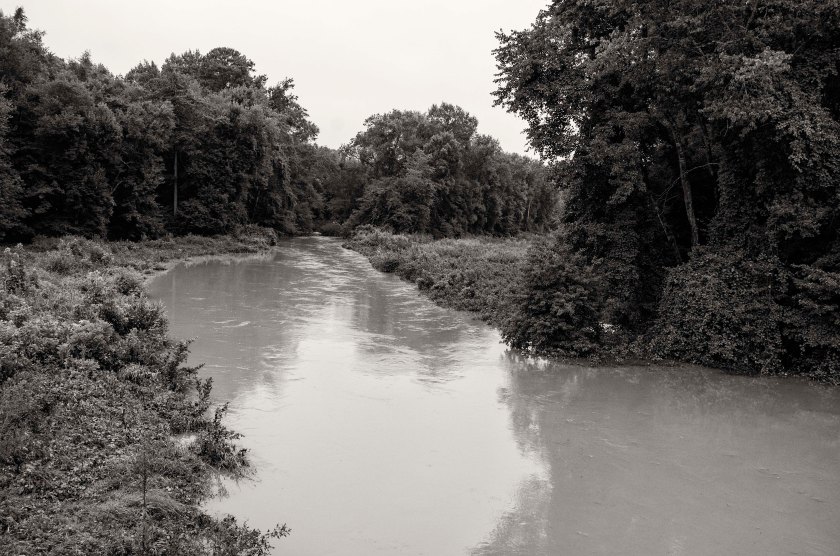
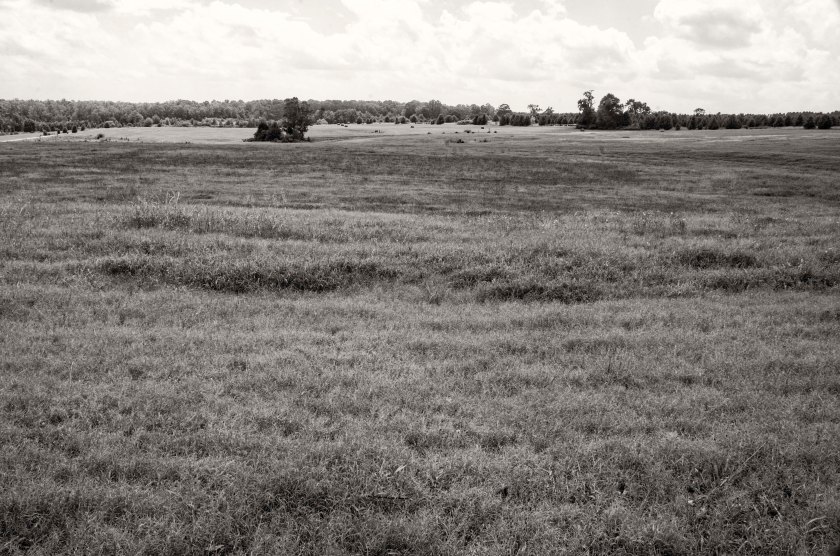
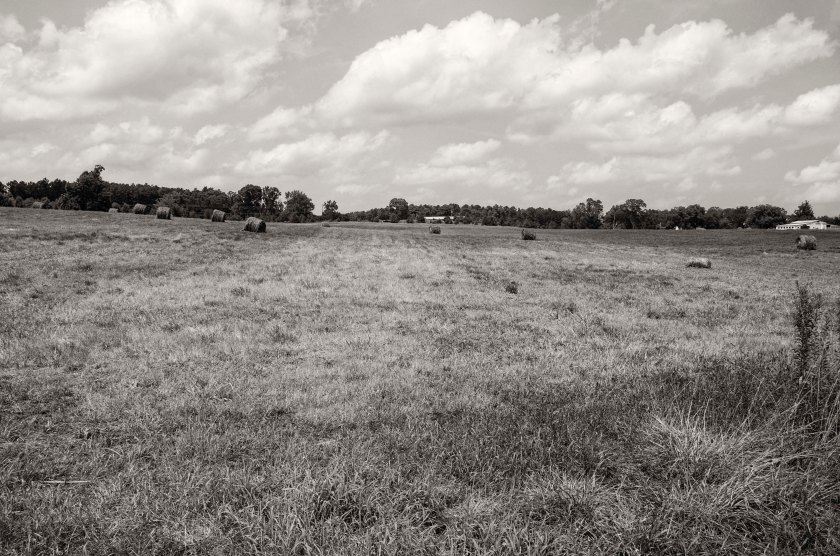
Looking west on Hwy 138 at the Flint River. Kilpatrick’s Cavalry rode from Fairburn to Jonesboro along this road. On the high ground in the distance, the Chicago Board of Trade Battery, unlimbered their field pieces and began to shell the Confederates of Ross’s Texans on the ridge on the east side of the river. This artillery bombardment covered portions of Kilpatrick’s Cavalry as they dismounted and crossed the Flint river on the stringers of the damaged bridge.The rain swollen Flint River at Hwy 138, 150 years after Kilpatrick’s raid.Looking east from the Flint River Bridge on Hwy 138. Ross’s Texans established a line on the low ridge in the distance. After being shelled by the Chicago Board of Trade Battery and being outnumbered by Kilpatrick’s advancing cavalry, Ross’s Texans fell back to and were eventually pushed out of Jonesboro.Downtown Jonesboro. This depot, built in 1867 to replace the original depot destroyed by Kilpatrick’s Cavalry, is located roughly half a mile south of location of the wartime depot. After destroying the depot and other structures, Kilpatrick’s men destroyed the railroad tracks. Heavy rain prevented the Federals from building large fires of cross ties to heat the tracks for bending into “neckties”, but they still did their best to dismantle the tracks.After leaving Jonesboro, Kilpatrick’s Cavalry rides to Love Joy Station with Ross’s Texans skirmishing with their rear guard nearly the entire way. As Kilpatrick’s troopers dismounted and started to destroy the railroad, Confederates allowed them to approach withing 50 yards before opening fire on them. Kilpatrick’s Cavalry was forced east from the railroad along the McDonough Rd. In the area of the Nash farm they encountered Ross’s Texans deployed across the road.Nash Farm Battlefield. Kilpatrick formed his cavalry into tight columns and charged in the direction of the camera, moving to break through Ross’s Texans.Ross’s Texans were deployed on this high ground at the Nash Farm Battlefield. They were astride the road with an artillery batter on the north side of the McDonough Rd. Kilpatrick’s Cavalry would have road across this ground into the distance to break through Ross’s Texans.
August 18th, 1864: Several days earlier, General Hood dispatched General Wheeler and his Confederate Cavalry to the north in an effort to disrupt Sherman’s supply lines coming from Chattanooga. Sherman, who has quickly become restless during the siege, has started planning the movement of his entire army to the the south of Atlanta to destroy the Confederate supply line coming up from Macon.
Sherman has also learned that Wheeler’s Cavalry has made it to Tennessee and is therefore to far to offer any support to Hood or oppose Kilpatrick and his Cavalry. Sherman decides to delay the movement of his army around Atlanta and instead he orders Kilpatrick to move on the railroad in Jonesboro with his three Brigades and two more attached to him from Garrard’s Cavalry.
On the night of the 18th, Kilpatrick and five Brigades of Federal Cavalry, begin their move towards Jonesboro. They leave from Sandtown and head towards Fairburn. They are opposed by only one Confederate Brigade. Ross’s Texas Brigade spends the night of the 18th harassing and slowing down the Federal Cavalry. These actions slow down the Federal Cavalry considerably and delay the raids time table.
Downtown Fairburn 150 years after Kilpatrick’s Cavalry came through. They returned here after their previous recon and at Sherman’s orders, attempted to destroy the railroad here and in Jonesboro. They crossed the Chattahoochee River in Sandtown and traveled south east to Fairburn and skirmished with Ross’s Texans along the way.
Sherman has sent Kilpatrick’s Cavalry to the south of Atlanta on a reconnaissance mission. On the morning of the 16th, Kilpatrick reaches Fairburn, where he destroys three miles of railroad track and the depot. He has been operating without any real opposition from Jackson’s Cavalry. Sherman begins to think that Kilpatrick, along with a couple Brigades of Garrad’s Cavalry, could swing far south of Atlanta and destroy the railroad without needing to move the entire army. Sherman ask Kilpatrick if he thinks it is possible, to which he replies that it would be possible to damage the tracks bad enough to be out of service and not put his command in any danger.
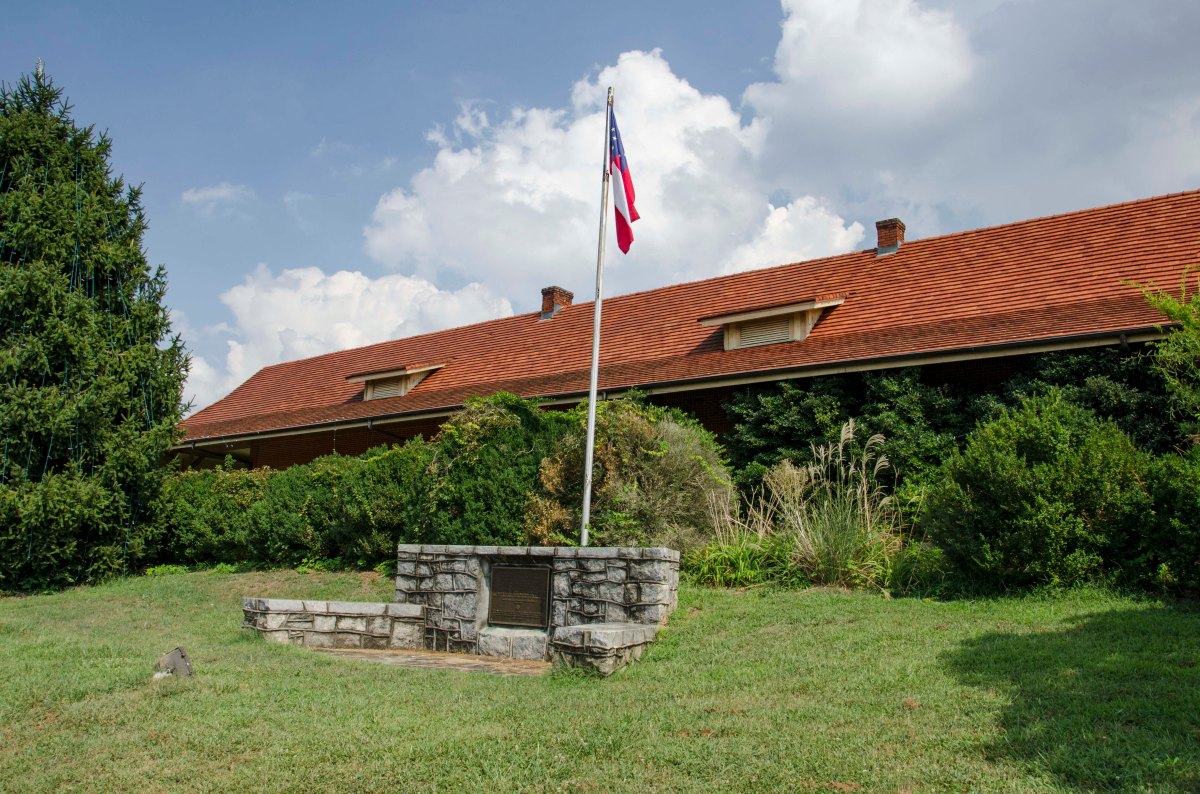
Fairburn, Georgia. Located south west of Atlanta along the railroad lines. As Kilpatrick came through on his raid he destroyed the original Depot. The marker here is for the raising of the first Confederate flag in Georgia. Wives of men that had been at the Confederate Congress, stopped on their home in Grantville to purchase fabric and by the time they made it to Fairburn, they had created the flag.Looking north towards East Point along the railroad that leads to Atlanta. This one of the vital supply lines the fed the city while it was under siege. Kilpatrick destroyed roughly three miles of track here.
On the morning of the seventh, the Federals again began to advance on the entrenched Confederates south of Utoy Creek. They encountered no resistance and found the Confederate works empty. Bate’s Division was withdrawn from the lines overnight and took their place in the line of defensive works, that stretched from the defensive perimeter around Atlanta, to the southwest in order to protect the railroads in East Point. Bate’s takes his place between Clayton’s Division on his right (north) and Clerburne’s Division to his left (south).
Sherman, who is displeased with the failure of the movement toward East Point, decides to lay siege to Atlanta and will do his best to run the Confederates out of the city. He begins to shell the city and considers the city itself as a military target even though there are still civilians within the city. Many have evacuated, but several thousand have no where to go or have decided to wait it out.
During the night of August the 6th, Bate(CS), withdrew his Division back to the original lines that had been established to block the Federal movement on East Point. Bate was aligned with Clayton’s Division(CS) on his right and Cleburne’s Division(CS) on his left. Here, along this low ridge split by Connally Road, was the far left of the Confederate line manned by elements of Cleburne’s Division(CS). This ridge line overlooks one of the many forks on the southern side of Utoy Creek.Remains of a Confederate trench lie beneath these fallen trees in the woods of Greenwood Cemetery. As Bate(CS) retired back to the original lines, Clayton’s Division9CS) was here on his right with his lines moving north and east back to Atlanta’s inner defenses.English Ivy covers part of the Confederate works that remain in John A. White Park. These works were staffed by Clayton’s Division(CS).





















 War Was Here