After the death of General McPherson during the Battle of Atlanta, General Logan assumed command during the battle and retained it for several days while General Sherman decided who should replace McPherson. Sherman, being a graduate of Westpoint, had a certain disdain for political Generals like Logan, and did not trust them to follow orders properly and promptly as they were on the field of battle for political gain. With these thoughts in mind and after consulting with General Thomas of the Army of the Cumberland, Sherman chose General O.O. Howard to command the Army of the Tennessee as McPherson’s successor. General Hooker is so offended and outraged that he was not given command of the Army of the Tennessee, the he resigns his commission and leaves the Army. Howard assumed command on the 27th of July and his order of the day was to shift the Army of the Tennessee from the east side of Atlanta near Decatur, to the west side of Atlanta by moving to the north and around the top of the city. His ultimate objective is to move on Eastpoint and destroy the railroad.
Sherman has Cavalry units dismount and fill the lines of Howard’s army as they began to pull out. He also ordered infantry units along the line to skirmish heavily with the Confederates in the cities defensive lines in hopes of screening Howard’s move. Sherman was attempting to flank Hood out of the city and draw him into a fight or cut off Hood’s supply line from the railroad to Macon and the railroad to Westpoint.
Stoneman’s and McCook’s Cavalry were sent on a raid to destroy the railroads while the Army of the Tennessee was moving into place. Stoneman went south out of Decatur and McCook moved southwest from Turner’s Ferry. McCook and Stoneman were scheduled to meet at Love Joy’s Station on the 28th to destroy the railroad. McCook went southwest along the west bank of the Chattahoochee and crossing on pontoon bridges at Smiths Ferry, about 6 miles south of Campbellton. He moves on toward the east and in Palmetto he destroys several miles of track, burns the depot and then moves towards the east again in the direction of Fayetteville. Along the Fayetteville road the come across a Confederate wagon train. They take about 300 prisoners and burn nearly 500 wagons. They also kill almost 1000 mules with their sabers to keep the sound of gunfire from giving away their location.
By mid to late morning, Hood is aware of the Federals movements. He sends Wheelers Cavalry to intercept and destroy the Union Cavalry. Wheeler surrounds Garrard’s Cavalry at Flat Rock where they skirmish and Garrard falls back towards Lithonia. Hood then learns of McCook’s raid and Wheeler is sent to intercept him. Having detected the movements of Howard’s Army of the Tennesse, Hood sends General Stephen D. Lee’s Corps and A.P. Stewart’s Corps to extend the Confederate left flank out of Atlanta in an attempt to block the Federal move toward East Point. S.D. Lee is now the commander of Hood’s former Corps.
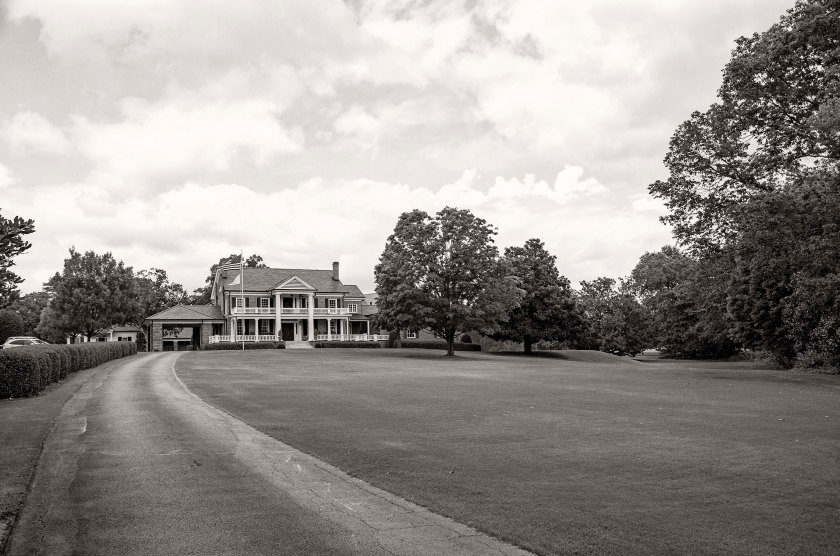
The Bullard Henley House, located west of the Chattahoochee River on Hwy. 92 near Hwy 166, was built in the late 1830’s. As McCook moved his column south toward Campbelton, he engaged in a short firefight on the Bullard Plantation. One of the Federal soldiers died and is buried behind the house. General McCook established his headquarters here for the night. McCook, along with his officers, enjoyed a meal prepared by Mrs. Bullard. In the evening, the daughter of Mrs. Bullard, played the family piano to entertain the officers. The officers made multiple request for Yankee Doodle, but she refused to play it and would play Dixie instead. After several rounds of this, the General made a deal that he would sing Dixie while she played as long as she would play Yankee Doodle after.Smith’s Ferry road. After meeting resistance at the river crossing in Campbellton, McCook moved six miles south to Smith’s Ferry. This dirt road is an original portion of the period road that McCooks cavalry traveled upon. At the end of the road is the original Ferry Masters house and is still occupied as a private residence. On the east side of the Chattahoochee at Cedar Grove Rd. and River Lake Dr. After Crossing the river at Smith’s Ferry, McCook east along this road that was once the other half of Smith’s Ferry Rd. They then turned to the south, camera left, and rode through Rico to Palmetto.The Railroad in Palmetto. Here, McCook destroyed six miles of track and burned the depot along with supplies and they cut the telegraph lines as well.
After an arduous night march of 16 miles, Hardee’s Corps was getting into position on the Federal left flank. The attack that was supposed to begin at dawn, but was delayed due to the distance of the night march and then further delayed when Walker’s and Bate’s Divisions had to work around the swampy terrain at Terry’s Mill Pond. Just after 12:00pm, Hardee ordered Walker and Bate to attack the Federal left flank. Bate’s Division was on the Confederate right, east of Sugar Creek and Walker’s Division was on the west side of Sugar Creek. As Walker’s Division made their way past the mill pond, Walker moved to the front of his lines to see what lay ahead of his column. As he raised his field glasses, a round from a Federal sharpshooter killed him instantly. After the disarray and confusion that followed, Brig. Gen. H. W. Mercer assumed command of the Division and carried out the attack. Walker fell near the intersection of Glenwood Ave. and Wilkinson Dr. A monument dedicated to his memory stands there today.
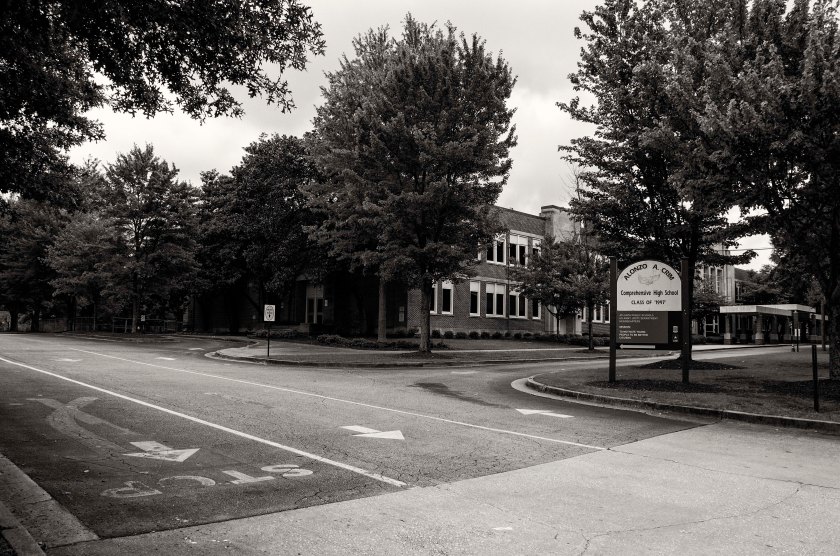
The Federals that Walker and Bate were attacking were elements of the 2nd and 4th Divisions of Dodge’s XVI Corps. They were entrenched in the area of Memorial Drive and Clay Street. With part of the line extending into what is now Alonzo Crim High School. This was a tactically advantageous position on high ground overlooking Sugar Creek valley. They were also supported by several artillery batteries.
Cleburne’s and Maney’s Divisions had moved up Flat Shoals Road and were heading toward the left flank of the Federals that were entrenched along Flat Shoals in the area between Glenwood and the intersection of I-20 and Moreland (Bald Hill, aka Leggett’s Hill). They attacked the left flank of Blair’s XVII Corps that was held by Smith’s 4th Division. Cleburne’s attack was fast and furious. His troops drove the Federals back to the north to Bald Hill and in the process they captured eight cannons and the entire 16th Iowa Infantry Regiment.
During this time, General McPherson was riding toward Dodge’s Corps to asses the situation and was traveling on a ridge line (McPherson Ave.) trying to find a way to close the gap between Logan and Blair. The Confederates were flooding into the gap in McPherson’s lines, and as McPherson searched for a way to close the gap, he was shot and killed by the attacking Confederates. One of McPherson’s aides was with him, and when the shots rang out, his horse took off and slammed into a tree, thus breaking his watch at 2:02pm, the time of McPherson’s death.
Late in the afternoon, Hood, who was observing the battle from a house adjacent to what is now Oakland Cemetery, ordered his former Corps, now commanded by Cheatham, to attack the Federal front. Cheatham’s Corps left their works and moved east toward the Federal line. The right of Cheatham’s Corps was attacking Bald Hill from the west and Maney’s Division of Hardee’s Corps was attacking from the south west. Even with their combined effort, they were unable to push the Federals off of Bald Hill. On Cheatham’s left, Clayton and Brown’s divisions were more successful. Manigault’s Brigade of Brown’s Division, used the cover of a deep railroad cut in the area of the current Inman Park Marta Station and the CSX railroad. They came under artillery fire, but were able to out flank the battery and capture the guns. This action broke the Federal line and Manigault wheeled to the left and began to “roll up” the Federal line. He captured 8 cannons in the process, four of which were 20 pounder Parrott rifles. Stovall’s Brigade, which was aligned to the left of Manigault, was attacking the Degress Battery (located off of Battery Place) from the front when Manigault hit the flank. As the line broke, soldiers from both Brigades stormed the works and captured the battery. The 42nd Ga. Volunteers, who were part of Stovall’s Brigade, took part in this assault.
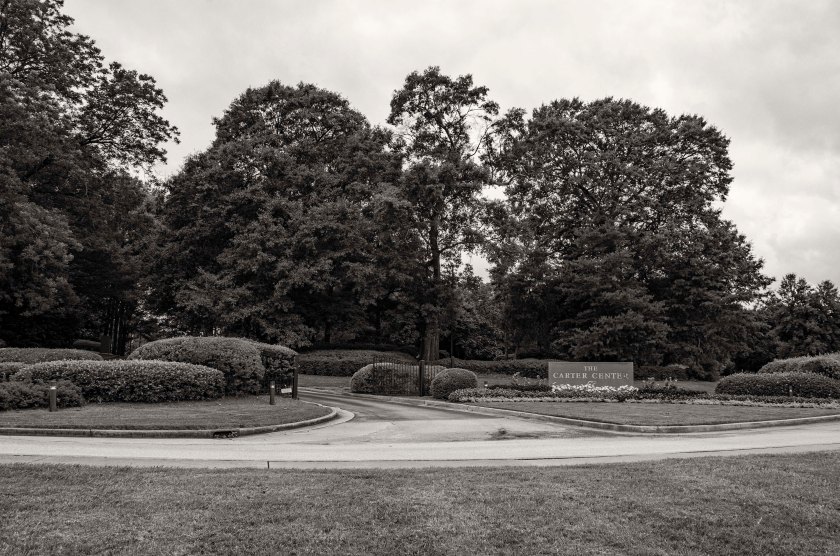
General Sherman, who was observing the battle from the Augustus Hurt house at the present day Carter Library, witnessed the Confederate assault that broke part of the lines of Logan’s XV Corps. He personally directed artillery fire from five concentrated batteries, toward the attacking Confederates. He had the artillery rounds falling to their front to prevent them from moving forward and attacking, as well as toward their rear to prevent reinforcements from supporting the assault. This artillery fire and a Federal counter attack of eight Brigades, pushed the Confederates back to their works and restored the Federal line.
Hood had also dispatched General Wheeler and his Cavalry to Decatur to attack McPherson’s wagon train. Wheeler found several regiments of Federal infantry posted south of Decatur. At 1:00pm, Wheeler dismounted two of his divisions and assaulted the Federals. He pushed them north across what is now Agnes Scott College and then across the railroad tracks to the Decatur Square. The wagon train was detoured from Decatur after Wheeler started his assault. Wheeler pushed the Federals through the square and through the old city cemetery. The Federals then formed a new line along what is now North Decatur Road. Before Wheeler could attack the new Federal line, he was recalled back to Atlanta to support the attack on Bald Hill.
The battle was over by the time darkness had fallen, the Confederates had returned to their works and had suffered nearly twice the number of casualties as the Federals. The Federals reformed their lines and will shortly begin the “Siege of Atlanta”.
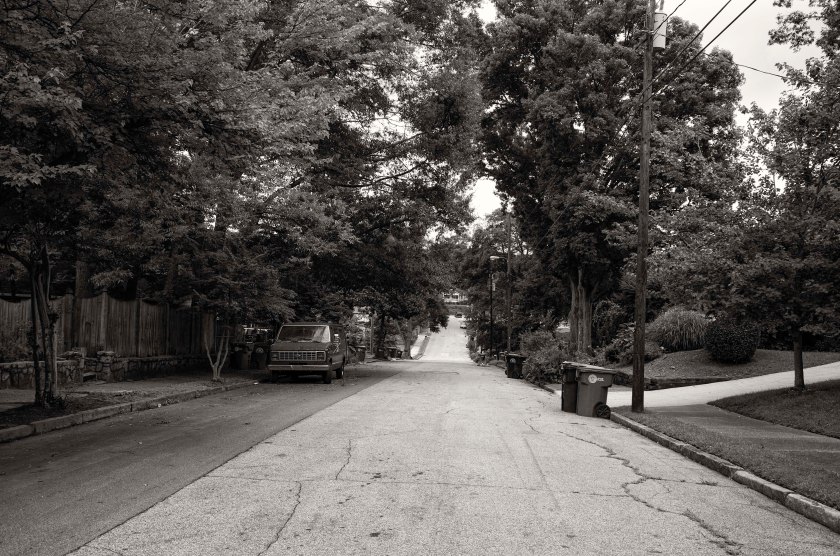
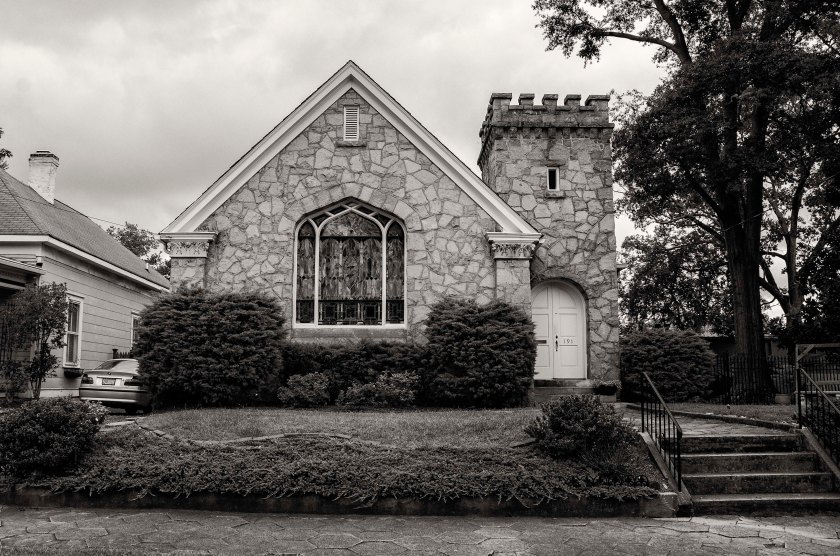
After receiving the order from General Hardee (CS) to attack, General W. Walker commanding his division of Hardee’s Corps rode to the front of his lines to observe the terrain and deploy his troops in Sugar Creek Valley. He was shot off his horse and killed by a Federal picket. General Mercer assumed command and continued the attack.Sugar Creek Valley: Bate’s Division of Hardee’s Corps(CS) was deployed on this, the eastern side of Sugar Creek and Walker’s Division, now commanded by Mercer, was deployed to the western side of the creek. They advanced up the low valley to assault the federal lines along present day Memorial Drive and Clay Street. The Dekalb Memorial Park now occupies what is left of Sugar Creek Valley.Alanzo A. Crim High School now occupies the spot where the Blodgett’s Missouri Battery H was positioned in the Federal lines that were occupied by Federal troops from Rice’s and Mersey’s Brigades of Sweeny’s Division(US). Rice’s Brigade was facing east and engaged with Bate’s Division as they moved up the east side of Sugar Creek and Mersey’s Brigade was facing south and bearing the brunt of the assault from Walkers Division(commanded by Mercer).The Federal lines of Rice’s Brigade were positioned on this high ground here at Memorial Drive near Clay street. They were facing east, toward the camera position, and were engaged with Bate’s Division (CS)While Bate’s and Walker’s Division’s constituted the right flank of Hardee’s assault on the Federal lines, Maney’s and Cleburne’s Divisions were the left flank. Maney’s Brigades advanced on the Federal lines and moved through what is now Brownwood Park, to assault the Federals on the high ground just north of Flat Shoals Rd.Cleburne’s Division was advancing on the west side of Flat Shoals Rd, to the right of Maney’s Division, when they encountered the far left of the Federal flank. Cleburne’s men were able to turn the Federal left, General Smith Division, and then were able to assault the rear of the Federal lines to their west. In the process of that assault, Cleburne’s troops were able to capture eight artillery pieces that belonged to the 2nd Illinois and 2nd U.S. Artillery.With an attack on two sides, General Smith(US), fell back with his Division under heavy fire. They made a retrograde movement to form a line on the east flank of Bald Hill, also called Leggett’s Hill. Leggett’s hill once occupied the intersection of I-20 and Moreland Ave. The fighting here was fierce, with the Leggett’s Division and what was left of Smith Division, taking fire on their position from their front, their left flank, and their rear.In the late morning, just before the noon start to the Confederate attack, General McPherson, along with Generals Logan and Blair, as well as their staff officer, stopped for lunch. They stopped in a grove of oak trees on the south side of the rail road near the location of Whitfoord Ave and La France. After finishing their meal and sending a dispatch to General Dodge to destroy the rail road, the generals heard the first shots of the Confederate assault. Logan and Blair rode off to command their respective corps and McPherson and his staff road towards the sound of the gun fight. While moving along what is now McPherson Ave., General McPherson was shot and killed by Confederates of Cleburne’s Division as they exploited a gap in the Federal lines. This image is of reenactors at a memorial service on the 150th anniversary of the Generals death.Several hours after the main Confederate assault by Hardee’s Corps(CS), General Hood(CS), threw Cheatham’s Corps into the attack and thus extended the Confederate line of attack further north and across the railroad. Here in this images is Edgewood Ave. Clayton’s Brigade of Cheatham’s Corps(CS) moved east through here to attack the Federal positions at the Troup Hurt House. Dekalb Ave. at the Inman Park Marta Station. Here, Manigault’s and Sharp’s Brigades of Brown’s Division Cheatham’s Corps (CS) moved east on the north side of the rail road tracks to assault the Federal lines. Sharp’s Brigade was able to exploit the cover provided by the deep railroad, where the Marta station now sits, and push through the small gap in the Federal lines where he wheeled to the right to attack the Federal flank south of the railroad and capture 2 artillery pieces of Battery A 1st Illinois Artillery. Manigault wheeled to the left and captured the 4 remaining guns of the battery and continued to move north up the Federal line. The Federal line broke and Manigault along with Stovall’s Brigade were able to continue the assault.This old stone church, now a private residence, sits on the site of the Troup Hurt House. This site was a land mark on the battlefield and the site of the Federal lines as well as the four 20 pounder Parrott rifles of the Degress Battery H, 1st Illinois Artillery. Manigault’s along with Stovall’s Brigade, were able to break the Federal lines here and capture the Degress Battery. They were able to hold the position for some time before they too were routed out by a Federal counter attack.General Hood(CS) was the commander of the Confederate Army of Tennessee and upon ordering Cheatham’s Corps to attack the Federal lines, he took up a position on the second floor of the Williams home, to watch the battle unfold. The Williams home once stood in this area of what is now Oakland Cemetery.The Carter Center now sits where the Augustus Hurt House once stood. This was the location of General Sherman’s headquarters during the Battle of Atlanta. Generals Howard and Schofield also made their command post here as well. After his death, General McPherson’s body was brought here before being send back to Ohio for burial. From here, Sherman ordered a counter attack on the Confederates and personally directed artillery fire against the Confederates in the area of the Troup Hurt House.As part of the Federal counter attack, Logan’s 15th Corps(US), moved west astride the railroad. Here, just on the south side of the railroad at Moreland Ave. and Caroline st., Lightburn’s Brigade advanced west toward the area of the Troup Hurt House.Dekalb Ave. at Moreland Ave. Upon establishing their lines in the area of the Troup Hurt House and the railroad cut just west of this location, the Federals set up a signal station in a large pine tree in this location. After the Federal lines broke, the station was abandoned and when the Federal counter attack was successful, the station was put back in to use.
Heavy fighting took place along the eastern approach to Atlanta. Wheeler’s Cavalry were engaged with Blair’s XVII Corps along area near Moreland Ave. Cleburne was in a desperate fight with Leggett’s 3rd Division of Blair’s XVII Corps, for control of “Bald Hill”. A prominent hill within artillery range of the city. Now located at Moreland and I-20, most of the hill, now called “Leggett’s Hill”, is gone due to the construction of I-20.
After his defeat at the Battle of Peachtree Creek on the 20th, Hood has started shifting his forces further to the east in an effort to engage McPherson and Schofield. In an attempt to attack McPerson’s left flank and his rear, he sends Hardee on a 16 mile long night march heading south and east to link up with Cleburne and assault the Federal flank east of Atlanta. Hardee begins his marches down Peachtree Street near Peachtree and Spring St. He heads south through Five Points and turn in a south easterly direction and moved to a point near the north side of the South River. Here he turned up the Fayetteville Road and the move onward to Bouldercrest Road. As he turned north on Bouldercrest he reached a fork in the road and divided his forces, with Cleburne’s and Maney’s Divisions taking Bouldercrest to Flat Shoals Road and then Walker and Bate’s Divisions moving up the Fayetteville Road.
Two divisions of Wheeler’s Cavalry, after roughly an hours rest from the days intense fighting, are sent way around the Federal left flank in an attempt to reach the Federal rear in Decatur and destroy the McPherson’s wagon trains.
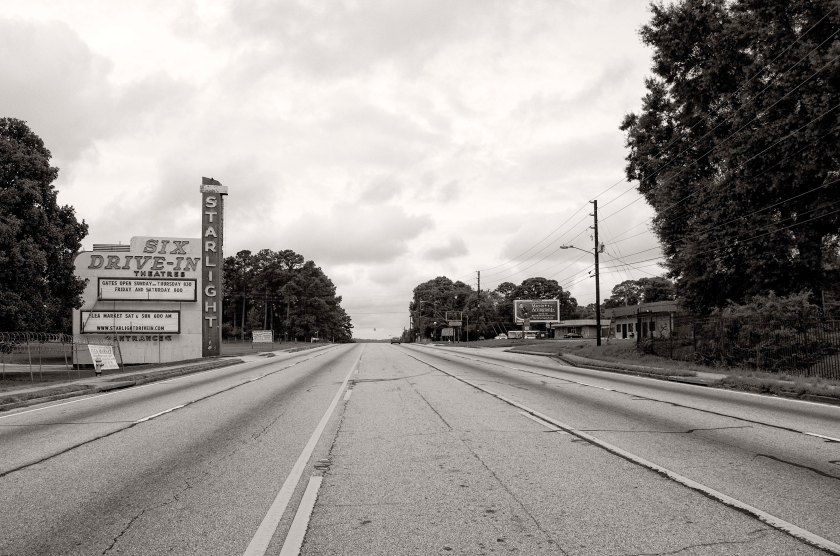
WSB TV, site of Atlanta’s Outer Defenses. After a failed assault at the Battle of Peachtree Creek, Hardee’s Corps fell back to the position where they started their assault and after a hard day of fighting, they moved from their works and mustered a couple hundred yards away near Preachtree St. and Spring St. to being their 16 mile long forced night march.After marching down Peachtree st. and through 5 points, Hardee’s Corps continued to march south down Capitol Ave. and onto what is not Hank Aaron Dr, passing the location of Turner field, were Confederate Artillery batteries were once positioned.Hardee’s Corps continued to march down Hank Aaron Dr, which was then called McDonough Blvd. They would have marched down the road to camera right and made a left turn, then marched toward the camera.McDonough Blvd. at Jonesboro Rd. The march continued down McDonough Blvd. taking the left fork to stay headed east.Hardee continued marching further and further into the night attempting to be in position by dawn, but march, consisting of close to 18,000 soldiers, was painfully slow. They would have passed through the area of the Federal Penitentiary.McDonough Blvd. at Moreland Ave. Hardee’s soldiers marched along this road and turned right on to what is now Moreland Ave and marched south to a point near the south river.The Starlight Drive In, a local landmark, now sits to the side of a road where Hardee’s Corps passed in the late night and early morning hours of July 21st – 22nd.After marching to a point just north of the South River, Hardee turned his troops north up Fayetteville Road. At dawn on the 22nd of July, 1864, Hardee’s Column stopped here at Intrenchment Creek. Here once stood the home and mill of WM Cobb. Hardee needed local guides for the remainder of his march as he and his officers were not familiar with the area. Mr. Cobb and his Miller, named Case Turner, agreed to guide Hardee’s columns to positions for their attack on the Federal left flank. Now a water treatment plant occupies the site.After continuing on from Intrenchment Creek, the column marched on Fayetteville road (now Key Rd) to the intersection with Bouldercrest Road and turned left. They continued up Bouldercrest Road to the fork with Fayetteville Road. With Cleburne’s and Maney’s Divisions taking the left fork (Bouldercrest Rd) and moved up to Flat Shoals Rd where they eventually assaulted the Federals in the area of Bald Hill. The right fork (Fayetteville Rd.) was taken by Walker and Bate’s divisions.
Terry’s Mill Pond. Case Turner guided Walker and Bate’s Divisions up the Fayetteville Rd. to Sugar Creek. At this point, against the advise of Mr. Turner, Walker’s Division turned north and moved off the road to travel up the west side of the creek and Bate’s followed suit moving up the east side of the creek. Mr. Turner warned them of the difficult and swampy terrain around Tom Terry’s Mill pond. Their advance was significantly delayed due to this obstacle. The mill pond is gone now, but one existed in the low ground inside this tree line. A community garden now exist on this site at the intersection of Terry Mill Rd and Glenwood Rd.Glenwood and I-20. The northern end of Terry’s Mill Pond was near this point and in the trees to camera left. The main assault of the Confederates began from this area at 12:15pm. As the assault was to begin, General Walker moved up to the front of his Division to survey the terrain. As he brought his field glasses up to his eyes, he was shot dead by a Federal Sharpshooter.
As Hood prepares for his first tactical engagement since taking command of the Confederate Army of Tennessee, he is hoping that General Thomas’s Army of the Cumberland has been unable to prepare any earthworks since crossing Peachtree Creek. Hood is also having to keep an eye on McPherson and Schofield as they advance from Decatur toward Atlanta. The attack is planned for 1:00pm, but for various reasons it does not commence until 4:00pm.
Hood has deployed Stewart’s Corps (formerly commanded by the late Lt. Gen. L. Polk) to his left. Stewart’s Corps consist of French’s Division on the far left connecting to the Western and Atlantic Railroad near Casey’s Hill in the current Crestlawn Cemetery and extending east and connecting to Walthall’s Division, which sits astride Howell Mill Road. Walthall’s right extends toward the east and connects with Loring’s Division between Howell Mill and Northside Drive. Hood had deployed Hardee’s Corps to the center. Hardee had placed Maney’s Division to the left of his line followed by Walker’s Division in the center and Bate’s Division to the right. Hardee held Cleburne’s Division in reserve. Hood, fearing an attack by McPherson on the east side of Atlanta, placed Cheatham on the far right of the Confederate line. Cheatham is commanding Hood’s former Corps. Hood’s plan is to attack “en echelon”. Starting with Bate’s Division on the right attacking first and then each subsequent Division attacking one after the other. This was done in an effort to turn the enemy flank and push them back to Peachtree Creek and the Chattahoochee River.
Thomas had most of his army across the creek by noon. Palmer’s XIV Corps had been placed on the right and had been able to entrench as they had been across the creek earlier. Hooker’s XX Corps was forming up in the center and Howard’s IV Corps was forming on the left. Newton’s Division of Howard’s Corps held the far left.
Late in the morning Hood received word from Wheeler, who commanded the cavalry attempting to hold the east side of Atlanta, that he was out numbered by McPherson and Schofiled who were moving toward the Atlanta from Decatur. Hood decided to shift his entire army to the east by a mile in order to support Wheeler should he need it. The orders were given and the movements were made, but through miscommunication and human error the shift to the right (east) was nearly two miles. This cost the Confederates time and delayed their attack until 4pm.
When the attack finally began, Bate’s Division was the first to move forward and should have been the first to make contact, but the terrain in their front had not been reconnoitered prior to the assault. Because of this they did not know where they were going and did not know where the enemy was. They ran into a heavy thicket and swampy area that greatly hindered their progress as they were attempting to find Newton’s Division.
By 4:30pm the “en echelon” advance had made its way down the line to Loring’s Division. In the area between present day Northside Drive and Walthall Street, Scott’s Brigade of Loring’s Division made one of the most successful assaults of the day. They captured the colors of the 33rd New Jersey as well as part of the regiment. They continued pressing their assault and nearly turn Geary’s flank, but the lack of support on either of Scott’s flanks, forced him to fall back.
The day was filled with heavy, fierce fighting on both sides. By late afternoon, Loring believed he could exploit a gap in the Federal lines between Newton and Geary. He asked Hardee for reinforcements and as Hardee was about to send Cleburne’s Division to assist Loring, he received an order from Hood to send a Division to the east of the city to support Wheeler. Hardee sent Cleburne’s Division to Wheeler, thus preventing another push forward to the Federal lines. The day ended with many dead, dying and wounded still on the battlefield. The high priced neighborhoods of the area now stand in stark contrast to the harsh reality of the battle that took place there 152 years ago today.
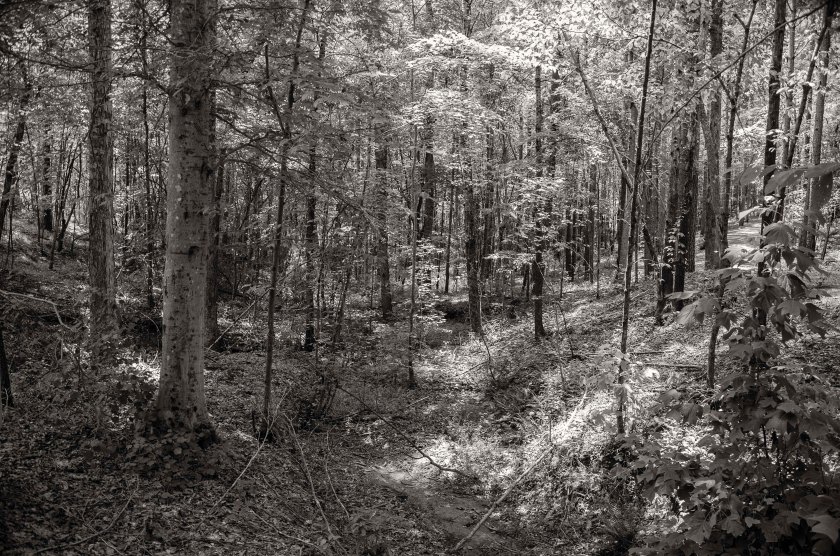
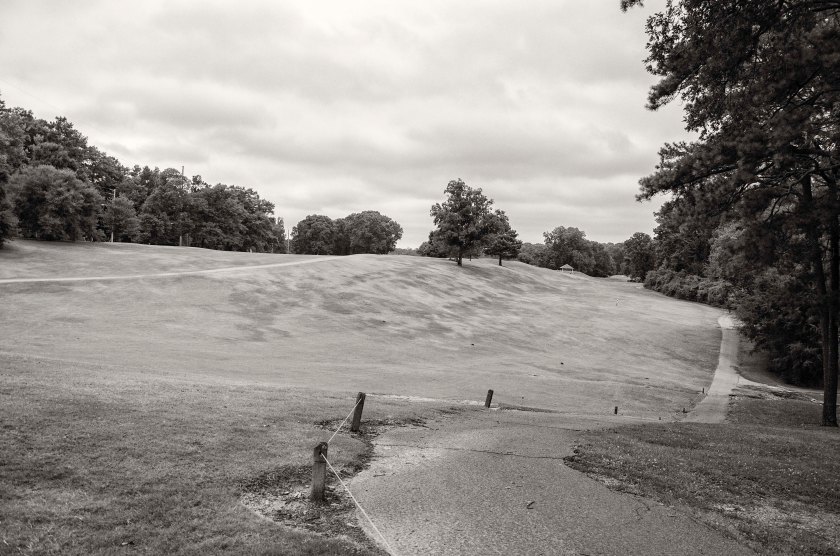
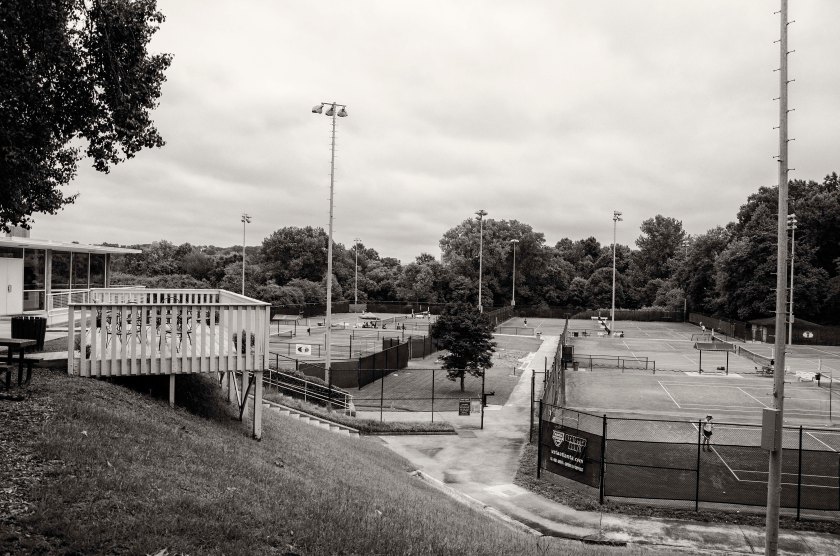
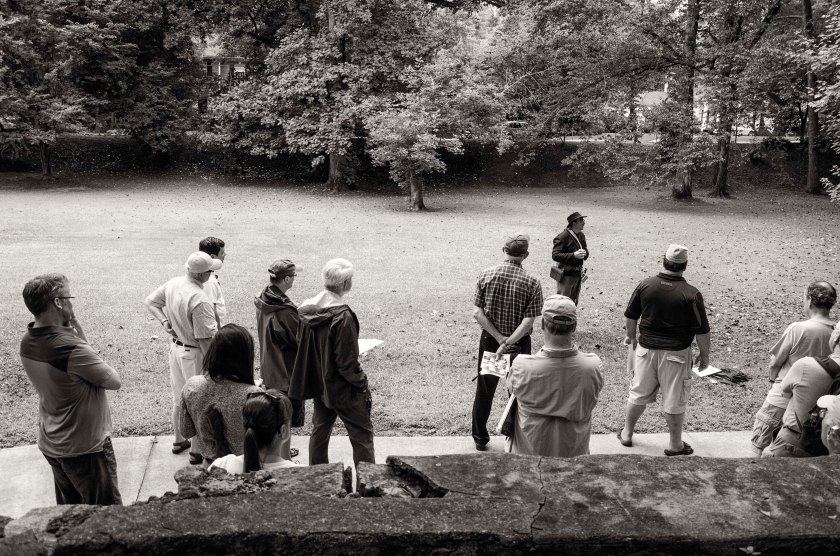
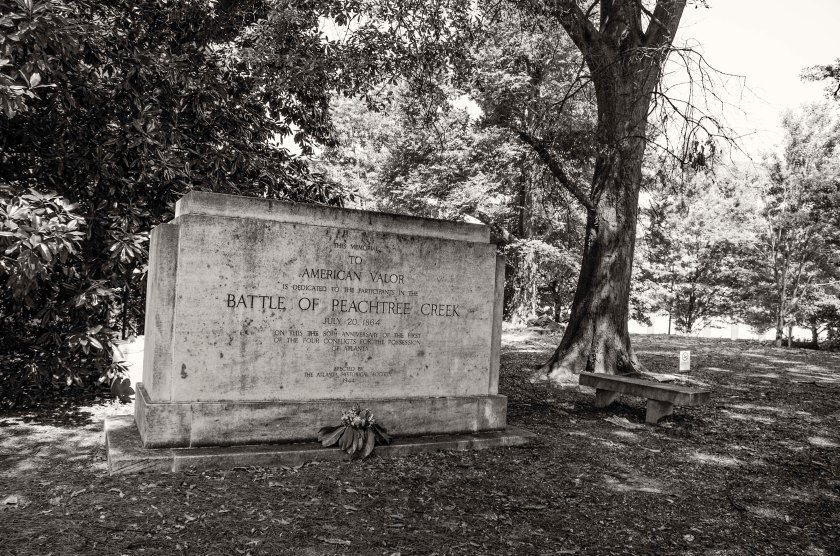
Knipe’s and Robinson’s Brigades of William’s Division of Hooker’s 20th Corps, were positioned along the high ground to the right of this image taken along Norfleet Rd. To the left of the image is a deep ravine that had to be traversed by the attacking Confederates. This area was the western most portion of the Federal line that came under direct assault during the Battle of Peachtree Creek.This deep ravine now sits between Norfleet Rd. to the right, where the Federals were positioned on high ground, and Springlake Dr. Reynold’s Brigade of Walthall’s Division of Stewart’s Corp(CS) attacked through this deep ravine and pushed forward attempting to push Knipe’s and Robinson’s Brigades back. After a failed second attempt under enfilading artillery fire and with only the support part of Selden’s Alabama Battery, Reynold’s was forced to withdraw from the assault.Near the intersection of Collier Road and Howell Mill, at the south western end of the ravine, the Selden’s Alabama Battery was placed in support of Reynold’s assault. While directing the placement of the battery Major William C. Preston was killed in action by Federal fire. Major Preston is the “Willie” Preston featured in Mary Chestnut’s “A Diary From Dixie”Bobby Jones Golf Course at the Bittsy Grant Tennis Center. The right of Geary’s Division of Hooker’s 20th Corps was positioned along the high ground of this ridge on the golf course. O’Neal’s Brigade of Wathall’s Division(CS) was on the right of Reynold’s Brigade and pushed through at shallower portion of the ravine and attempted to exploit a gap between Williams and Geary. Geary’s line was pushed back until his right met Williams left forming a re-entrant angle in the Federal line. O’Neal split the Brigade with half swinging left to attack Williams and the other half swinging right to turn Geary’s right flank. Fierce fighting ensued and with lack of numbers and artillery support, O’Neal eventually withdrew.Bittsy Grant Tennis Center. Looking toward the Confederate lines. O’Neal’s Brigade would have crossed this area in their assault on Geary’s and Williams lines.Tanyard Creek Park, a historian and reenactor gives a lecture to a tour group on the 150th anniversary of the Battle of Peachtree Creek. General Loring’s Division of Stewarts Corps(CS), came across this ground moving from the background toward the camera position to attack elements of Geary’s and Ward’s Divisions (US), which were positioned behind the camera on the high ground near present day Collier Rd.Tanyard Branch in Tanyard Branch Park. Heavy fighting ensued here as Loring’s Division(CS) pushed hard in their attack on elements of Geary’s and Ward’s Division’s(US).Eastern portion of Tanyard Creek Park. Portions of Featherston’s Brigade, Loring’s Division (CS), advanced through this area, crossing the creek (camera right),under heavy fire from Geary’s (US) artillery and moving towards the high ground along present day Collier Road. Ardmore Road looking toward Collier Road. The right of Featherston’s Brigade advanced down the slope for their trenches nearly a mile behind the camera position, to attack Coburn’s and Wood’s Brigades of Ward’s Divison (US). Featherston’s Brigade drove back the Federal skirmishers and pushed passed the barricades the skirmishers used to assault the main line. They gained some ground but were forced back to the abandoned barricades as they were counter attacked along their front and flank.28th St. at Wycliff Rd. looking toward’s Peachtree Street. 28th St. dead ends into Ardmore where the previous image was made. The Old Montgomery Ferry Road crossed through this spot and intersected Peachtree Road slightly south of Palisades Rd. Brig. General Clement H. Stevens (CS) was killed in action here as he ordered the withdraw of his Brigade. Steven’s Brigade was part of Walker’s Division of Hardee’s Corps.Battle of Peachtree Creek memorial. This memorial, shaded by Oaks and Magnolias, rest on a small knoll between Peachtree Road and Piedmont Hospital. Kimball’s Brigade of Newton’s Division, Howard’s 4th Corps (US) was positioned here on this high ground astride Peachtree Road. They were assaulted by Walker’s Divisions of Hardee’s Corps (CS).Dale Way Park now sits on the battlefield once crossed by Bate’s Division of Hardee’s Corps (CS). Bate’s Division was the far right of the Confederate assault on the Federal lines at Peachtree Creek. Bate’s was the first to move from his works to begin the assault with each successive Division move forward one after the other. Bate’s assault was delayed as the whole Confederate line had been shifted to the right by nearly two miles. Initially, the line was supposed to move only a mile to the right in order to be in position to reinforce Wheeler’s Cavalry east of Atlanta should McPherson and Schofield attack. Miscommunication lead to shift of two miles and as such, when Bate’s made his advance on two Brigades of Newton’s Division (US), he did so across terrain that had not been reconnoitered. Bate’s advance was slow due to heavy thickets and swampy areas in the Clear Creek Valley.WSB TV, West Peachtree St. near Inwood Cir. The Confederates outer defensive line of Atlanta was placed on the high ground here and extended westward along various hills and ridges to present day Crest Lawn Cemetery where it terminated at Casey’s Hill along the Western Atlantic Railroad. Walker and Bate’s Divisions both started their assault on the Federals from this defensive line. This view is looking south toward the Confederate line.West Peachtree at Inwood Cir. WSB TV. Looking north toward Federal Positions from the Confederates outer defensive line of Atlanta. Walker’s and Bate’s Divisions(CS) would have advanced down this slope crossing the area that is now Buford Hwy and I-85 and then moving up through what is now the Brookwood Hills neighborhood, to assault part of Newton’s Division (US) that were positioned along the high ground in the area of present day Brighton Road.
It is General Hood’s first full day in command of the Confederate Army of Tennessee. He is working to get a grip on the tactical situation and is making plans for a fight near Atlanta. He plans to attack the Federal Army of the Cumberland, commanded by General Thomas, after it crosses Peachtree Creek and before they can entrench. Once the Army of the Cumberland is pushed back to the Chattahoochee River and has surrendered or been crushed, he plans to turn the Confederate Army toward the east and attack the Federals east of Atlanta.
At General Sherman’s urging, General Thomas has sped up his southward movement and has the majority of the army across Peachtree Creek. Sherman has also ordered him to send Howard’s Corps to the east to reinforce Schofield and McPherson should the Confederate Army turn on them.
Unbeknownst to General Hood, McPherson is already in Decatur and has begun to destroy the railroad tracks and occupy the city. Garrard’s Cavalry has been sent as far east as he deems prudent to destroy as much of the railroad towards Augusta as he can. General Schofield an his Army of the Ohio are linking up with McPherson in Decatur.
Nearly continuous skirmishing takes place all along the Federal advance.
During the day of July 19th, General Geary’s 2nd Division of the 20th Corps, Army of the Cumberland (US), crossed Peachtree Creek in this area via foot bridges. They were support by a dozen pieces of artillery and heavy infantry support. Logs that had been prepared earlier were brought forward and several foot bridges were built under fire. The 3rd Brigade crossed under fire a seized the ridge south of the creek and held the bridgehead until the remaining two Brigades could cross. By daybreak on the 20th, two more bridges had been built with freshly cut wagon roads to bring supplies forward.Atlanta Memorial Park now sits in the area the Geary’s Division crossed under fire to establish their bridgehead. They would have crossed here from right to left and worked their way up to the low ridge line.Two Brigades of General Palmer’s 14th Corps, Army of the Cumberland(US), crossed Peachtree Creek about a half mile west of Howell’s Mill after two days of heavy skirmishing. On the night of the 19th, Two Brigades of General Baird’s 3rd Division of the 14th Corps, Army of the Cumberland(US), made a night crossing hear Peachtree Creek at the site of Howell’s Mill.Railroad tracks of Stone Mountain. Throughout the 18th and 19th of July 1864, Garrard’s Cavalry(US) along with General Lightburn’s 2nd Brigade, of the 2nd Division of the 15th Corps, Army of the Tennessee(US), worked diligently to destroy the railroad that lead west to Atlanta and east to Augusta. They destroyed several miles of tracks, 200 bales of cotton and the stores of the Quartermaster and Commissary that were supplying the Confederates in Atlanta.The Hamilton House, Stone Mountain. This structure was built in 1836 and was used as a hotel until the Civil War and was later used as a Hospital. Because of its use as a Hospital, it was saved from the destruction of the Federal troops.The Stillwell House, Stone Mountain. This structure built in 1820 served as a Confederate Hospital during the Civil War and has just recently opened as a the Stillwell House Bed and Breakfast.The Stone Mountain Cemetery contains many Confederate graves. 150 of them are unknown soldiers who died here in the local hospitals from their wounds of diseases. Some of the died skirmishing with Garrard’s Cavalry and Lightburn’s Brigade as they came to destroy the railroads.
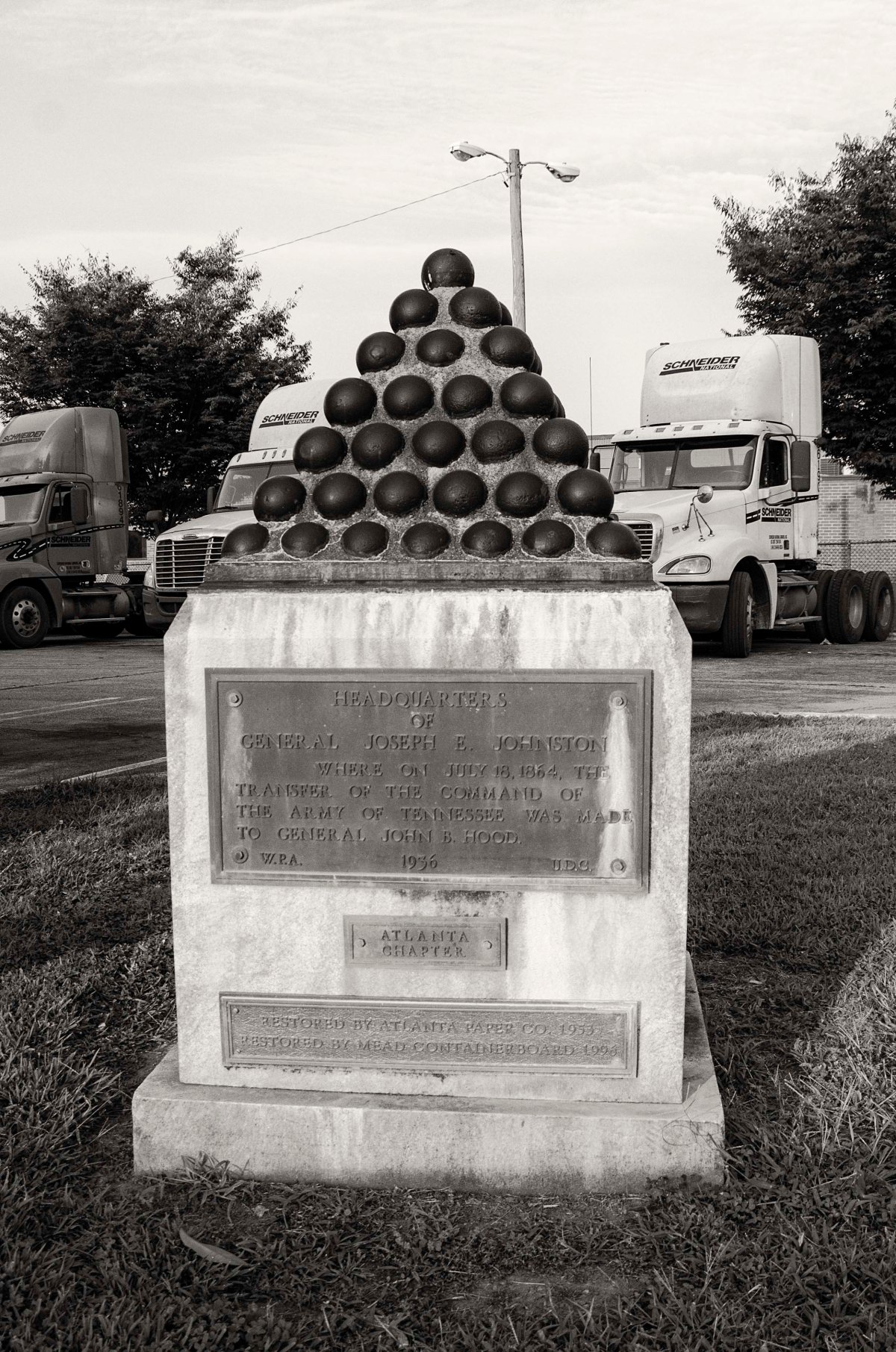
General Joseph E. Johnston is officially relieved of command of the Confederate Army of Tennessee. President Davis promote Lt. General John. B. Hood to be the new commander of the Army of Tennessee. Davis advised Johnston the he was relieved of command due to his inability to stop the Federals from reaching Atlanta and that he did not have confidence that he could prevent the Federals from capturing Atlanta and destroying the Army of Tennessee. Johnston was very well liked among his troops and many were in disbelief.
This change in command has come at a crucial time as the Federals have just crossed the Chattahoochee River. The Army of the Cumberland crosses at Pace’s Ferry and Power’s Ferry and are advancing toward Peachtree Creek. General McPherson’s Army of the Tennessee, has crossed the river at Roswell and has been moving south through Dunwoody toward the Augusta Railroad line near Decatur. They reach it on the 18th and destroy about four miles of it in between Stone Mountain and Decatur, in an attempt to disrupt the supplies, and possibly reinforcements, coming from the east. McPherson then turns west and moves towards Decatur.
Wheelers Cavalry had been skirmishing with the Federals approaching Peachtree Creek for several days, but today they burn the bridges over Peachtree Creek at Moore’s Mill, Howell’s Mill, and on Ridgewood Road. They then move south east to intercept McPherson’s Army of the Tennessee near Decatur.
The pieces are nearly in place for the first of two major battles to happen on the outskirts of Atlanta. Soon the two armies will clash in the Battle of Peachtree Creek and then two days later at the Battle of Atlanta.
Peachtree Creek, once a strategic obstacle for the advancing Federals, now sits nestled between neighborhoods and park.Moore’s Mill at Peachtree Creek. The original wooden bridge would have been located to the left of the current bridge. After encountering the advancement of Federal troops, Confederate skirmishers were forced across the bridge and burned it in an attempt to stall the Federal advance.Another bridge across Peachtree Creek, here at Howell’s Mill, was burned by Confederate skirmishers in an attempt to slow down the Federals as they moved on Atlanta.As General McPherson’s men moved from Roswell they passed through Dunwoody where they split their columns to take advantage of multiple roads in an effort to move faster. Here along Johnson Ferry Road at Nancy Creek, Dodge’s 16th Corps, on the right of McPherson’s Army of the Tennessee(US), linked up with General Cox’s 3nd Division of the 23rd Corps, Army of the Ohio. They camped here along the creek for a night before proceeding to Decatur. Part of Dodge’s 16th Corps camped here at Ashford Dunwoody Road and Nancy Creek. Now a large athletic complex covers their camp.Logan’s 15th Corps and Blair’s 17th Corps moved down what is now N. Shallowford Road. They camped along Nancy Creek in the area of I-285 and N. Shallowford Road.Nestled in a small copse of trees off of Peachtree Road in Brookhaven, the Solomon Goodwin House is the oldest structure in Dekalb County and also the oldest inside the “Perimeter (I-285). The oldest portion was built in 1831 and expanded to it’s current size in the 1840’s. The home was a landmark on maps at the time and both Hascall’s and Cox’s Divisions of the 23rd Corps, Army of the Ohio, passed by here on their movement south. There are still dents in the mantel from rifle butts. Now the clubhouse for the Peachtree Golf Club, the Samuel House Plantation was a landmark for the advancing Federals. Cox’s 3rd Division of the General Schofield’s 23rd Corps, Army of the Ohio, camped here on the plantation grounds. General Schofield, along with General Sherman were accompanying the Division, made their Headquarters here.Browning’s Court House was another area landmark on McPherson’s route to Decatur. Originally located at the intersection of Lavista Road and Fellowship Road, it has been moved to property owned by the county in order to preserve the structure. Logan’s 15th Corps moved to this point to support elements of Garrard’s Cavalry as them moved to destroy the railroad tracks in nearby Stone Mountain.The railroad in Decatur looking east towards Stone Mountain and on to Augusta. This was McPherson’s goal. He was charged with destroying the railroad in order to prevent supplies and reinforcements from reaching Atlanta from the east.
Over the last several days and continuing into the next several days, General Sherman is resting his troops and changing their positions in preparation for an assault on Atlanta. He is trying to deceive General Johnston into believing the attack will come from the west. To do this, he has sent Stoneman’s Cavalry on a raid towards Newnan to destroy the Railroad that connects Atlanta with Alabama. Stoneman’s Cavalry cross the Chattahoochee near Campbelton and skirmish with Confederates along the way. They are unsuccessful and fall back to Villa Rica before returning to the Federal lines along the Chattahoochee. During this time, Sherman is shifting several Corps from his right flank to the left flank at the river crossing in Roswell. The Federal soldiers crossing at Roswell will be shifted to the east of Atlanta. While both armies rest from the rigors of the campaign, there is a great deal of fraternization between the soldiers stationed along the Chattahoochee. There are many documented accounts of trading, usually the Confederates trading tobacco for coffee, as well as other goods and small items. There are accounts of Regimental bands on both sides having competitions and serenading the troops on the opposite side of the river. For some soldiers, this is the first time the have been able to have a bath in weeks. Even General Sherman himself, takes a bath in the river.
For General Johnston, this is a time of uncertainty, President Davis has sent Braxton Bragg, former Commander of The Army of Tennessee, to ascertain the tactical situation in Atlanta and to find out what Johnston plans to do. Davis is considering replacing Johnston and is relying on advice from Bragg as to who the replacement of Johnston should be. This decision would have great bearing on the outcome of the campaign. They met at Johnston’s Headquarters which was established at the Dexter Niles house along the Atlanta road between the Chattahoochee river and the city.
Well preserved Federal earthworks near Roswell, Ga. These were part of the bridge head established by General McPherson’s Army of the Tennessee (US). These works were manned by the 2nd Division of the XV Army Corps.Stones,stacked by Federal soldiers fortifying their positions, are still in place 150 years later at their bridge head near Roswell.Remnants of a Federal trench located on a ridge overlooking the Chattahoochee river near Cochran Shoals. This site is located with an office park.After crossing the Chattahoochee at Powers Ferry, the IV AC (US), established a bridgehead on the high ground above the river. Northside Drive now runs along this same ridge and several home owners have the remains of Federal earthworks in their front yards.Remains of a Federal trench along Northside Drive, manned by the IV AC(US), after crossing the Chattahoochee River.Remnants of an artillery battery that was maned by elements of the IV Army Corps (US). Now located near the intersection of Northside Drive and River View Drive in the side yard of private residence.Site of the Cagle house where General O.O. Howard established his Headquarters and along with General Sherman and other officers, had a meeting to plan their next moves in the campaign. That meeting was depicted in the sketch below that appeared in Harper’s Weekly in September of 1864.Sketch of General Sherman and other officers at the Cagle house, this sketch appeared in a September issue of Harper’s Weekly.Site of the Dexter Niles house where General Johnston (CS) established his headquarters after retreating across the Chattahoochee River upon learning of Federal crossing north of his River Line position. It was here that he would be relieved of command and General John Bell Hood would be command of the Army of Tennessee.
After the first Federal crossing of the Chattahoochee at Sope Creek on the afternoon of the 8th, Garrard’s Cavalry crosses at Roswell. At dawn on the 9th, a Federal Battery provides covering fire as several companies of dismounted cavalry begin wading across the Chattahoochee at what is called the “Shallow Ford”. It was the ford used by the Hightower Trail which was a prehistoric trading route. They engage a small Confederate force across the river. The Confederates are out numbered and out gunned and they quickly retreat and some surrender. The Federals are armed with Spencer repeating rifles and are able to move and shoot quickly without stopping while they cross the river. The battery that is providing cover fire is the Chicago Board of Trade Battery. When Sherman learns of Garrard’s crossing of the river, he immediately dispatches Newton’s Division from its camp near Rottenwood Creek, to Roswell “double time”, to reenforce Garrard. He also sends Dodge’s Corps to reenforce Garrard and establish a strong bridgehead for subsequent crossings. A detachment of General McCook’s Cavalry, the 1st Tennesse Regiment (US), under the command of Colonel Brownlow, dismounted and crossed the river enforce wearing only their hats and carrying their rifle and cartridge box.
After receiving information about these crossings and size of the forces at each crossing, General Johnston orders the fall back from the River Line. The Confederate army begins to retreat from the River Line at dusk and in the early morning hours of the 10th, they are across the river and begin to burn the Railroad bridge and the wagon bridge next to it. They also take up their pontoon bridges and at Pace’s Ferry they cut the pontoon bridge loose hoping it will swing across the river or down stream where they can recover it. It becomes stuck and is recovered by the Federals, but not put into use.
General Johnston establishes his Headquarters 3 miles from Atlanta, at the abandoned Dexter Niles house. He orders that the river crossings at Pace’s Ferry and Turner’s Ferry, be heavily guarded.
The first crossing of the Chattahoochee River by Federal troops happened here at the confluence of Sope Creek and the river. The neighborhood pool on the southern shore is the location of the Ferry landing where the Federal troops made their assault. “Shallow Ford” in Roswell was the site of the Federal crossing by several companies of Garrard’s Cavalry dismounted and with their new Spencer rifles and supporting fire from the Chicago Board of Trade Battery, they fought their way across the river.What is now a Cul-de-sac was once the location of the Chicago Board of Trade Battery that support Garrard’s crossing of the river at Shallow Ford.
Col. Brownlow and his dismounted Cavalry crossed the river just about Powers Ferry at Cochran’s Ford. They crossed wearing only their hats and carried their rifle and cartridge box.
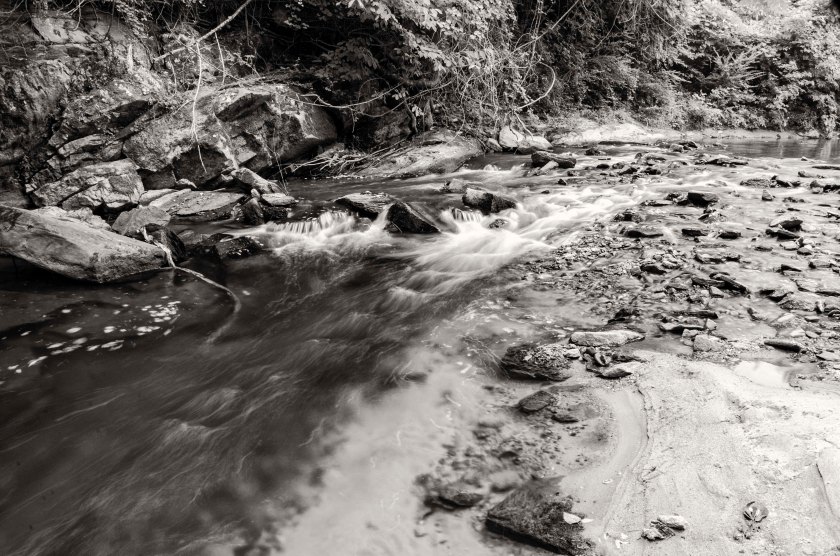
Rottenwood Creek: When General Sherman learned of Garrard’s crossing at Roswell he dispatched Newton’s Division double time to Roswell to reinforce Garrard. Newton’s Division was camped near the area of present day Cumberland Blvd, I-75 and I 285. They crossed Rottenwood Creek on a wooden bridge just above this small cascade.
General Johnston’s Army of Tennessee now occupies the River Line and they have the Chattahoochee River to their back and the Federals to their front. General Sherman is looking for another route across the river that would allow him to turn Johnston’s Flank and force him from the River Line. The images below are from the southern half of the river line.
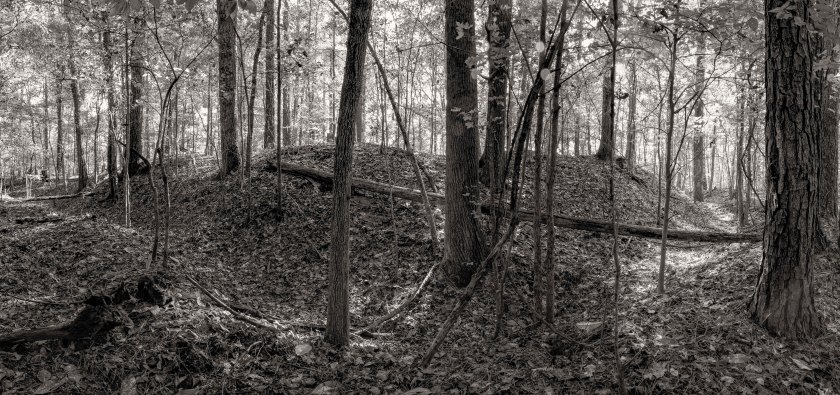
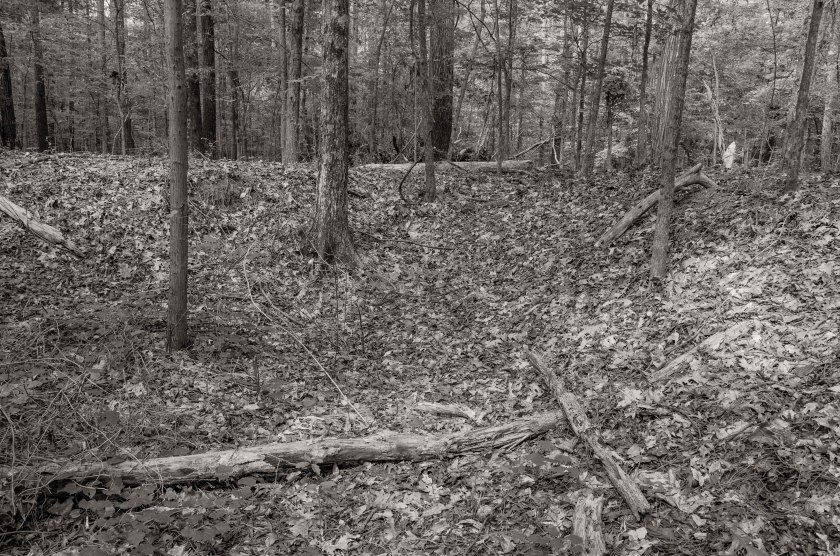
Remnants of a large artillery battery at the far south end of the River Line. General Hood’s forces held the is area which was the left of the Confederate line.A dead tree spans the remains of Confederate earthworks along the River Line.Several thousand feet of earthworks, including a Shoupade and large artillery battery are still in great condition and have survived the years of urban sprawl in Metro Atlanta.The inside of one of the Shoupades in what is known as the River Line Extension.Looking south on Oakdale road. They Confederate River Line followed the ridge line that Oakdale Road follows. In a few spots along the road you can still see remnants of Confederate works on the left as you drive south.Nickajack Creek and its valley separated the Confederate River Line from the Federal lines to the west.
In the early morning hours, General Johnston and the Army of Tennessee, retreat from the Smyrna Line and fell back to the last line of previously prepared fortifications before the Chattahoochee River. Known as the River Line, it was conceived and constructed by Brigadier General Francis Asbury Shoup, Chief of Artillery for the Army of Tennessee. The River Line had a new style of fortification in the line, they were called a Shoupade. They were diamond shaped forts built with two of the angles sticking out ahead of the line. The Shoupades were placed anywhere from 60 to 175 yards apart depending on the terrain and were connected by earthworks that intersected the Shoupade roughly in the center. The angled section in front of the line from two adjoining Shoupades, allowed for a crossfire on an advancing enemy. Each Shoupade could hold 80 soldiers shoulder to shoulder. They were also constructed to withstand an extended artillery barrage. The Confederates occupied this line until the night of July the 9th, when the retreated across the river.
These images are from the northern half of the river line. Tomorrow I will post images from the southern half of the river line.
Looking at the inside of one of the best preserved of the remaining Shoupades. This one now sits hidden in the woods and covered with English Ivy just a stones through away from a major expressway.
Shoupade Park, Cobb County. Remnants of one of two Shoupades in the park. There are also remnants of an artillery battery.The second Shoupade at Shoupade park fenced off and covered with brush, but you can still see its size and shape.A child’s tree house now stands guard over the remains of a large Confederate artillery battery located near the northern end of the River Line.The crossed the Atlanta Road at this point. Atlanta road, the road passing from the left to right of the image, is a period road that is still in use today.The Confederates River Line crossed the railroad tracks here along the high ground at this railroad cut.River Line Park, Cobb County. The remains of a Shoupade are fenced off and still visible and protected in this park with ball fields and walking trails.








































 War Was Here