Sherman began to receive reports that General Hood had crossed the Chattahoochee River and were moving toward Marietta. Sherman, unsure of where Hood was moving, began sending messages to all points along his supply line and also sent additional troops to Chattanooga. He thought Hood would do one of two things; attack the supply line between Atlanta and Chattanooga or move toward northern Alabama to meet up with General Forrest to attack the supply depots in Tennessee. Sherman also mobilized his troops in Atlanta in an attempt to chase down and engage Hood. He left the XX Corps to garrison Atlanta and move the remaining troops northwest toward Marietta.
Hood was moving toward the northwest as well. He was not moving on Marietta directly and was making a wide move around it and the formidable Kennesaw Mountain. As the Confederate Army was marching, General Stewart’s Corps was the farthest to the right (east) of the column. They marched throughout the day and Stewart’s Corps made camp a few miles south of Lost Mountain. Hood and the remainder of his army camped in area southeast of Dallas near Flint Hill Church.
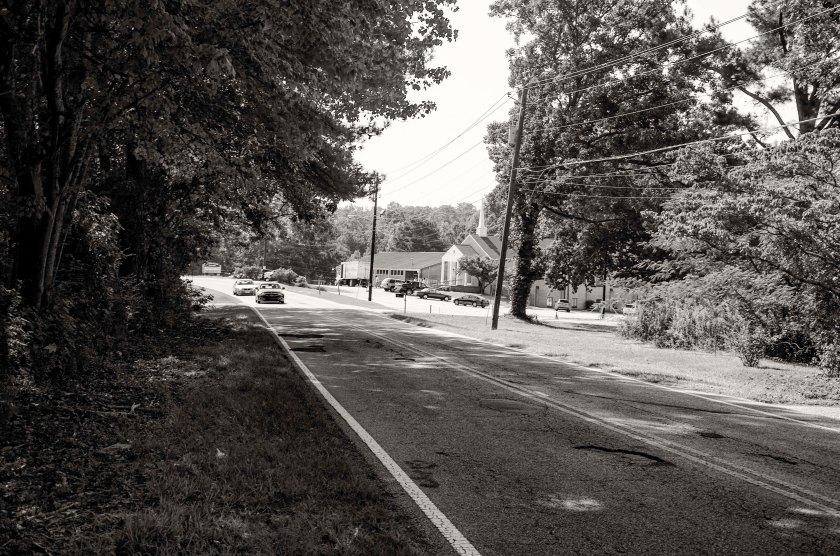
On the evening of the October 2nd, Hood sent orders to Stewart. His orders were to move his entire Corps, in the morning, to Big Shanty (now called Kennesaw). Stewart was assigned to capture and destroy as much of the railroad as possible and if he was able to take Big Shanty, he was to send a Division to Acworth to do the same thing there. Hood suggested that he should be back in two days to link up with the remainder of the army. These actions, were to set into motion, all the pieces for the Battle of Allatoona Pass.
Sherman has fortified Atlanta extensively and has started to build up supplies and rest his troops. The Confederates are not sitting idle, and Hood has ordered all the Federal prisoners kept at Andersonville to be moved to different prisons out of the reach of Sherman’s forces. Hood then shifts his Army from Love Joy’s Station to Palmetto, which lies along the railroad to West Point and further into Alabama. Hood is resting his troops, building up supplies and making plans for a move to the north to attack Sherman’s supply line.
Confederate President Davis arrives in Palmetto on September 25th. The next morning he begins a review of the troops and is greeted with silence, not cheers for their President. A few soldiers yell out to the President asking for General Johnston to be place back in command, but these remarks fall upon deaf ears. Bringing Johnston back would be like admitting that he made a mistake in removing him.
On the 27th, Davis meets will Hood and all his Corps Commanders and some of the Divisional Commanders. A great deal is discussed including a plan to strike Sherman’s supply and communications lines north of Atlanta, there by cutting him off and forcing him to retreat back to Tennessee, all the while being engaged by Hood. Hood then thinks he can move on the Federals in Tennessee and turn the tide of the war in the western theater and possibly as a whole. Hood also complains to Davis about General Hardee and blames the loss at Jonesboro on him. He ask Davis to remove him. Davis agrees and Hardee readily accepts the offer to command the coastal defenses of Georgia, South Carolina, and Florida. Hardee is relieved to be out from under Hood’s command. On the 28th, Hood receives word from Davis that he may move forward with his plans to on North.
On September 29th and 30th, the Confederate Army of Tennessee begins their next march and crosses the Chattahoochee River near Palmetto and Campbellton with about 40,000 troops. By late in the evening of October 1st, Hoods army has moved about 8 miles from the river crossing in the direction of Marietta. Sherman, who had anticipated this move to the north by Hood a week earlier, had already sent troops to Rome and Chattanooga to help protect those areas from the threat of Hood and from the threat of General Nathan Bedford Forrest, who cavalry that has started operating in the northern part of Alabama and into Tennessee.
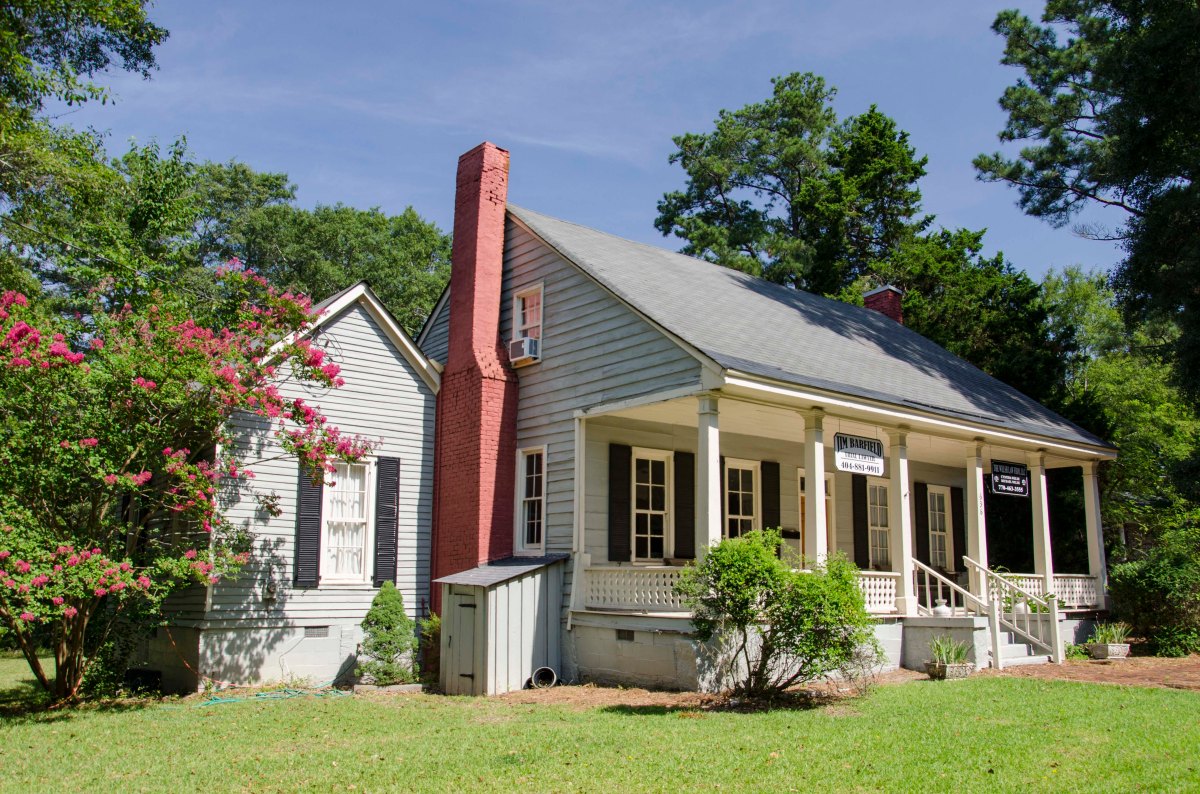
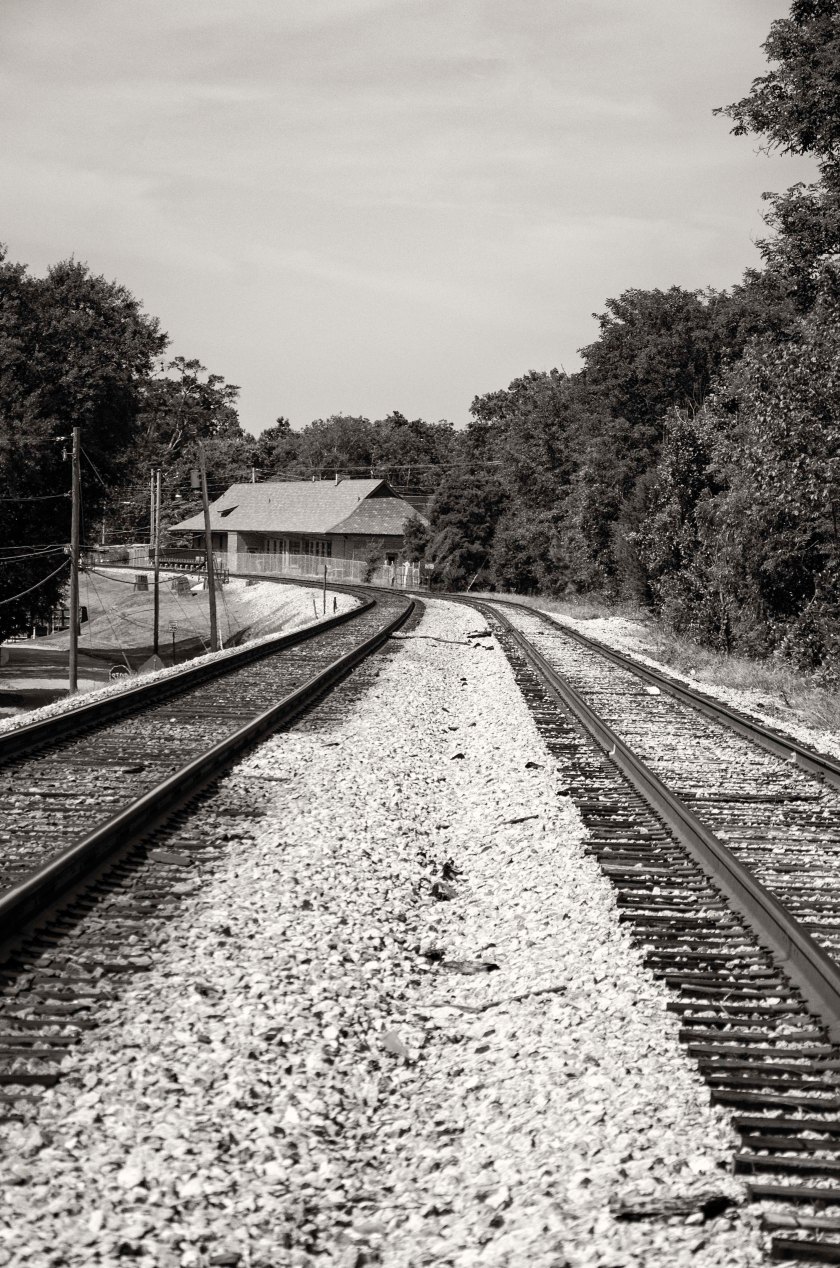
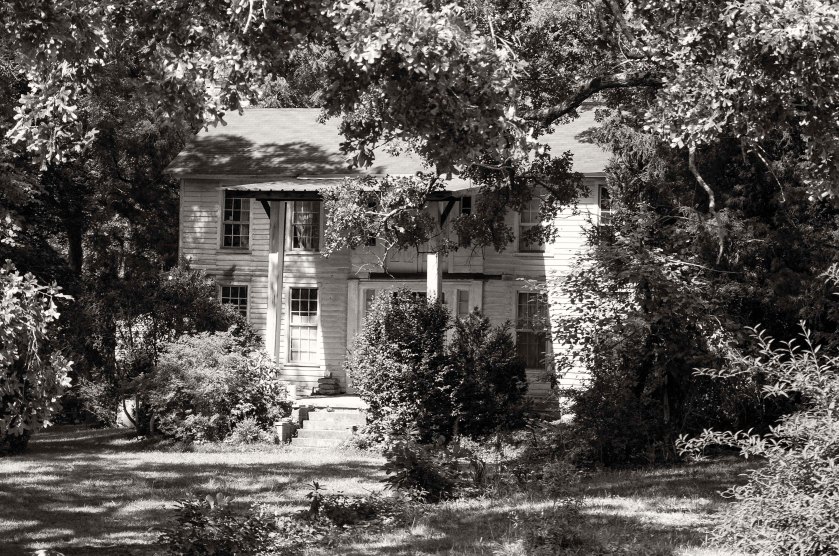
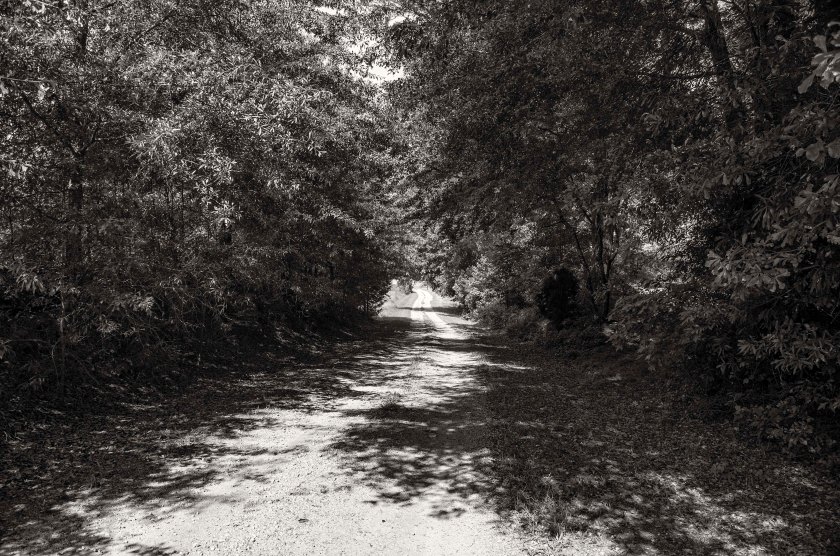
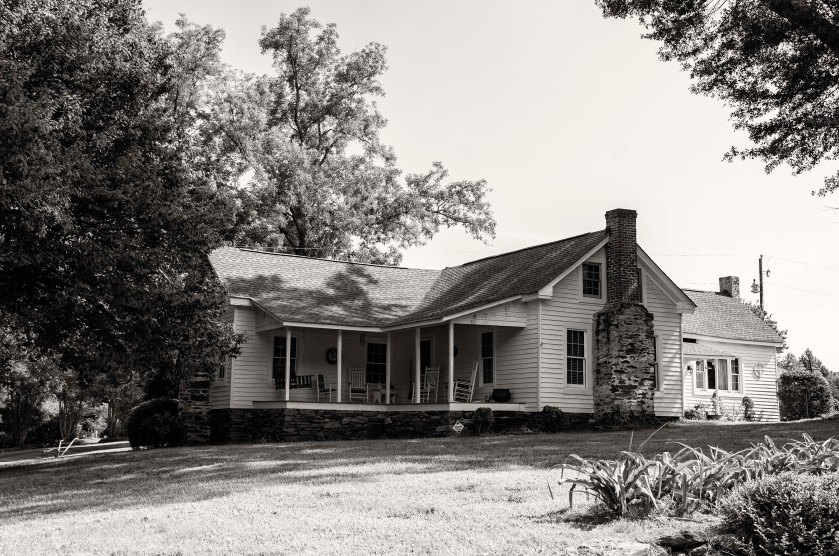
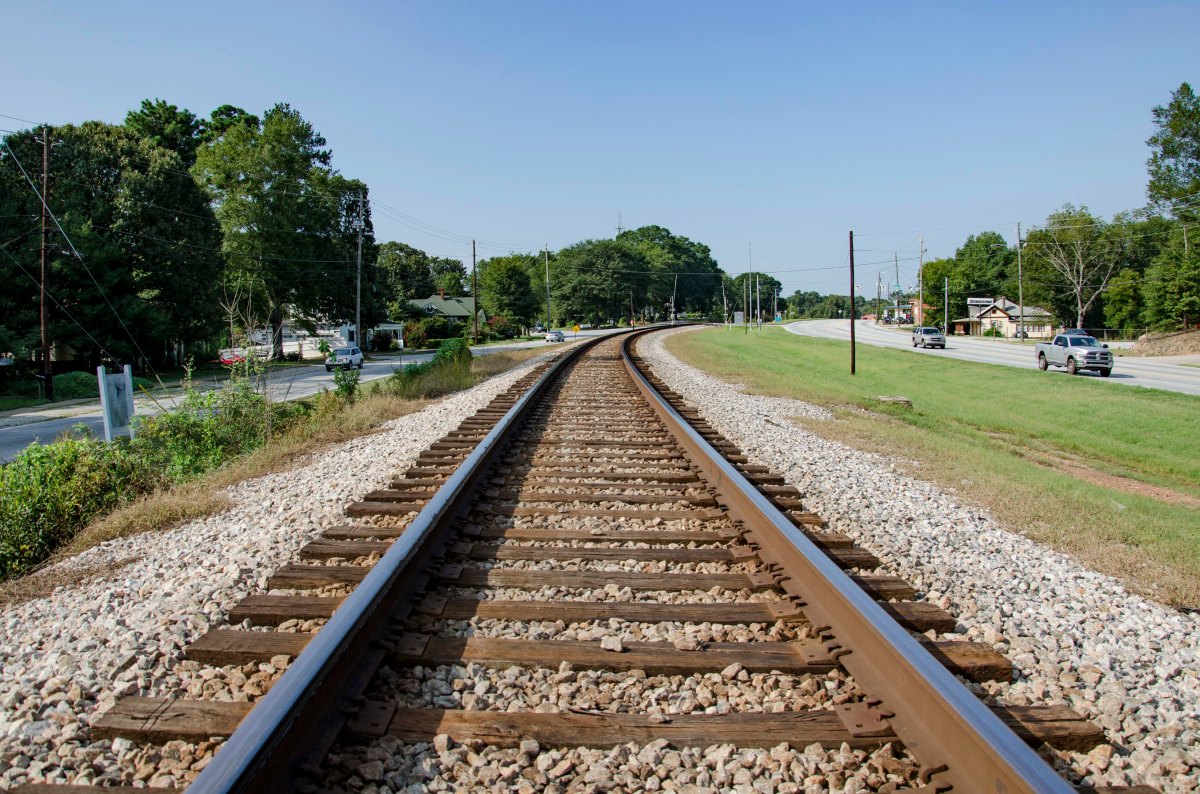
President Davis arrived by train along these tracks after having to take a route that went well south of Atlanta and then back north a short distance to Palmetto. Looking sout along the railroad tracks in Palmetto with the post war train depot in view.Once the Palmetto Stage Coach House, this building now serves as Barfield’s Law Office. It was here that President Davis meet with General Hood and his Corps Commanders as they made plans to disrupt Sherman’s Supply chain in an effort to force him out of Atlanta.The Weaver House (also called the Wilson House), located on Hearn Rd. west of Palmetto, was a plantation where the Confederate Army purchased 44 bushels of corn. This home was built in the mid 1850’s and is still occupied today. The original two story front porch has been removed and replaced by the full height porch roof.On their way to cross the Chattahoochee River, the Confederates passed by the Redwine Plantation that was built in 1840. Located west of Palmetto at Hutchesons Ferry Rd. and Hwy. 70. This home served as a significant landmark in the area.Confederate troops marched down this road to Phillips Ferry (later operated as Hutcheson Ferry). They crossed the Chattahoochee River here on their way to disrupt the Federal supply lines between Atlanta and Chattanooga. The Phillips House, built around 1840, was home to the Phillips Family who operated the Ferry at the crossing of the Chattahoochee. Like many antebellum homes, this one has had additions and updates, but the majority of the home is original.
After the Battle of Jonesboro, Sherman’s Army followed the Confederates to Love Joy’s Station, where Hood rejoined Hardee with Stewart’s and Lee’s Corps. Sherman skirmished a day or so and then after learning that the XX Corps had entered Atlanta, he withdrew from Love Joy’s Station and marched back to Atlanta to claim his prize and losing what many consider to have been a prime opportunity to crush Hood and the Army of Tennessee once and for all. Having taken Atlanta, Sherman decided he had reached his objective and did not think it was worth the bloodshed to continue pressing his advantage.
Upon entering Atlanta, Sherman established his headquarters and began to restore order to the town. He decided that it was a military outpost and ordered all civilians to evacuate. A truce was negotiated with Hood, who was not happy about civilians being forced from their homes, and the civilians were given a choice of taking a train north or one to the south. The ones that choose a train south, were sent to Rough and Ready, where they had to disembark and travel to Love Joy’s Station by wagon. About half the cities population went north and the other half went south. There were some civilians that were allowed to stay as they were given jobs by the Federals.
Poe, Sherman’s Chief Engineer, immediately started to rebuild and strengthen the defensive line around the city. He built artillery forts connected with infantry trenches. With much of the city in ruin, the soldiers started to use building materials from destroyed structures to begin building small shacks as living quarters. Sherman also began to rest and resupply his armies in preparation for his next sortie into the heart of the Confederacy.
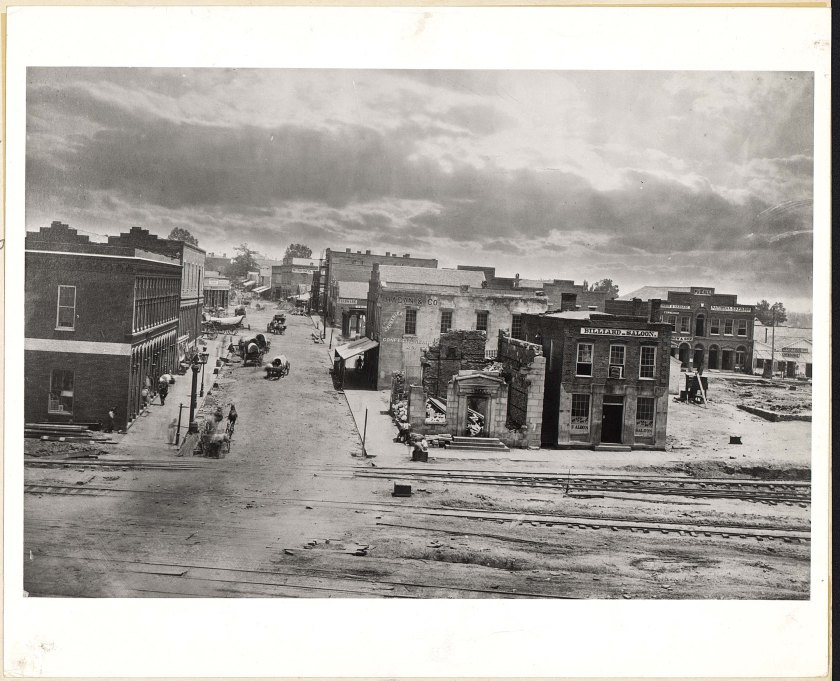
Many of the period images that exist of Atlanta come from this time of the campaign. George Barnard entered the city to document the Federal occupation. There are many iconic images of the Federals and their forts in Atlanta.
After the Federal occupation of Atlanta, General Sherman forced all the civilians out of the city. Those that chose to go south were sent to Rough and Ready, a railroad way station just south of town. It is now called Mountain View sits east of the Atlanta Airport between I-75 and I-285. Here, civilian and their belongings were transferred from the wagons of Union soldiers to the wagons of the Confederates. The Confederates carried them south to the point where the railroad was usable and the civilians were transferred again to trains.
Note: All the images below are attributed to George Barnard. These images are all open source and were downloaded via wikicommons. They are all in the National Archives or the Library of Congress.
Whitehall Street, Atlanta Ga. 1864.After occupying Atlanta, the Federals began to strengthen the fortifications that were built by the Confederates to defend the city.Part of the Atlanta battlefieldPart of the Atlanta battlefield.Battlefield of Atlanta with the Potter House in the background.When the Confederates evacuated Atlanta, General Hood ordered the munitions train to be destroyed. This image shows all the remains of the train and the rolling mill.One of the Confederate forts converted into a Federal fort.Converted Confederate fort being used by the Federals during their occupation of Atlanta.Downtown Atlanta, 1864.
General Sherman, having followed Hardee from Jonesboro on the previous day, has formed his troops in a line of battle across from what is left of Hardee’s Corps. Skirmishing continues throughout the day, buy Sherman does not order an assault. Just before breakfast, Sherman receives a dispatch from a courier sent by Slocum in Atlanta advising him that they have entered and secured the City of Atlanta and that the remainder of Hood’s forces have evacuated toward Love Joy’s Station via the McDonough Rd. Sherman, fearing that all of Hood’s forces have reunited, holds off on attacking the Confederates and with his objective “fairly won”, he decides to hold his position a day or two longer and destroy more railroad track, before returning to Atlanta. Slocum’s entire XX Corps has entered the city and is attempting to restore some semblance of order.
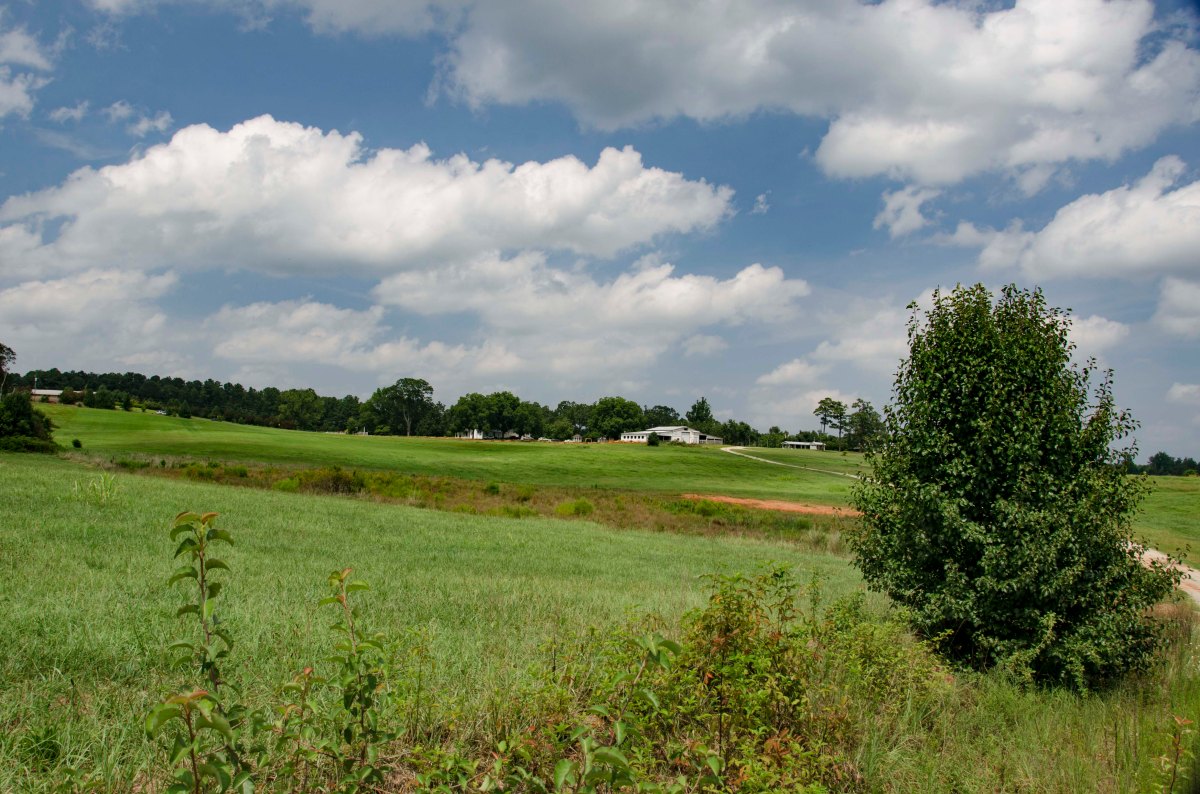
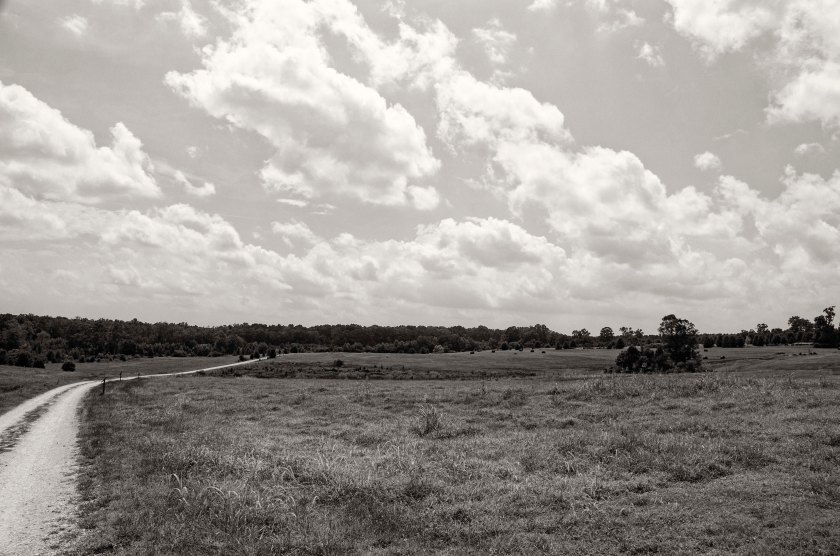
After his defeat at Jonesboro, General Hardee (CS) retreated with his Corps south to Love Joy’s Station. The remainder of General Hoods Army of Tennessee (CS), having evacuated Atlanta, meets them here. They entrench in the area and establish camps at Nash Farm and other sites within Love Joy.Nash Farm, once the site of a Cavalry Battle from Kilpatrick’s Raid (CS), will be site where the Confederates plan to make another stand, but General Sherman, receiving word that Atlanta has been captured and occupied by Federal forces, decides not to press his advantage and attack the Confederates. He positions his armies facing the Confederates and small skirmishes continue.After learning that Atlanta has fallen, General Sherman does not attempt to attack the Confederates again at Love Joy Station. Instead he forms entrenched lines and begins to destroy more of the railroad between Love Joy and Jonesboro.Hwy. 41 at McDonough Rd. Looking south at where the Confederate lines crossed the road at Love Joy Station after their retreat from Jonesboro and Atlanta.Looking north on Hwy. 41 from McDonough Rd. in the direction of the Federal lines the were established after they chased the Confederates from Jonesboro to Love Joy. The spent several days here preventing the Confederates from moving back north as well as destroying more railroad.
With the Confederate army gone and ensuing occupation of the Federal Army, Mayor Calhoun and a group of prominent citizens rode out of the city under a white flag of truce. Prior to leaving they debated as to whether or not they should arm themselves, the decide wisely to go unarmed. They ride out the Mason-Turner Ferry Road, now called Donald Lee Hollowell Parkway, where they pass through the defensive perimeter and go by the Ponder house. They encounter a mounted patrol of Federals whom they engage in conversation. Calhoun informs the Colonel that he would like to surrender the city to General Sherman, the Colonel states that Sherman is at Jonesboro and has Calhoun write a note to his commanding officer General Ward, surrendering the city. Calhoun wrote the note and the Colonel and two other officers sign it affirming its validity. The note reads as follows:
Brigadier General Ward,
Comdg. Third Division, Twentieth Corps
Sir: The fortune of war has placed Atlanta in your hands. As mayor of the city I ask protection to non-combatants and private property.
James M. Calhoun,
Mayor of Atlanta
By noon Federal units have reached City Hall and hoisted their colors over the city. Around 2:00pm, General Slocum enters the city and establishes his headquarters at the Trout House. He sends a telegram to the Secretary of War in Washington. The first line is “General Sherman has taken Atlanta”.
Demoralized, Hood’s troops continue their march to Love Joy’s Station to link up with Hardee. The loss of Atlanta is a crushing blow to the Confederacy. For Lincoln, it is a great political achievement that helps secure his spot for another term as President.
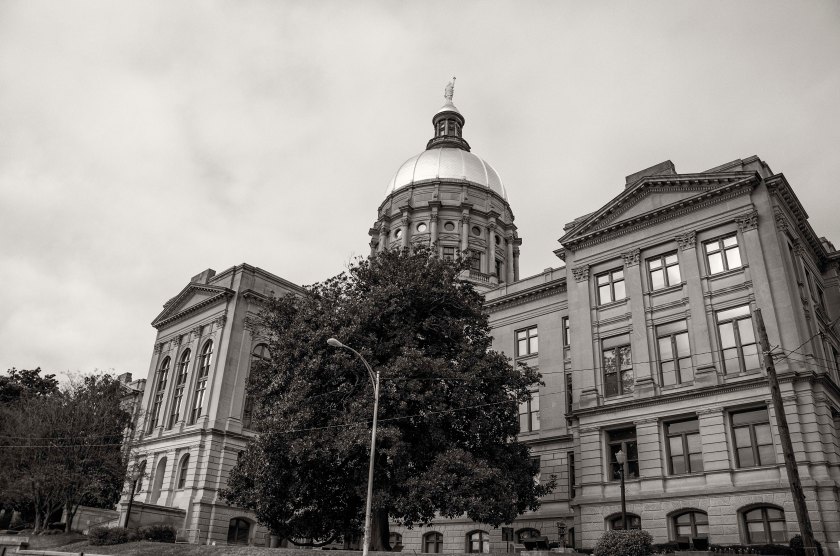
Marietta St. at North Side Drive. The site where Mayor Calhoun formally surrendered the City of Atlanta to Federal force essentially ending General Sherman’s Atlanta Campaign.The Georgia State Capital now sits where Atlanta’s war time city hall once sat. By noon on the second of September 1864, Federal Forces raised the US flag above city hall. Later as the occupation of Atlanta began in earnest, the City Hall was used as a headquarters for the Provost and the Provost guard camped on the grounds.
With S.D. Lee’s Corps having been sent back to Atlanta, Hardee was left to defend Jonesboro and the railroad with only his single Corps. to defend against the entire Federal Army of the Tennessee. Grossly outnumbered, Hardee deployed is Corps across the line that he had previously occupied with two Corps. Carter’s Division formed the Confederate left, Brown’s Division was placed in the center and Cleburne’s Division placed on the right and formed a salient angle with a refuse at the Warren house to the railroad. The brigade at the very extreme end of the right flank was commanded by States R. Gist. He ordered his men to go out ahead of the line and cut, bend over, and entangle as many trees as possible to try and even the odds with as much “abatis” as possible. This would later prove to be a very wise decision that prevented the Federal IV Corps under Stanley’s command from being able to reach the Confederate flank and turn it.
The attack by the Federals began at 4:00pm. Logan’s XV Corps attacked the Confederates from the west and Davis’s XIV Corps attacked the Salient in the Confederate line from the north west. Stanley’s IV Corps attempted to attack from the north by moving south along the railroad, but was unable to penetrate the abatis of Gist Brigade. Davis’s XIV Corps assaulted and overran the Salient in the Confederate line. This portion of the line was held by Govan’s Arkansas Brigade and Lewis’ Kentucky Orphan Brigade. They were overrun so rapidly that General Govan himself was captured along with 600 men and 8 cannons. Cleburne ordered Magevney’s Brigade to fill the gap and reform the line. They were able to do so and held off the remainder of the Federal assault.
After darkness fell, Hardee ordered a retreat of all his forces. They fell back six miles south to Love Joy’s Station where they entrenched. He sent a dispatch to Hood detailing that Jonesboro had fallen and that the railroad was in Sherman’s hands.
Having lost his supply lines, Hood has no choice but to evacuate Atlanta and attempt to reunite the remainder of his army at Love Joy’s Station. He orders A.P. Stewart’s Corps and the Georgia Militia in the defenses of Atlanta to evacuate the city. S.D. Lee’s Corps, which has marched all night toward Atlanta, after having fought a battle the previous day, is turned around only a mile or so from the city and has to march southward toward Love Joy’s Station. With the railroad destroyed, Hood orders the Cavalry to act as a rearguard and when the Army is out of the city, they are to set fire to and blow up the munitions train at the rolling mill. The rolling mill was at the present day location of Decatur and Boulevard. The explosions last for hours and can be heard all they way to Jonesboro.
After having marched all night and having fought a hard battle the previous day, S.D. Lee’s Corps(CS) met General Stewart’s Corps and the Georgia Militia just on the outskirts of Atlanta. Stewart’s Corps continued theirs towards Love Joy Station and Lee’s Corps stopped and then followed behind them. Both Corps and the militia traveling down the McDonough Rd. then turning south to cross the South River.Stewart’s and Lee’s Corps along with the Georgia Militia marched south towards Love Joy Station and crossed the South River here along what is now Moreland Ave.Looking north along Jonesboro Rd. at Adamson. Cleburne’s Division was deployed across Jonesboro road with the right of his line just across the railroad. The extreme right of the Confederate line was in the distance of this image and crossed the railroad tracks. States R. Gist Brigade held the right and at his orders, his men bent and felled trees in their front to create as many entanglements as possible to help slow the Federal assault. His method worked and the Federal 4th Corps marching south along the railroad from Rough and Ready were not able to break his line.The Warren house, Jonesboro Rd. between Adamson and Mimosa. General Cleburne’s Division held the Confederate line in this area. The half of his Division on his left was facing the Federal assault coming from the west and the remainder of his line formed a salient angle just north west of the Warren House, which allowed him to make a refused line back to the railroad. It was here that the Federal assault broke the line and General Govan was captured. Cleburne was able to rush reinforcements forward to hold the line. The Warren House, built in 1859, was used as a Confederate Hospital during the battle and after the Confederate lines were overrun, it became a Federal headquarters and a hospital.The Carnes House built in the 1850’s, was the home of Stephen Carnes who manufactured wagons and caskets for the Confederacy. The Johnson – Blalock House was built in 184o and was used as a commissary by the Confederates and during the Battle of Jonesboro, it functioned as a hospital.The Gayden House, built in the 1850’s, was home to Confederate Captain and Dr. Frances Gayden. He served as the chief medical officer during the two days of battle at Jonesboro.The Allen – Carnes Plantation, located a few miles from town, was built in 1820 and is known to be the oldest home in Clayton County. During the two days of combat around Jonesboro, many of the residents fled town and came here and to the Camp Plantation seeking refuge. Stately Oaks was built in 1839 and was originally located about four miles from town. It was moved to current spot in Jonesboro and restored to be used as a museum. The original detached kitchen is on site as well as many other exhibits the demonstrate what life was like in the 1800’s. The home at it’s original location was noted on military maps and used as a landmark for troop movements.
Having left the area of Red Oak and Fairburn, the Federal army advances on Jonesboro and the Western & Atlantic Railroad. Howard’s Corps is the first one to cross the Flint River. Howard’s troops come under fire as they approach the Flint River. The Confederates are trying to delay them and as the retreat across the river toward Jonesboro, they set fire to the bridge. The men of Logan’s XV Corps dash across the burning bridge, some providing cover fire and others putting out the flames and saving a usable portion of the bridge. They purse the Confederates to the edge of the city and then fall back to high ground between the river and Jonesboro. They dig in on the eastern side of the river in an area that is now Hynds Springs Road near the intersection of 138.
Logan’s 15th, along with Ransom’s 16th and Blair’s 17th Corps of the Army of the Tennessee, commanded by General Howard (U.S.), marched from Fairburn to Jonesboro on this road. This view is looking west towards Fairburn. This is Hwy 138 at the Flint River.As Howard’s Army of the Tennessee reached the Flint River, they engaged in a skirmish with the Confederates. The Confederates set the bridge on fire and soldiers from Logan’s Corps sprinted across the burning bridge to provide covering fire for other soldiers to begin putting out the flames on the bridge. They pushed the Confederates back towards town and then the Federal troops entrenched along the ridge line that Hynds Springs Road follows. This view is looking east towards Jonesboro from the Flint River bridge on Hwy 138.Bethsaida Baptist Church sits along Bethsaida road. At the time of the war, this was the main road from Fairburn to Jonesboro. As the Army of the Tennessee (U.S.) left the destroyed railroad in Fairburn and Shadnor Church, the 15th, 16th, and 17th Corps all converged on this road. They skirmished constantly with Confederate Cavalry during their march to Jonesboro. The church was used as temporary headquarters by the Federals during their march and the church pews were used as feed troughs for the horses.On their march from Red Oak, Baird’s Division of the 14th Corps split off from the other two divisions to march along a different road traveling in the same direction. This was common practice as roads were much smaller and the shear volume of soldiers and wagons could quickly bottle neck on a small road. Baird moved his Division along what is now Flat Shoals Road and made a right hand turn onto what is now Riverdale Road heading south towards Jonesboro to link up with the remainder of the 14th Corps. As the division was making its turn to the south, two divisions, Wood’s and Kimball’s, of the 4th Corps (U.S.) were halted at this cross roads on their march to Rough and Ready. The 4th Corps ended up camping here around the crossroads and the farm and home of John A. Mann, which was located a few hundred feet down the road. This view is looking south down Riverdale Road in the direction the Federals marched towards Jonesboro.
The Federal Army, having reached the West Point railroad at Red Oak and Fairburn on the previous day, spend the 29th destroying 12.5 miles of track stretching as far south as Palmetto. They burned the ties and lay the track across them to heat them and then bend them around trees. They fill the railroad cuts with trees, rocks, dirt, and in some cases they rig up artillery shells in the debris to explode if material is moved. There is also a great deal of looting and pillaging of the local populace. Livestock and food stuffs are taken along with anything the looters deem useful. Some things are destroyed just for fun. On the night of the 29th, Sherman issues marching orders for the next day. In the morning they will begin moving toward Jonesboro.
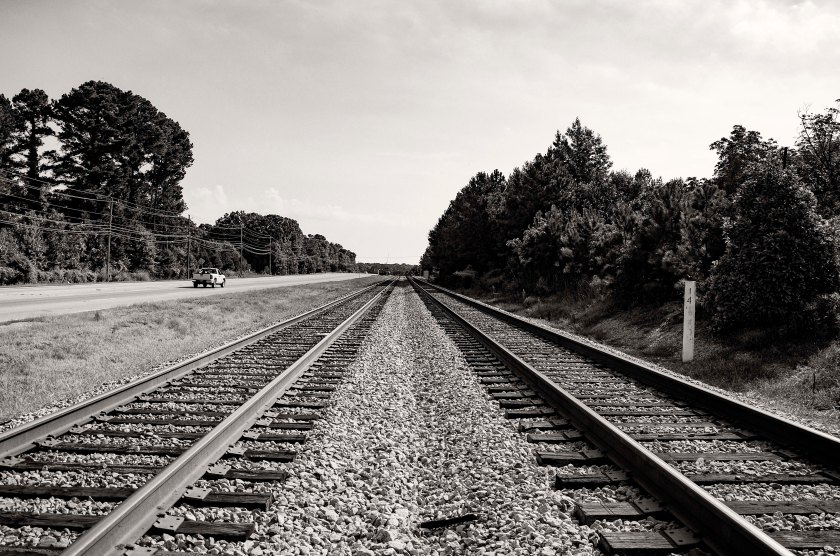
Atlanta – West Point Railroad looking south towards Fairburn. Fairburn Georgia as it stands today. Much of the town and local farms were looted during the two days that Federal forces spent here destroying the railroad prior to their movement to Jonesboro.The Atlanta – West Point Railroad at Red Oak. Looking north from mile marker 14 toward the Confederate held East Point. The Federals destroyed over 12 miles of track in two days time between East Point and Fairburn and further south to Palmetto.
General Sherman has grown impatient and restless with the siege of Atlanta and the failure of his Cavalry to destroy the Confederate supply line south of Atlanta. He has devised a plan to sweep his entire army with the exception of one Corps, to the south west then move back east towards the railroad. This movement will carry them though Red Oak, Fairburn, and Palmetto. From there they will move on Jonesboro.
On the 25th, Sherman gives the order to begin the movement and late in the evening the XX Corps begins pulling back from the siege lines and moves across the Chattahoochee river. The IV Corps moves as well. They moved to the area that is now I-285 and Cascade Road. They form a line of battle facing toward the north in the direction of the Confederate stronghold of Atlanta. They will act as a rear guard to protect the remainder of the Union army as they begin their march on Jonesboro. The IV Corps will remain in the Atlanta area during the assault on Jonesboro. Sherman has also ordered all the surplus wagons and supplies to be moved from the siege lines and taken across the Chattahoochee where they will be guarded.
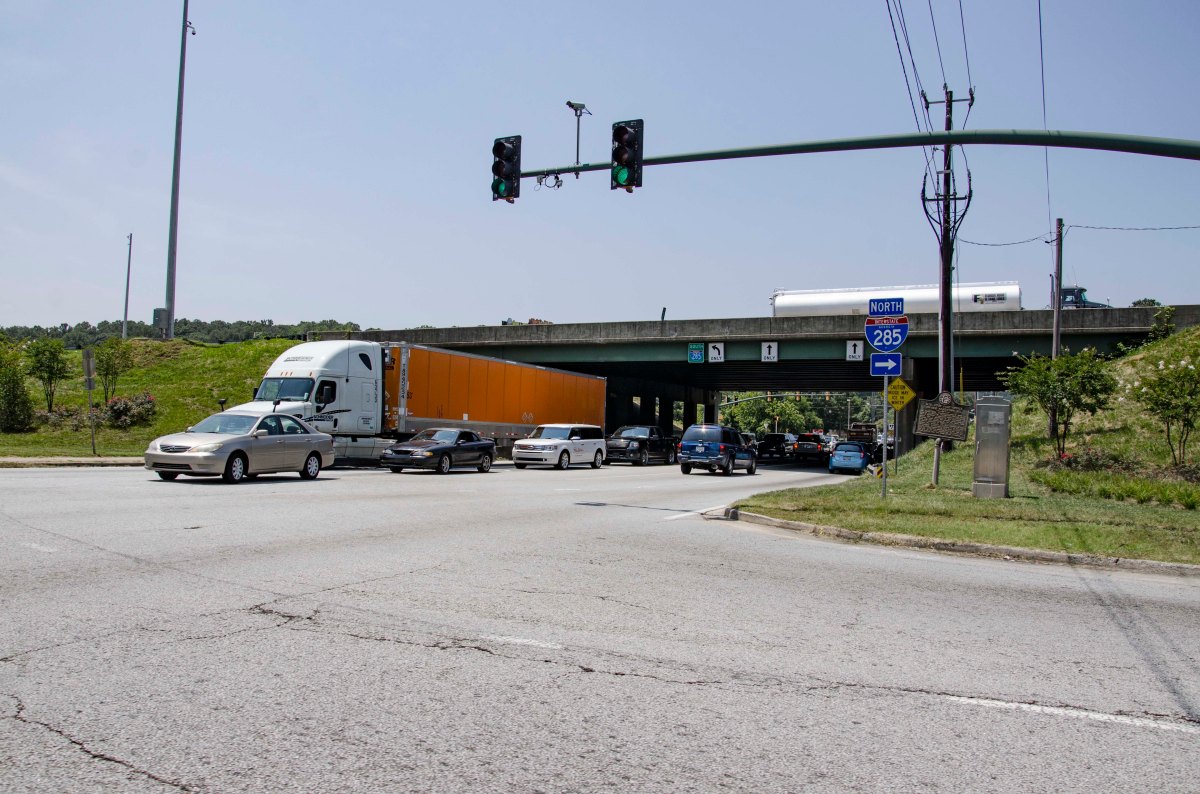
Cascade Road at I-285. Sherman ordered his IV Corps to this area where they formed a line of battle facing the Confederate lines in Atlanta. They were to act a the rear guard as the remainder of Sherman’s army moved towards the railroad in Red Oak, Fairburn and Palmetto, before moving on to Jonesboro.
August 18th, 1864: Several days earlier, General Hood dispatched General Wheeler and his Confederate Cavalry to the north in an effort to disrupt Sherman’s supply lines coming from Chattanooga. Sherman, who has quickly become restless during the siege, has started planning the movement of his entire army to the the south of Atlanta to destroy the Confederate supply line coming up from Macon.
Sherman has also learned that Wheeler’s Cavalry has made it to Tennessee and is therefore to far to offer any support to Hood or oppose Kilpatrick and his Cavalry. Sherman decides to delay the movement of his army around Atlanta and instead he orders Kilpatrick to move on the railroad in Jonesboro with his three Brigades and two more attached to him from Garrard’s Cavalry.
On the night of the 18th, Kilpatrick and five Brigades of Federal Cavalry, begin their move towards Jonesboro. They leave from Sandtown and head towards Fairburn. They are opposed by only one Confederate Brigade. Ross’s Texas Brigade spends the night of the 18th harassing and slowing down the Federal Cavalry. These actions slow down the Federal Cavalry considerably and delay the raids time table.
Downtown Fairburn 150 years after Kilpatrick’s Cavalry came through. They returned here after their previous recon and at Sherman’s orders, attempted to destroy the railroad here and in Jonesboro. They crossed the Chattahoochee River in Sandtown and traveled south east to Fairburn and skirmished with Ross’s Texans along the way.



















 War Was Here